

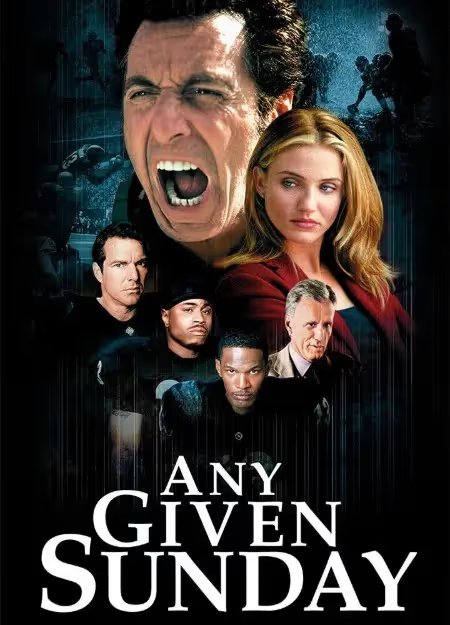
No sport captures the American glorification of violence and celebration of excess like football. And Stone must have figured that if he was going to make a movie about violence and excess, well, it had better damn well take place in Miami. And so came the tale of the last five weeks of the Miami Sharks’ season, “Any Given Sunday.”
The Sharks, to a point of painful obviousness, are the evil twin to our local Miami Dolphins. The playful orange-and-teal playful porpoises are replaced by all-black-clad man-eating Sharks. Bright and modern Dolphin Stadium is shelved for the ghetto-dwelling Orange Bowl. And the three main icons of the team – the owner, the coach, and the legendary quarterback, seem like bizarre evil versions those same icons of the Miami Dolphins. Perhaps this obvious correlation is why the film attempts to have us believe the Dolphins also play in this league, quite the stretch considering the anemic attendance figures at most South Florida sporting events.
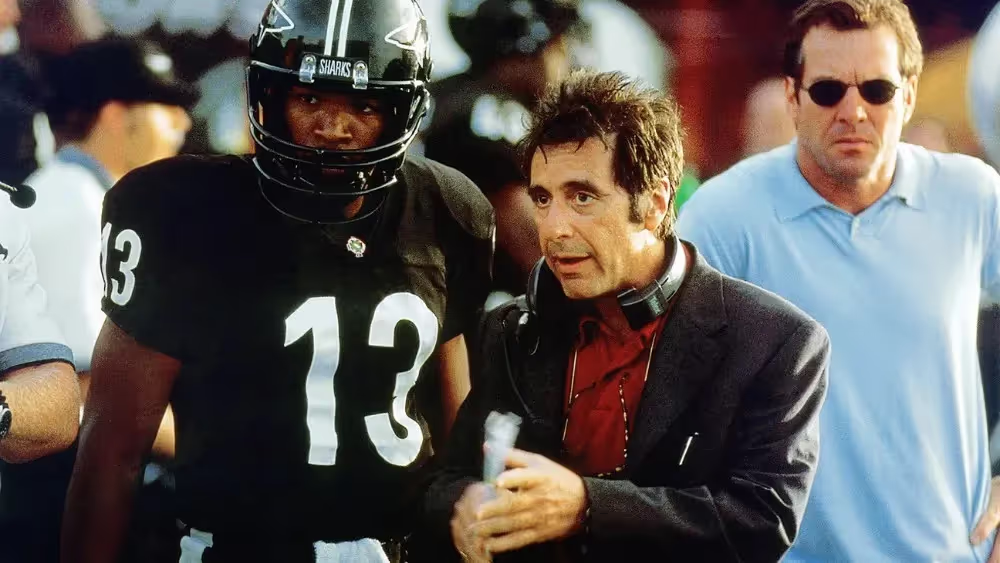
When Rooney gets injured, beleaguered legendary coach Tony D’Amato (Al Pacino playing Don Shula if he were short and felt the need to yell everything he said) puts in journeyman black quarterback Willie Beamen, played by Jamie Foxx. Despite initial struggles, Beamen eventually leads the team to three straight victories showcasing his phenomenal athletic ability and on-field improvisational skills. It is interesting to note that the film was made in 1999, before the “mobile quarterback revolution” with guys like Mike Vick and Donovan McNabb in the National Football League. So when the fictitious sportswriter in the film states that Beamen is the “quarterback of the future,” it seems that Stone was almost prophetic in his writing.
The movie, while it has a gripping plot of the aging coach feuding with both his hotshot new quarterback and his boss, the vindictive Cameron Diaz, has a lot of messages to it. It is first of an indictment of the American culture of win at all costs, showing the physical and mental toll that the game puts on its top athletes. Lawrence Taylor plays, and this was a real stretch for him, a great linebacker at the end of his career who will likely be paralyzed or die if he gets one more bad hit. But he plays on, because winning is all he knows. Quaid is pressured by his wife to keep playing football, even though his body no longer functions like it should. James Woods, who plays a sleazy team doctor, fakes test results so star players can get on the field. Any of us would be naïve to think that the NFL doesn’t work at least a little bit like this.
The other message is one of the old and great being forced to grapple with change that threatens the very things that made them successful. The old coach must deal with a new way of playing the game, the old quarterback must accept that his is not the style that people want anymore, and everyone must deal with the fact the old owner is dead, and the new one has more modern aspirations than simply “giving back to the people of Miami.”

The new owner, Diaz’ character Christina Pagniacci, had inherited the team from her father who was the beloved longtime owner of the team. Or, basically, the Robbie children if they were a hot blond. Stone made the movie during the era of franchise free-agency, when teams were holding up cities and moving to whichever one built them the best stadium. So Pagniacci points out, rightfully so, to the mayor that the Orange Bowl is falling apart and needs renovations, and wants public money to do that. Sound familiar? Diaz is essentially playing a richer, hotter Donna Shalala. Of course, with the cross-town Dolphins playing at “the other stadium,” Diaz has no choice but to try and facilitate a move to LA by getting them to build her a new park. Glad Donna didn’t have that option.
Interestingly, when the Sharks actually do play a road game in LA, the stadium there is immediately obvious to any Dolphins fan as Dolphin Stadium. I’m not sure if Oliver Stone just confuses his palm tree cities, but after passing off LA as Miami in “Scarface,” and now this obvious error, it makes one wonder if Hollywood really does think we are interchangeable with Southern California.
As the movie progresses, we get glimpses of the life of excess that professional football players lead. Parties with expensive escorts (again, this was before the Minnesota Vikings’ much-publicized sex cruise), players doing cocaine at every occasion, and one memorable scene where LT (a Miami resident and golfing buddy of OJ Simpson) cuts Beamen’s truck in half with a buzzsaw after the quarterback makes a comment about the defense not doing its part. The film portrays the players as ultraviolent psychos with too much money and too much greed, and I’m surprised the NFL didn’t get as upset about this movie as it did about television’s “Playmakers.”
Eventually the team makes the playoffs once Beamen loses his newfound ego and realizes he has to sacrifice for the team (a speech Pacino and Taylor give him repeatedly), Jack Rooney comes back in extreme pain to play his final half of football and LT, predictably, is paralyzed after making a crucial fourth down stop. I won’t tell you how the dramatic final playoff game in Dallas ends, but it is fairly predictable. That game, strangely, was filmed at Texas Stadium. I guess Oliver couldn’t find a third place in South Florida to pass off as somewhere else. Maybe when they build the new Marlins’ park.
Given the subject matter, Miami plays a nice backdrop for the film. All of the opulent houses that belong to the coaches and owners and legendary players have views of Biscayne Bay (again, any follower of the Dolphins knows all their players live in Broward, so Stone sacrifices accuracy for scene location here as well). The perpetual black clouds that cover the sky, actually a common occurrence down here, also make for a deliciously ominous backdrop for the violence that unfolds on the field, and the game shots of the Miami skyline just past the East end zone at the OB makes one a bit nostalgic for the old days.
The half-full Orange Bowl, as Stone shows it to demonstrate the team’s financial difficulties, is also accurate since that is how I remember it looking for most of the Canes games I went to. Filmmakers actually recruited UM students to be extras for the movie, not realizing they were filming it over winter break. Still, I did recognize one guy I knew from the dorms in one shot early on, as he had told me several times 9 years ago that he was visible in the final cut.
Stone made a good choice in setting this movie in Miami, as the tropical background makes the movie aesthetically easy when men are not having their eyes gouged out on the field. The culture of partying and excess also make his points about the temporary glory of pro sport easily recognizable. But the film is typical Oliver Stone; dizzying editing and excessive overlap of film (although the montage of pro football and the Ben Hur chariot scene is entertaining) and may leave you with a headache if you are expecting “Friday Night Lights” with professionals. But if you like football, and you like tales of depravity and violence, “Any Given Sunday” is a pretty solid movie. And, if you are as much of a fan of the old Orange Bowl as I am, it can be a tear-jerker as well.
Editor’s Note: Originally published on June 24, 2008. Updated in 2026 with new photography; Matt Meltzer’s original writing remains unchanged.

Lorem ipsum dolor sit amet, consectetur adipiscing elit. Suspendisse varius enim in eros elementum tristique. Duis cursus, mi quis viverra ornare, eros dolor interdum nulla, ut commodo diam libero vitae erat. Aenean faucibus nibh et justo cursus id rutrum lorem imperdiet. Nunc ut sem vitae risus tristique posuere.
Lorem ipsum dolor sit amet, consectetur adipiscing elit. Suspendisse varius enim in eros elementum tristique. Duis cursus, mi quis viverra ornare, eros dolor interdum nulla, ut commodo diam libero vitae erat. Aenean faucibus nibh et justo cursus id rutrum lorem imperdiet. Nunc ut sem vitae risus tristique posuere.
Check out our top local tours on Miami Beach 411—no tourist traps, just the best adventures, Everglades, and more.
Book Your TourOr book your hotel through our Hotels.com partnership—it helps keep Miami Beach 411 free and independent for everyone.
Book Your Hotel

Comment disclaimer:
Some comments below originated on a previous version of MiamiBeach411.com. As a result of platform migrations, displayed comment dates may reflect import timestamps rather than original posting dates. Many comments date back to the early 2000s and capture community conversations from that time. If you have local insight, updates, or memories to share, we welcome your comments below.
This story has been part of Miami Beach conversations for decades—and it’s still unfolding. Add your voice.
Lorem ipsum dolor sit amet, consectetur adipiscing elit. Suspendisse varius enim in eros elementum tristique. Duis cursus, mi quis viverra ornare, eros dolor interdum nulla, ut commodo diam libero vitae erat. Aenean faucibus nibh et justo cursus id rutrum lorem imperdiet. Nunc ut sem vitae risus tristique posuere.
Lorem ipsum dolor sit amet, consectetur adipiscing elit. Suspendisse varius enim in eros elementum tristique. Duis cursus, mi quis viverra ornare, eros dolor interdum nulla, ut commodo diam libero vitae erat. Aenean faucibus nibh et justo cursus id rutrum lorem imperdiet. Nunc ut sem vitae risus tristique posuere.