


In the 1980s, Miami was the undisputed murder capital of America. Drive-by shootings, cocaine-fueled massacres, and bodies dumped in the Everglades were so common they barely made the evening news. Yet of all the violent episodes that defined that brutal era, the one that left the deepest scar on federal law enforcement didn’t involve drug cartels, kingpins, or even street-level dealers. It involved two middle-aged white guys from Pinecrest and eight FBI agents. What started as a routine surveillance stop on a sunny April morning in 1986 ended as the deadliest shootout in FBI history—and changed how every law-enforcement agency in the country thinks about firepower, stopping power, and survival.
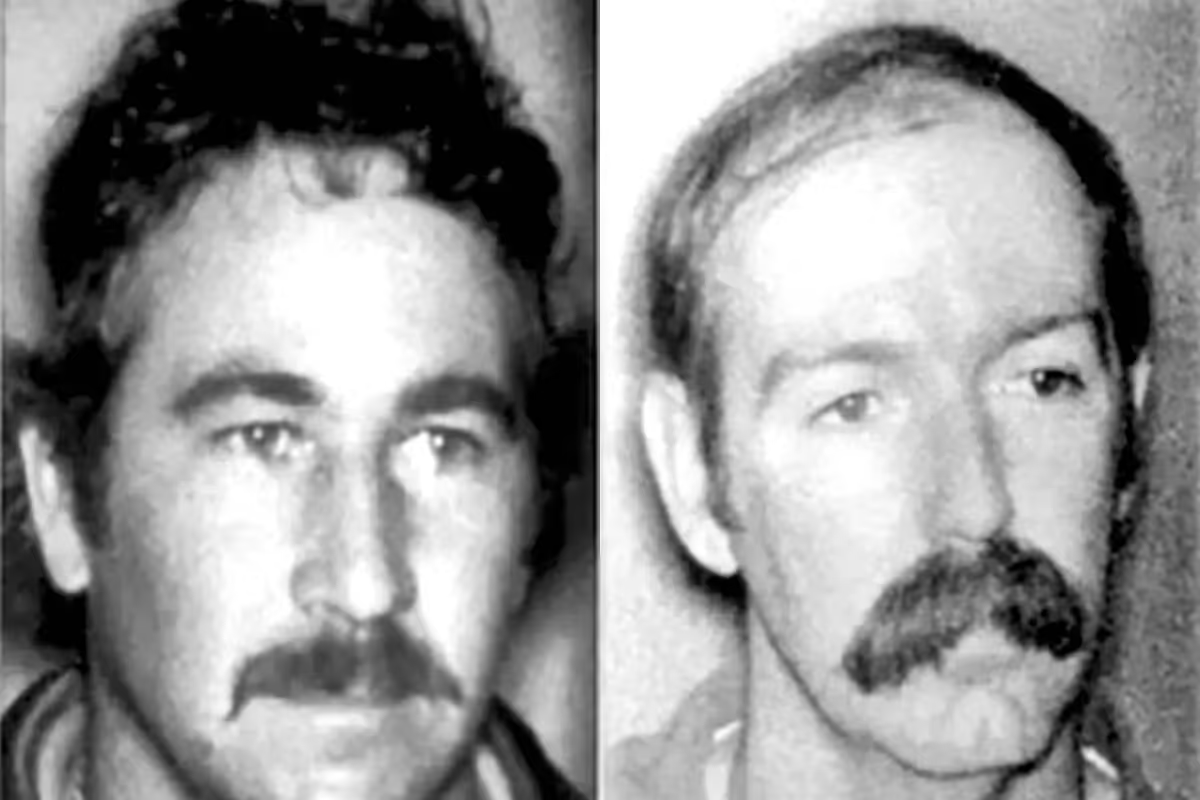
Michael Platt and William Matix met in the Army at Fort Campbell, Kentucky in the early 1970s. Both were considered model soldiers—Platt an airborne ranger, Matix a military policeman. After honorable discharges they drifted apart geographically but stayed in touch. Both men also suffered the violent deaths of their wives in the early 1980s: Matix’s wife was murdered during a 1983 lab robbery in Ohio, and Platt’s committed suicide a year later. Coincidence? Maybe. But by late 1985 the two were living in South Florida and embarking on a violent crime spree that would end in a hail of bullets.
The FBI’s Miami field office had been tracking them for months. By April 1986 they had enough to move. Supervisory Special Agent Gordon McNeill deployed 14 agents to patrol a stretch of South Dixie Highway in what is now Pinecrest—an affluent, quiet suburb of families and strip malls, not exactly a hotbed of violent crime. At around 9 a.m. on April 11, Special Agents Ben Grogan and Jerry Dove spotted the suspects in a black Chevrolet Monte Carlo. They fell in behind and radioed the team.
The robbers sensed the tail, turned off US-1 onto SW 122nd Street, then again onto SW 82nd Avenue behind the Dixie Belle shopping center. McNeill passed them and saw Platt racking his Ruger Mini-14. Everyone knew what was coming.
Special Agent Richard Manauzzi, riding alone, forced the Monte Carlo into a tree in the parking lot. Platt immediately opened fire with the Mini-14, hitting McNeill in his shooting hand and Edmundo Mireles in the forearm. Matix blasted a 12-gauge shotgun into the grill of Grogan and Dove’s car, then leaned out to try to commandeer a vehicle. Grogan—widely considered the best shot in the Miami field office—hit him in the forearm. McNeill followed with shots to the head and collarbone, knocking Matix unconscious.
Platt, unfazed, exited the wrecked Monte Carlo and advanced on Grogan and Dove’s vehicle. He was shot four times leaving his car—mostly legs and torso—and another five times as he tried to take the FBI car. Still he kept coming. He killed Grogan and Dove instantly, wounded several others, and laid down cover fire while Matix—somehow conscious after a head shot—crawled over and joined him in the stolen vehicle.
The gunfight lasted nine minutes. FBI agents fired 75–80 rounds; Platt returned 25–30. Matix managed one shotgun blast and some pistol fire. Autopsies later showed the suspects were hit 18 times, including multiple “kill-zone” wounds to head and chest. Yet they kept fighting until Mireles—despite his shattered forearm—advanced with a Remington 870 shotgun and then his .357 revolver, firing five final rounds that lodged in their spines. Both men slumped. Mireles turned off the ignition. It was over.
Paramedics arrived to no signs of life in Grogan or Dove. Matix was already dead; Platt was resuscitated briefly but succumbed. Five other agents were wounded—McNeill and Mireles most seriously—but survived.
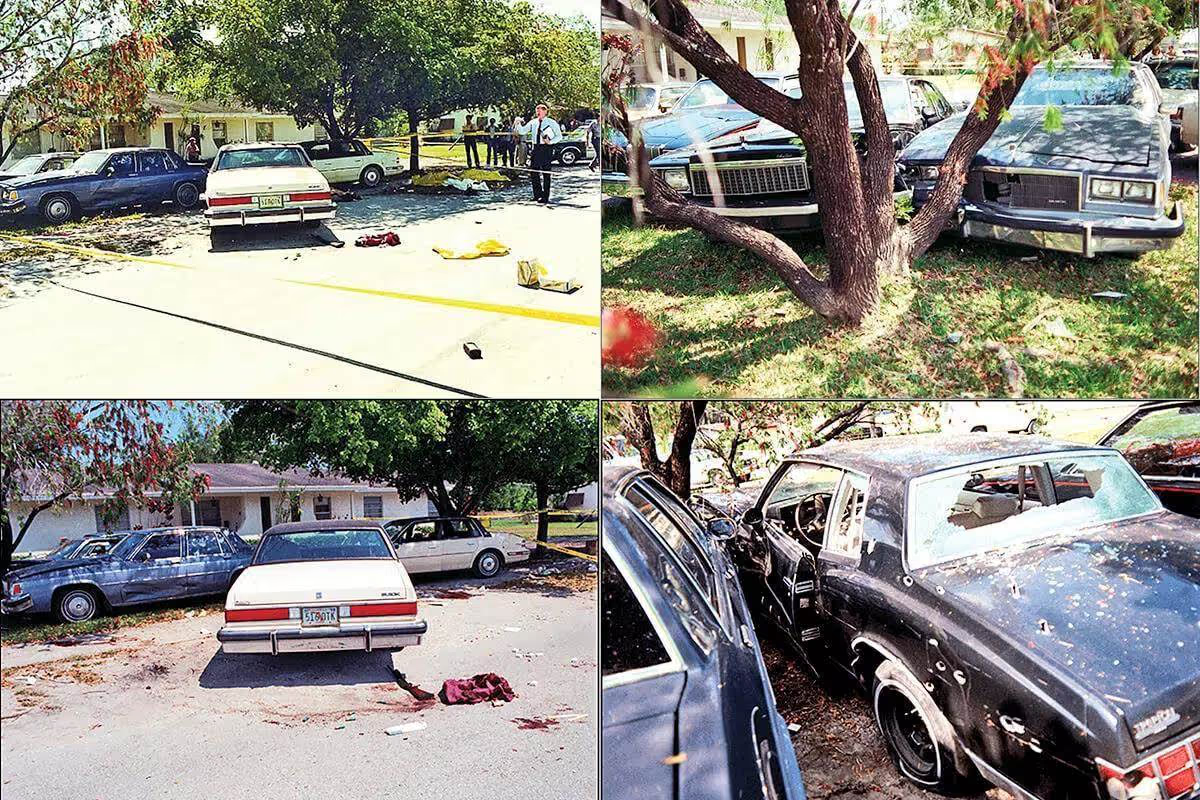

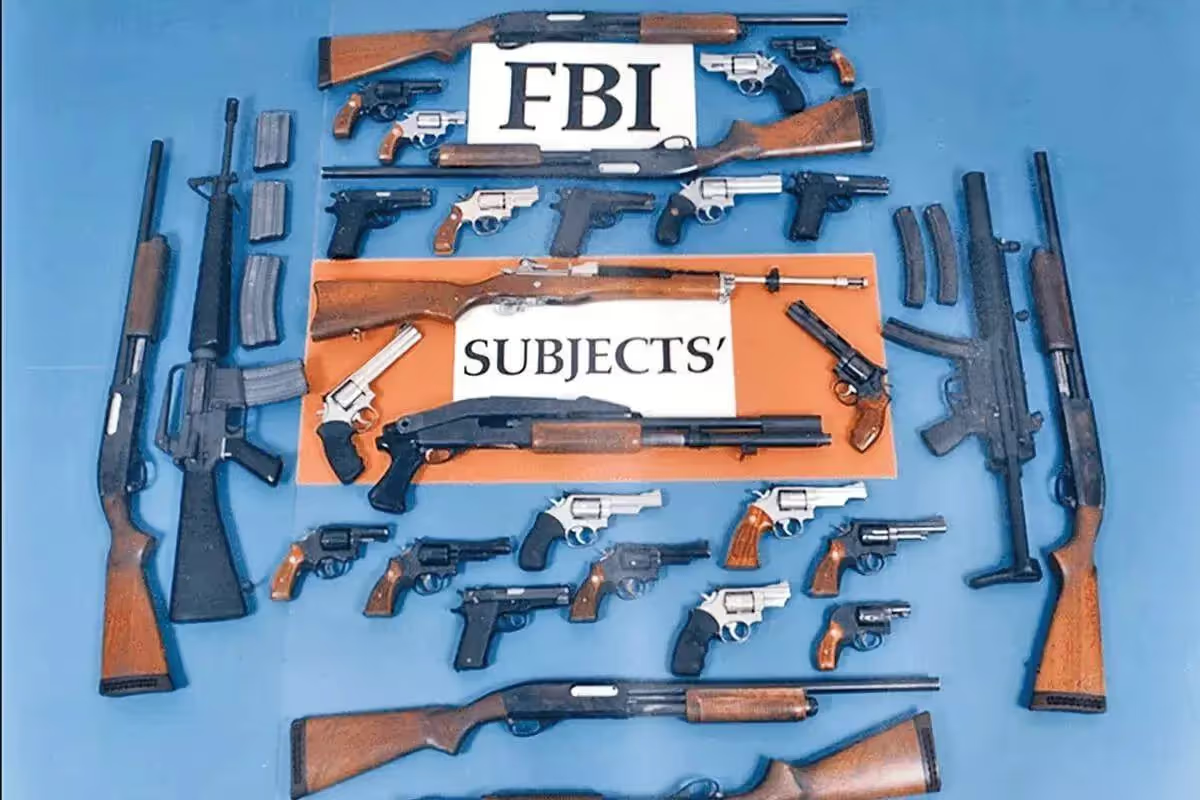
The aftermath was seismic. How could trained FBI marksmen land multiple center-mass and head shots and still fail to stop the threat? Autopsies confirmed excellent shot placement and functioning firearms. The answer lay in the human body’s terrifying ability to fight on through catastrophic trauma—especially when adrenaline and survival instinct take over. Platt and Matix simply refused to go down until their central nervous systems were physically destroyed.
The Bureau took the lesson to heart. The Miami shootout triggered a nationwide reevaluation of law-enforcement handguns, ammunition, and training. The old standard .38 Special and 9mm loads were deemed inadequate against determined, drug-fueled threats. Stopping power and barrier penetration became the new priorities. The incident directly influenced the adoption of 10mm Auto (later scaled back to .40 S&W) and modern hollow-point designs that expand reliably.
Today, most Miamians drive past the corner of SW 82nd Avenue and 122nd Street without knowing what happened there. The only public reminder is a stretch of road renamed Agent Jerry Dove Avenue and Agent Benjamin Grogan Avenue—small plaques in a quiet suburb that once became a war zone.
The shootout closed the book on the most violent chapter of Miami’s cocaine era. The machine-gun firefights, the Scarface glamour, the daily body count—it all began to fade after April 11, 1986. But the scars remain. And for the FBI, the lessons never faded: bring enough gun, shoot to stop, and never underestimate what a human body can endure when it refuses to die.
If you grew up here after the 1980s, or moved in later, this is the backstory you probably never learned. Two seemingly ordinary guys from Pinecrest turned one spring morning into the bloodiest day in FBI history—and forever changed how law enforcement arms and trains itself for the worst-case scenario.
Editor's Note: Originally published on June 23, 2007 and updated in 2026 for clarity while preserving Matt Meltzer’s storytelling and investigative detail.

Lorem ipsum dolor sit amet, consectetur adipiscing elit. Suspendisse varius enim in eros elementum tristique. Duis cursus, mi quis viverra ornare, eros dolor interdum nulla, ut commodo diam libero vitae erat. Aenean faucibus nibh et justo cursus id rutrum lorem imperdiet. Nunc ut sem vitae risus tristique posuere.
Lorem ipsum dolor sit amet, consectetur adipiscing elit. Suspendisse varius enim in eros elementum tristique. Duis cursus, mi quis viverra ornare, eros dolor interdum nulla, ut commodo diam libero vitae erat. Aenean faucibus nibh et justo cursus id rutrum lorem imperdiet. Nunc ut sem vitae risus tristique posuere.
Check out our top local tours on Miami Beach 411—no tourist traps, just the best adventures, Everglades, and more.
Book Your TourOr book your hotel through our Hotels.com partnership—it helps keep Miami Beach 411 free and independent for everyone.
Book Your Hotel

Comment disclaimer:
Some comments below originated on a previous version of MiamiBeach411.com. As a result of platform migrations, displayed comment dates may reflect import timestamps rather than original posting dates. Many comments date back to the early 2000s and capture community conversations from that time. If you have local insight, updates, or memories to share, we welcome your comments below.
This story has been part of Miami Beach conversations for decades—and it’s still unfolding. Add your voice.
Lorem ipsum dolor sit amet, consectetur adipiscing elit. Suspendisse varius enim in eros elementum tristique. Duis cursus, mi quis viverra ornare, eros dolor interdum nulla, ut commodo diam libero vitae erat. Aenean faucibus nibh et justo cursus id rutrum lorem imperdiet. Nunc ut sem vitae risus tristique posuere.
Lorem ipsum dolor sit amet, consectetur adipiscing elit. Suspendisse varius enim in eros elementum tristique. Duis cursus, mi quis viverra ornare, eros dolor interdum nulla, ut commodo diam libero vitae erat. Aenean faucibus nibh et justo cursus id rutrum lorem imperdiet. Nunc ut sem vitae risus tristique posuere.