

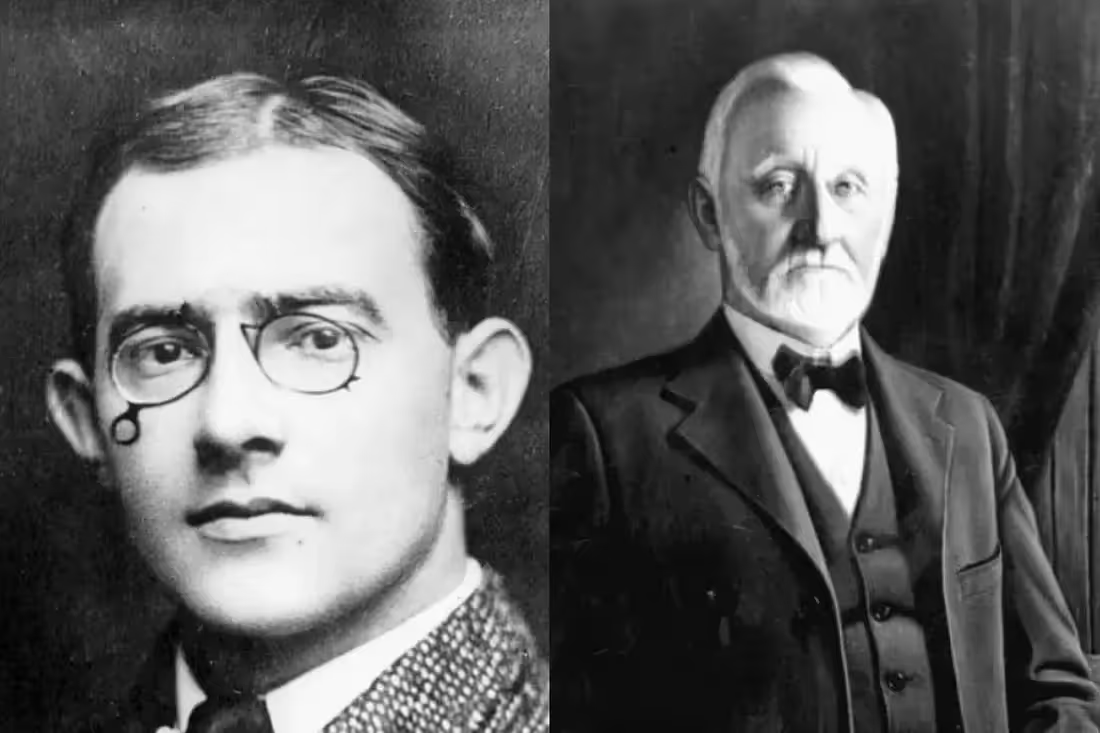
Born on December 29, 1837, in Moorestown, New Jersey, John Stiles Collins was the sixth generation of his family to farm the family homestead, a legacy dating back to 1678. Raised in the liberal Moorestown Meeting, Collins embodied Quaker virtues of honesty, patience, sobriety, and hard work, though he was known for his energy, determination, and occasional impatience. While he appeared gentle to outsiders, his children recalled him as a “he-man” full of drive and vision.
Collins’ passion for farming extended beyond the homestead. In 1855, he founded Pleasant Valley Nurseries and supply yards in Moorestown and Merchantville. He gained recognition for cultivating the Kiefer pear and Wilson blackberry, and his innovative approach led him to help establish the New Jersey Horticultural Society.
Adventurous and market-minded, Collins purchased land in Florida in 1891 but did not visit until 1896. He was captivated by the island’s potential, acquiring additional acreage with two fellow New Jersey investors to grow coconuts. The partnership faltered: Ezra Osborn died, and Elnathan Field preferred conservative grapefruit farming. Collins, seeking exotic crops like mangoes and avocados—then called “alligator pears”—bought out his partners, becoming sole owner of five miles of land between the Atlantic Ocean and Biscayne Bay, roughly 50 blocks of present-day Miami Beach.
Collins hired primarily Black workers to clear the swamp, contending with rats, tangled roots, and challenging soil. By 1907, his groves flourished with mangoes, avocados, tomatoes, and potatoes. While tourism was emerging, Collins’ focus remained on improving transportation for agriculture. He envisioned a canal to speed access to his crops, but financing such a project exceeded his personal resources.
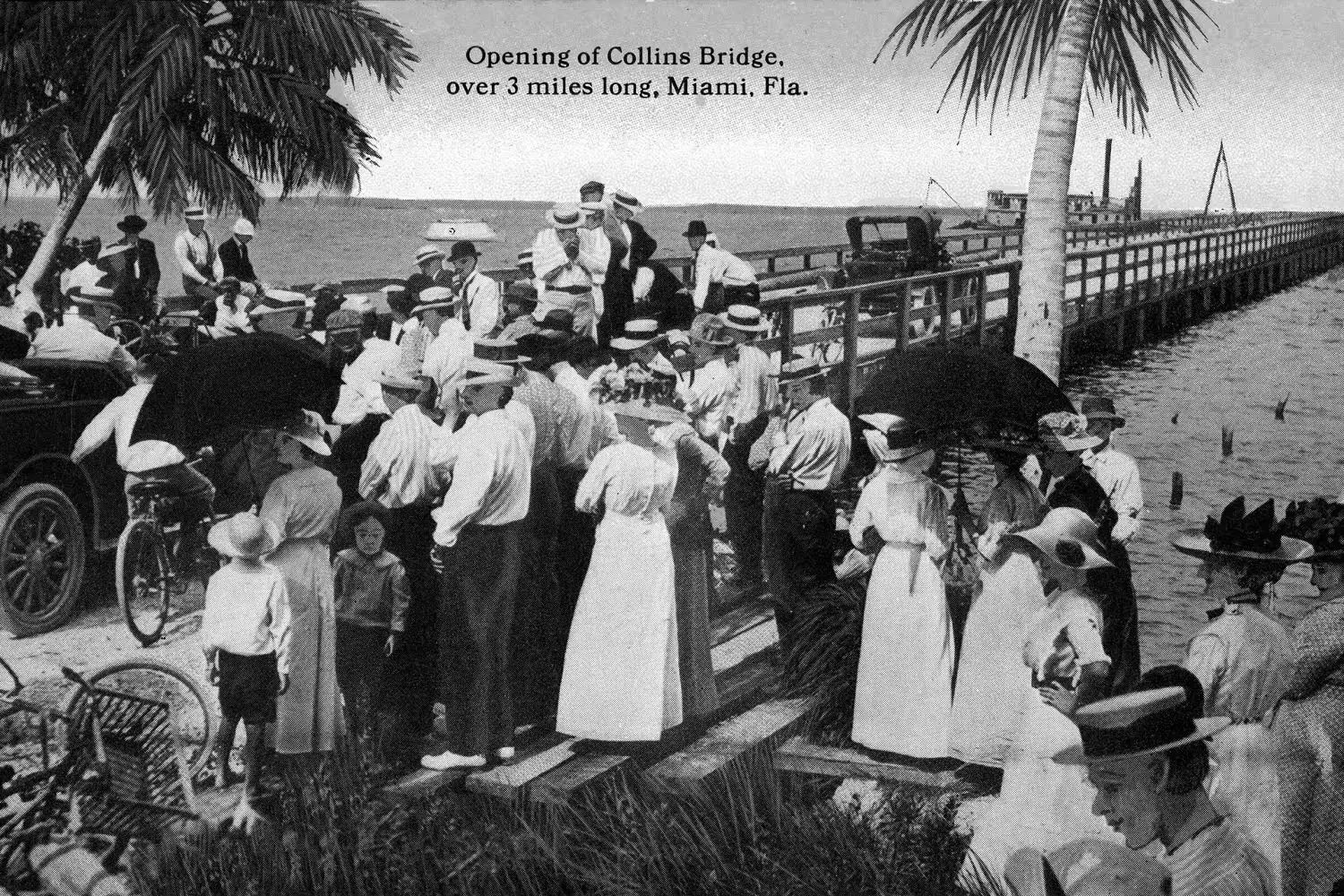
Collins enlisted his children, who managed the New Jersey nurseries, to finance the canal. Hesitant at first, the family agreed under one condition: Collins had to build a bridge across the canal, opening the island to traffic and real estate development. This led to the founding of the Miami Beach Improvement Company, and construction of the bridge in 1912 triggered a surge in property development, with advertisements calling the area “a veritable Treasure Island…and winter playground for the masses.”
When funds ran short, Carl G. Fisher, an Indiana auto-parts mogul, invested $50,000 for 200 acres, enabling Collins to complete the bridge on June 12, 1913, almost a year after construction began. Collins and his son-in-law also built a hotel to remain competitive, but he never abandoned his agricultural vision. By 1922, Miami Beach hosted some of the largest avocado and mango groves in the world, even as tourism began to dominate the economy.
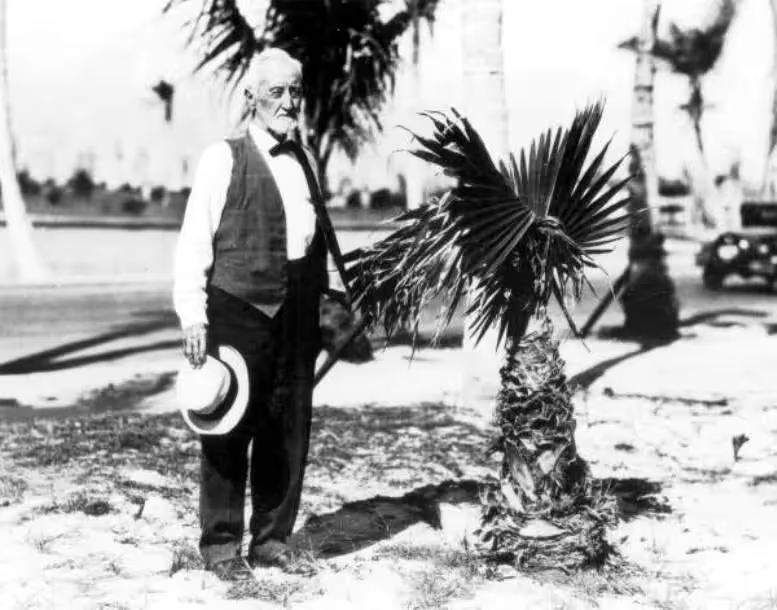
When John Collins died on February 11, 1928, Miami Beach had transformed from untamed swampland into a thriving, organized city. His work laid the groundwork for the city’s transition from agriculture to tourism, and his vision, tenacity, and willingness to take calculated risks helped shape the Miami Beach we know today. Collins remains remembered not just as a developer, but as a pioneering Quaker farmer whose impact on the city endured long after his groves were gone.
Editor's Note: Originally published in 2002. Updated in 2026 to reflect the most current information.

Lorem ipsum dolor sit amet, consectetur adipiscing elit. Suspendisse varius enim in eros elementum tristique. Duis cursus, mi quis viverra ornare, eros dolor interdum nulla, ut commodo diam libero vitae erat. Aenean faucibus nibh et justo cursus id rutrum lorem imperdiet. Nunc ut sem vitae risus tristique posuere.
Lorem ipsum dolor sit amet, consectetur adipiscing elit. Suspendisse varius enim in eros elementum tristique. Duis cursus, mi quis viverra ornare, eros dolor interdum nulla, ut commodo diam libero vitae erat. Aenean faucibus nibh et justo cursus id rutrum lorem imperdiet. Nunc ut sem vitae risus tristique posuere.
Check out our top local tours on Miami Beach 411—no tourist traps, just the best adventures, Everglades, and more.
Book Your TourOr book your hotel through our Hotels.com partnership—it helps keep Miami Beach 411 free and independent for everyone.
Book Your Hotel

Comment disclaimer:
Some comments below originated on a previous version of MiamiBeach411.com. As a result of platform migrations, displayed comment dates may reflect import timestamps rather than original posting dates. Many comments date back to the early 2000s and capture community conversations from that time. If you have local insight, updates, or memories to share, we welcome your comments below.
This story has been part of Miami Beach conversations for decades—and it’s still unfolding. Add your voice.
Lorem ipsum dolor sit amet, consectetur adipiscing elit. Suspendisse varius enim in eros elementum tristique. Duis cursus, mi quis viverra ornare, eros dolor interdum nulla, ut commodo diam libero vitae erat. Aenean faucibus nibh et justo cursus id rutrum lorem imperdiet. Nunc ut sem vitae risus tristique posuere.
Lorem ipsum dolor sit amet, consectetur adipiscing elit. Suspendisse varius enim in eros elementum tristique. Duis cursus, mi quis viverra ornare, eros dolor interdum nulla, ut commodo diam libero vitae erat. Aenean faucibus nibh et justo cursus id rutrum lorem imperdiet. Nunc ut sem vitae risus tristique posuere.