

Let me start by saying I'm extremely frugal—cheaper than Jack Benny on a bad day. If you're dreaming of a deluxe high-rise sky-pad and $20 cocktails at clubs every night, this guide isn't for you. I moved here for the turquoise seas, tropical vibes, car-free(ish) lifestyle, cheap Cuban eats, and that steamy energy—without the J-Lo sightings or velvet-rope stress. These days, I'm happy watching the pretty people like my personal ant farm. Less drama, more savings, and I still drive my beat-up car in ratty jeans.
For those of you who want to follow your bliss without forfeiting your life savings, listen up! I’ve picked up a lot of useful knowledge in my escape to paradise, and I’m happy to pass it on! And here I am! I actually pulled it off! This was my strategy. Feel free to copy it or amend it as you see fit! This is what I learned in 2007—and how it holds up (or doesn't) in 2026.
It's the perfect mash-up: Manhattan's walkable diversity, LA's sunshine and palms, New Orleans' exotic party edge. I first felt the pull in 1996, vacationed yearly, and post-Katrina New Orleans funk (potholes, crime headlines, endless tension) pushed me to finally move. I packed the truck, took off my shoes, sat a spell… and made it happen.
The first step was scouting the right spot in compact-but-diverse South Beach. From years of visits, I knew to steer clear of the hormone-charged chaos on Washington, Collins, and Ocean avenues; Alton Road's busy local scene; Lincoln Road's dense parking nightmare and crowds (despite the appealing sidewalk cafes); and pricey SoFi (South of Fifth), with its condos and yuppies.

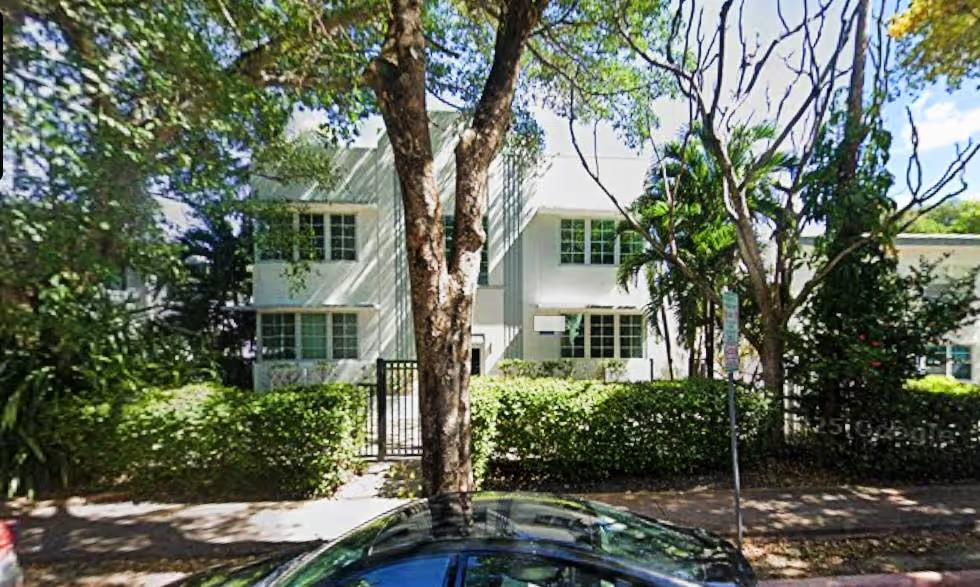
My ideal: the quieter area between Alton Road and Washington, near Flamingo Park—mellow energy, more foliage, abundant character in older Deco buildings (mixed with some new construction)—yet still a short walk to the action.
In 2026, this mid-South Beach/Flamingo zone remains one of the more budget-friendly pockets (relative to core SoBe or SoFi). Mid-Beach (north of 23rd) offers even quieter, often lower-rent options. Current 1BR averages hover around $2,500–$3,000+ citywide (per Apartments.com, RentCafe, Zillow data), with quieter areas dipping toward $2,200–$2,600 if you hunt smart.
Pro-managed and condo spots often mean extra hurdles: application/credit fees, condo board approvals, hefty pet deposits (non-refundable in many cases), and tacked-on charges (agent, cleaning, admin) to pad profits beyond rent. South Beach standard: first + last + security upfront, plus extras.
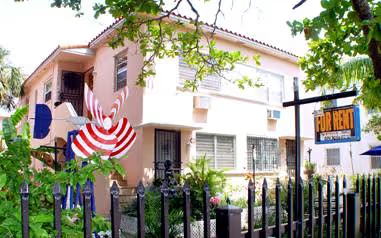
My frugal (slightly risky) plan: skip middlemen and target direct owner or on-site managed properties.
Best tip: walk around the area you want to live and look for "For Rent" signs and contact owners directly.
I visited months early (early summer = peak vacancies, best deals). Walked streets like Lenox, Michigan, Meridian, Jefferson, Euclid. The area near 5th had some sketchier vibes, but tame compared to New Orleans—kept it on the list.
Spotted a charming two-story, 12-unit nautical Deco building in the 700 block of Michigan. Owner was on-site prepping units—showed me around. Two available then: $950 and $1,000 (ancient history now). Explained my later move date, grabbed his contact to follow up.
I found a charming 12-unit Deco spot on Michigan—owner on-site prepping units at $950–$1,000 back then.
In 2026: 1BR averages $2,500–$3,000+ citywide (higher in luxury; budget finds ~$2,000–$2,500 near Flamingo/Mid-Beach if you hunt). Craigslist still king for deals, but watch for bait-and-switch (recycled pics, fake low prices). Use apps like Zillow, Apartments.com, RentCafe for trends.
Avoid overlapping rent—time your move for end-of-month.
I learned early on that when dealing with Craigslist, look for phone numbers in the listings—otherwise they are very likely bait planted by spammers who harvest the email addresses of people who reply. NewTimes/Backpage gone—now it's Facebook Marketplace, or Miami Beach 411 style forums.
About a month and a half before my June 1 move date, I reached out to local property management companies like Regatta and Columbia Asset Management (recommended by a South Beach online contact). Neither responded to my initial emails.
I followed up with Columbia by phone and finally spoke to an agent. He vaguely mentioned a 1BR near Lincoln Road potentially available around May 15. When I pressed for details on location or exact timing, he stayed fuzzy, saying May 15 was just a "rough" availability window for units in the building.
Move-in costs were equally unclear. He dodged questions about first/last/security breakdowns, eventually saying it'd require first month's rent plus two full months' security (no applying security to last month). Add a credit check fee and an extra (undisclosed) pet deposit—framed as a "favor" since they normally ban pets entirely, thanks to my name-dropping the acquaintance.
This felt off: uneven pet rules breed tenant drama, and the "favor" meant paying more upfront (double security + pet fee) with refund risks. South Beach property managers often nickel-and-dime on fees (application, admin, cleaning, pets), and security deposits can be hard to recover.
Knowing many managed buildings push these extras to boost profits beyond rent, I passed and focused on private owners instead—where terms are usually simpler and more negotiable.
(In 2026, pro-managed spots still layer on non-refundable fees like $300–$585 one-time pet fees + $50/month pet rent, per current listings from Helios, Muze, and Flamingo South Beach. Private landlords remain the frugal path for fewer surprises.)
Checked back with my Michigan landlord: unit ready June 1—perfect sync. Drove down early May, saw it, left half-security deposit ($500 then). No heavy checks—just refs/employment (unchecked). Cats OK, no extra fee.
In 2026: Similar—private owners flexible. Expect first + last + security (3x rent upfront; bargain down security to half, waive pet fees). Good credit helps waive utilities deposits.
Moving to Miami is exciting, but the little (and not-so-little) surprise expenses can add up fast. Here are some of the sneaky ones I (and many others) ran into—plus tips to help you avoid getting burned.
In most cities, landlords ask for first month’s rent plus one month’s security. In South Beach (and much of Miami), the standard is first, last, and security—that’s three full months’ rent upfront. It’s a bigger hit when you’re just starting out, but there’s an upside: landlords here tend to be far less picky about proof of income, credit checks, or employment history. They just want to see the cash.
Pro tip: Don’t be shy about negotiating. Don’t want to pay the full pet deposit? Application fee feels too high? Ask to drop the security to half a month—many landlords will meet you there. Get everything in writing, keep receipts, and if they agree to reimburse or deduct from rent, document it clearly.
Renting a truck to move your stuff? Brace yourself. I needed a U-Haul to pick up belongings from the ReloCube terminal in Hialeah (ReloCube companies usually won’t leave containers on public streets in Miami Beach due to city rules). In-city rentals here start around $19.95–$39.95/day depending on truck size—similar to other cities—but the mileage rate is brutal. I paid $1.19 per mile in Miami Beach; back in New Orleans it was only 69 cents per mile.
They also auto-added the optional SAFE-MOVE insurance ($14)—no asking. Luckily I wanted it anyway, but it’s an extra you might not expect. Plan your route carefully; those miles add up fast.
Good news: my credit was solid enough to set up Florida Power & Light (electric) with no deposit. Bad news: TECO (gas company) wanted $60 upfront before activating service in my name. I asked if they’d waive it based on my credit—they said they don’t even check past credit history! On top of that, there’s a $2 fee for paying the deposit by credit card (your only option over the phone). So: $62 total just to turn on the gas.
The phone company (AT&T/BellSouth back then) tried to hit me with a $41 connection charge—even though there was literally no “connecting” to do; it was just activating an existing line. In the age of cell phones, you have leverage: start to reconsider or walk away, and they’ll usually waive it. Don’t pay without pushing back.
Parking on South Beach is a nightmare. Unless your building includes a spot or you’re willing to commute from the free zone (streets between 5th and 6th—also home to aggressive panhandlers and very watchful cops), you’ll need a resident parking decal.
Good news: unlike most places, transient South Florida doesn’t require state vehicle registration or a local driver’s license to get one. Bad news: renewals are fixed to specific dates (back then, the next was April 30, 2008). Arrive after the cutoff? You still pay the full $100 to $150 annual fee, even if it only covers 7–12 months depending on timing. Confusing? Yes.
Want visitor passes for guests? Add $6–$10 for a coupon book (good for two-week segments). Insider tip: don’t get caught in the bureaucratic shuffle. At the time, City Hall (1100 Washington Ave.) was under renovation, and the parking office had moved temporarily. I was misdirected to the Clerk of Courts at 225 Washington Ave. (traffic tickets and civil matters)—wrong spot. The actual office was in the Palm Court Building at 309 23rd St, Suite 200. Bring your driver’s license, vehicle registration, proof of residency (lease copy or utility bill), and cash. By the time I found it, I was sweaty and annoyed—don’t make the same mistake.
In New Orleans, finding free unsecured Wi-Fi was as easy as finding a radio station. In Miami? People guard their signals like treasure. Hotels and coffee shops (including Starbucks) often require codes. If your apartment doesn’t have strong free Wi-Fi, you might need to buy a modem and subscribe. Options like Wireless Oceans (praised by Miami SunPost as the “best internet provider” back then) existed—coverage was spotty, with pricing from one-hour bursts to multi-month plans. Check their site for details.
These are the sneaky costs that can catch you off guard when moving to Miami. Plan ahead, ask questions, negotiate hard, and keep receipts—you’ll save money and headaches. Welcome to the Magic City. It’s worth it… most days.

It’s now been a month since I made South Beach my home. Despite concerns from friends back home that it was expensive, superficial, and impersonal (including one priest who cautioned me: “Don’t move there, Doug! It’s trendy!”), I’ve found that it’s whatever you want it to be. It’s as shallow or deep as you are. The thrill of being near the ocean never wears off (though the all-pervasive sand in everything can become a little annoying!).
As Pancho, a frequent contributor to this site, told me “estar cerca de la playa es un premio al espiritu (to be by the beach is a reward to the spirit).” People here, while a little more cautious than they might be in, say, Austin, have the same basic needs for friendship and affection as people do everywhere else. If you’re open to meeting new friends from different cultures and learning new languages, this will be a wonderful experience for you. Naturally, life’s complications will stay with you no matter where you go, but they’re a lot easier to deal with among the palm trees and the turquoise water!
Looking for "For Rent" signs, this classic budget-hunting tactic from Doug's 2007 South Beach move still holds up strong in 2026, even in a market that's evolved with apps, online listings, and higher rents. While digital tools (Zillow, Facebook Marketplace) dominate searches, 1-month before you want to move, walking around Lenox, Michigan, Meridian, Jefferson, and Euclid and spotting old-school "For Rent" signs remains one of the best ways to uncover apartments with cheaper rent. In South Beach—owners of smaller buildings—still post physical signs rather than (or in addition to) listing online.
Should also mention, good deals are often found in August and September.
Editor’s Note: Originally published July 09, 2007. Updated in 2026 to reflect pricing changes, while preserving Doug Emaes’ experience renting in South Beach.

Lorem ipsum dolor sit amet, consectetur adipiscing elit. Suspendisse varius enim in eros elementum tristique. Duis cursus, mi quis viverra ornare, eros dolor interdum nulla, ut commodo diam libero vitae erat. Aenean faucibus nibh et justo cursus id rutrum lorem imperdiet. Nunc ut sem vitae risus tristique posuere.
Lorem ipsum dolor sit amet, consectetur adipiscing elit. Suspendisse varius enim in eros elementum tristique. Duis cursus, mi quis viverra ornare, eros dolor interdum nulla, ut commodo diam libero vitae erat. Aenean faucibus nibh et justo cursus id rutrum lorem imperdiet. Nunc ut sem vitae risus tristique posuere.
Check out our top local tours on Miami Beach 411—no tourist traps, just the best adventures, Everglades, and more.
Book Your TourOr book your hotel through our Hotels.com partnership—it helps keep Miami Beach 411 free and independent for everyone.
Book Your Hotel


Comment disclaimer:
Some comments below originated on a previous version of MiamiBeach411.com. As a result of platform migrations, displayed comment dates may reflect import timestamps rather than original posting dates. Many comments date back to the early 2000s and capture community conversations from that time. If you have local insight, updates, or memories to share, we welcome your comments below.
This story has been part of Miami Beach conversations for decades—and it’s still unfolding. Add your voice.
Lorem ipsum dolor sit amet, consectetur adipiscing elit. Suspendisse varius enim in eros elementum tristique. Duis cursus, mi quis viverra ornare, eros dolor interdum nulla, ut commodo diam libero vitae erat. Aenean faucibus nibh et justo cursus id rutrum lorem imperdiet. Nunc ut sem vitae risus tristique posuere.
Lorem ipsum dolor sit amet, consectetur adipiscing elit. Suspendisse varius enim in eros elementum tristique. Duis cursus, mi quis viverra ornare, eros dolor interdum nulla, ut commodo diam libero vitae erat. Aenean faucibus nibh et justo cursus id rutrum lorem imperdiet. Nunc ut sem vitae risus tristique posuere.