

.avif)
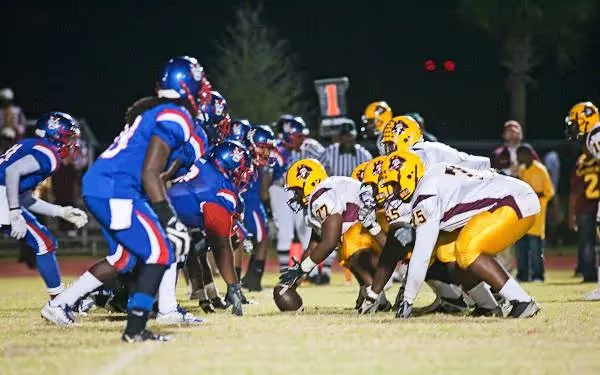
Drive about an hour north from Miami on I-95 until you hit West Palm Beach, then start heading west on Southern Blvd until the strip malls turn to sugar cane fields and the school crossing signs turn to tractor crossing signs.
Keep driving through the vast fields for another 45 minutes until Highway 441 turns into Hooker Highway. Keep driving until you hit a dead end.
That’s when you know you’ve reached Lake Okeechobee—the largest freshwater lake in Florida.
You’ll still be in Palm Beach County, which happens to be the largest geographical county in the state (just slightly larger than Miami-Dade), but you’re practically a million miles away from the Kennedyesque Palm Beach mansions on the east coast that litter the high-society pages of glossy magazines.
This is the area known as the Muck, one of the most poverty-stricken regions in the country.
It is also one of the most fertile football regions in the country.
From that dead-end at Lake Okeechobee, turn left and you will drive south into Belle Glade, a rural town of 16,681.
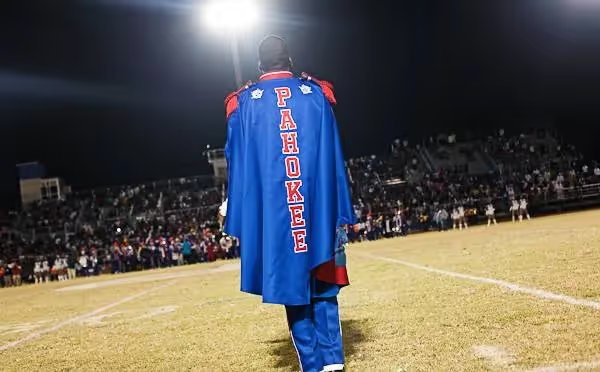
Turn right from that dead-end and you will drive north into Pahokee, a rural town of 6,598.
Only 12 miles apart, those towns and their respective high schools have produced 12 high school state championships as well as dozens of NFL players, including Anquan Boldin, Reidel Anthony, Fred Taylor, Santonio Holmes, Louis Oliver, and Johnny Rutledge, just to name a few.
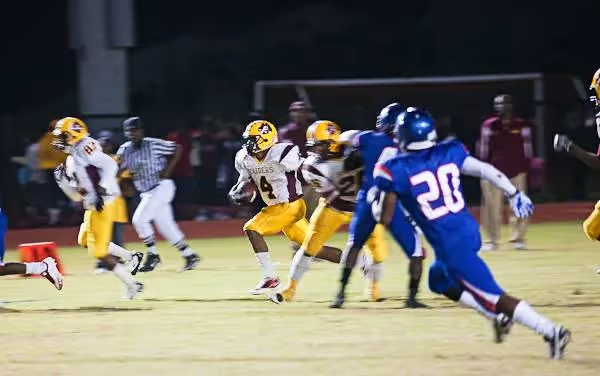
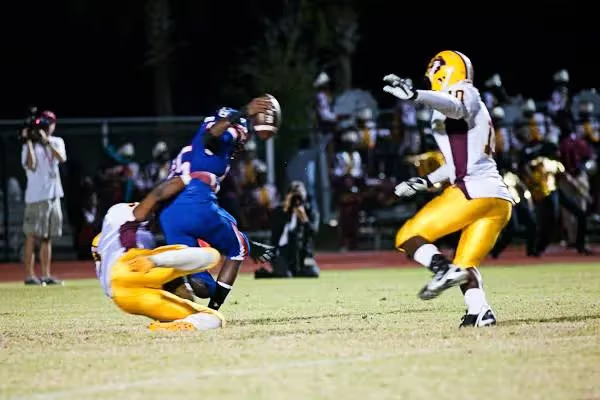
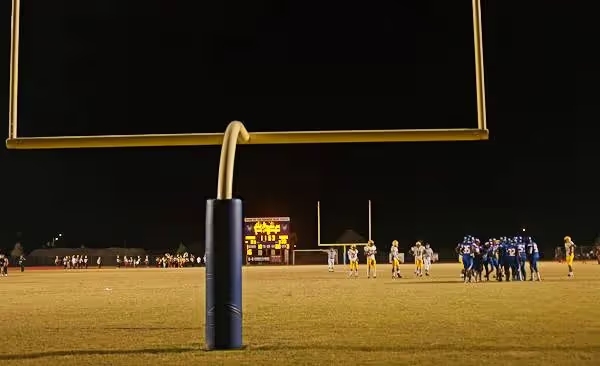
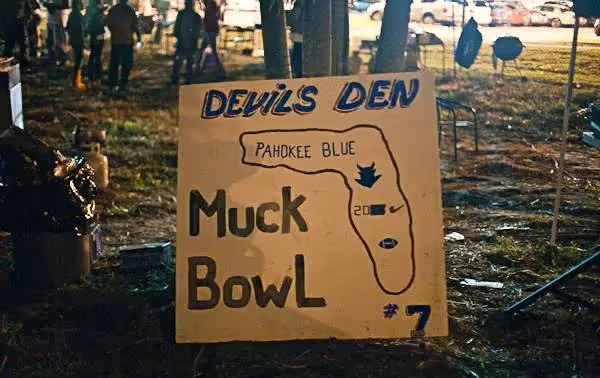
It is no wonder why the annual meeting between these two teams—a highly anticipated game dubbed the Muck Bowl—is known as one of the fiercest high school rivalries in the country. And it’s no wonder why the Muck Bowl draws so much attention from recruiters, coaches, and media each year.
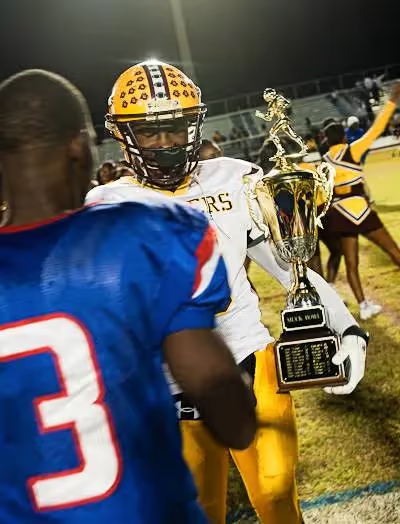
This year’s game, played last Saturday, was actually an off-year because Pahokee is having a losing season and Glades Central is expected to make the finals again.
But it still drew the same attention because nobody wanted to miss an upset in case Pahokee turned it up against their regional rivals.
Above: Glades Central ended up with the Muck Bowl trophy this year.
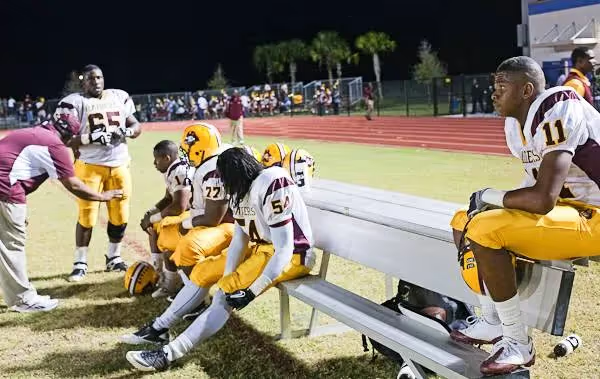
Pahokee did no such thing, losing the game 58-0 in what turned out to be the biggest blowout in Muck Bowl history. A dismal performance from a team that has won five state championships in its division over the last seven years.
(The schools’ respective marching bands put on a more competitive show at halftime. Check out the video below to judge which school has the better band and to see the Rickey Jackson interview.)
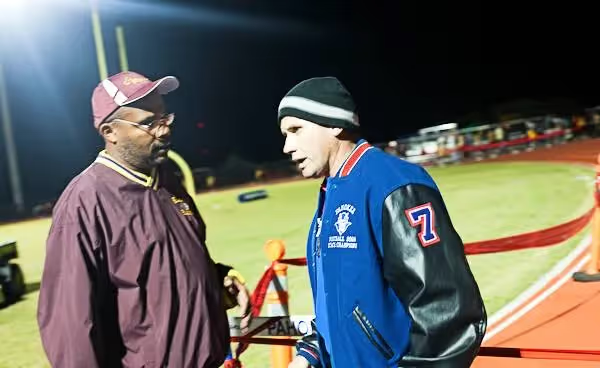
“This is the worst year I’ve ever seen them have,” said Rickey Jackson, a Pahokee alumnus who was standing on the sidelines of Saturday’s game.
“They’re rebuilding this year.”
Jackson played 14 years in the NFL as a linebacker for the New Orleans Saints and the San Francisco 49ers, earning a Super Bowl ring in 1994.
Earlier this year, he became the first Hall of Fame inductee to emerge from the Muck. He lives in New Orleans but never fails to return home for the Muck Bowl to cheer on his alma mater.
Glades Central, which has won six state championships in its division since 1971, is now 18-8 against Pahokee in the Muck Bowl since they started keeping track of these things.

In 2001, the New York Times reported that Glades Central had seven graduates playing in the NFL that season—more than any other high school in the country at the time. An amazing feat considering it has a student enrollment of 1,200 students. Most public high schools in Miami have twice that enrollment.
With an enrollment of less than 600 students, Pahokee has three graduates currently playing in the NFL: Anquan Boldin (Baltimore Ravens wide receiver), Antone Smith (Atlanta Falcons running back), and Alphonso Smith (Denver Broncos cornerback).
To put this figure into perspective, take Miami Northwestern High School with its student enrollment of 2,400. A renowned football powerhouse with three 6A state titles under its belt, it currently has three active players in the NFL (with a few active free agents that have not been signed).
So what is it about the Muck that produces such talent?
It’s the hunger. Quite literally.
Players grow up so poor in the Muck that they learn how to chase rabbits from the time they learn to walk. Once they catch the rabbits, they either bring them back to their family to eat or they sell them for a few bucks.
The average per capita income is $13,000 and the unemployment rate is a whopping 40 percent, so chasing rabbits becomes a survival skill. And as that child grows, those rabbit-chasing skills translate to speed on the football field. And in many cases, lucrative NFL contracts.
In 2009, the Muck Bowl reached the Super Bowl when Pittsburgh Steelers wide receiver Santonio Holmes (Glades Central) and Arizona Cardinals wide receiver Anquan Boldin (Pahokee) played for the championship during Super Bowl XLIII.
Holmes became Super Bowl MVP when he caught a touchdown pass with only 35 seconds left in the game to push the Steelers past the Cardinals 27-23.
The Tampa Tribune mentioned the rabbit lore in a Super Bowl preview that year.
According to local legend, when the sugarcane is burned during harvest, rabbits run from the flames and the children give chase. Rabbits are then sold on the streets for a few dollars. In theory, it’s why the area has so many speedy football players.
Boldin chased rabbits. So did Holmes.
And now—after growing up in the Muck, the rich, dark soil that provides the area’s agricultural advantages—they are chasing the Lombardi Trophy.
And they won’t be the last to emerge from the Muck onto the national stage.
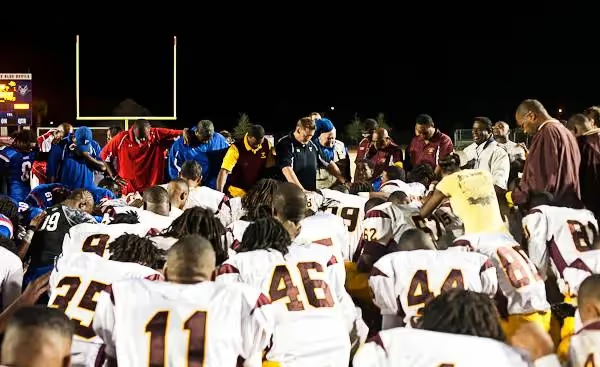
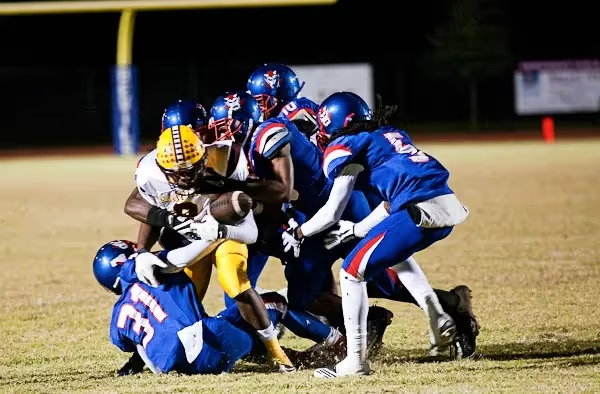

Editor’s Note: Originally published November 14, 2010. Updated in 2026 with new photography; Carlos Miller's original writing remains unchanged. Visit Muck City United for more information.

Lorem ipsum dolor sit amet, consectetur adipiscing elit. Suspendisse varius enim in eros elementum tristique. Duis cursus, mi quis viverra ornare, eros dolor interdum nulla, ut commodo diam libero vitae erat. Aenean faucibus nibh et justo cursus id rutrum lorem imperdiet. Nunc ut sem vitae risus tristique posuere.
Lorem ipsum dolor sit amet, consectetur adipiscing elit. Suspendisse varius enim in eros elementum tristique. Duis cursus, mi quis viverra ornare, eros dolor interdum nulla, ut commodo diam libero vitae erat. Aenean faucibus nibh et justo cursus id rutrum lorem imperdiet. Nunc ut sem vitae risus tristique posuere.
Check out our top local tours on Miami Beach 411—no tourist traps, just the best adventures, Everglades, and more.
Book Your TourOr book your hotel through our Hotels.com partnership—it helps keep Miami Beach 411 free and independent for everyone.
Book Your Hotel

Comment disclaimer:
Some comments below originated on a previous version of MiamiBeach411.com. As a result of platform migrations, displayed comment dates may reflect import timestamps rather than original posting dates. Many comments date back to the early 2000s and capture community conversations from that time. If you have local insight, updates, or memories to share, we welcome your comments below.
This story has been part of Miami Beach conversations for decades—and it’s still unfolding. Add your voice.
Lorem ipsum dolor sit amet, consectetur adipiscing elit. Suspendisse varius enim in eros elementum tristique. Duis cursus, mi quis viverra ornare, eros dolor interdum nulla, ut commodo diam libero vitae erat. Aenean faucibus nibh et justo cursus id rutrum lorem imperdiet. Nunc ut sem vitae risus tristique posuere.
Lorem ipsum dolor sit amet, consectetur adipiscing elit. Suspendisse varius enim in eros elementum tristique. Duis cursus, mi quis viverra ornare, eros dolor interdum nulla, ut commodo diam libero vitae erat. Aenean faucibus nibh et justo cursus id rutrum lorem imperdiet. Nunc ut sem vitae risus tristique posuere.