


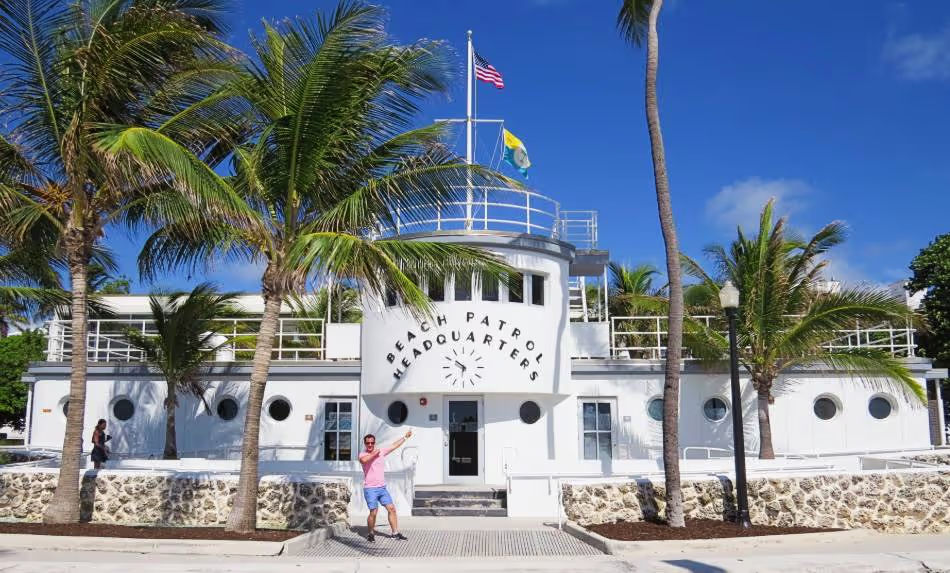
They line the streets of South Beach like colorful, curvaceous time capsules—pastel stucco facades glowing under neon, evoking cruise liners, Flash Gordon rocket ships, and pure 1930s escapism. Born at the 1925 Paris World’s Fair as a bold fusion of Art Nouveau curves and early industrial modernism, Art Deco found its spiritual home in Miami Beach. Portholes, rounded walls, streamlined edges, and vibrant hues drawn from turquoise waters and island sunsets create a playful, frivolous atmosphere that feels made for carefree vacations and hedonistic delights.
It’s no coincidence that South Beach boasts the world’s largest collection of Art Deco architecture—over 800 buildings in the Miami Beach Architectural District—and that so much of it remains preserved in its original spirit. That legacy owes much to Barbara Capitman, who founded the Miami Design Preservation League (MDPL) in 1976 alongside designers Leonard Horowitz and Lillian Barber. Their tireless work led to the area’s designation as a historic district, saving these whimsical structures from demolition and celebrating the simple pleasures that inspired them.
Though Capitman passed away in 1990 at age 69, her vision lives on through the MDPL’s walking tours (see photos below). You can join a guided tour or explore at your own pace with a self-guided iPod audio tour. Guided options run Wednesdays, Fridays, and weekends at 10:30 a.m., plus Thursday evenings at 6:30 p.m. ($20 adults, $15 seniors/students, free for MDPL members). The iPod rental ($15) lets you wander anytime until 4 p.m.—I opted for that and spent a leisurely two hours soaking in the stories of my new neighborhood.
I picked up my iPod at the Art Deco Welcome Center (1001 Ocean Drive) and headed north along sunny sidewalks, guided by jazzy 1930s music and a lively narration. The tour opens with the origin story: the devastating 1926 hurricane leveled much of Miami Beach, sparking a frantic rebuilding boom. Developers raced to construct elaborate facades—often over simple concrete-block structures—creating an opulent look that belied the modest materials beneath. Critics later used that “cheapness” to argue against preservation, but the MDPL prevailed.
The Depression era brought more buildings, funded by Northern money and, at times, organized crime. South Beach became a neutral playground for rival syndicates, free from the turf wars plaguing cities like Chicago.
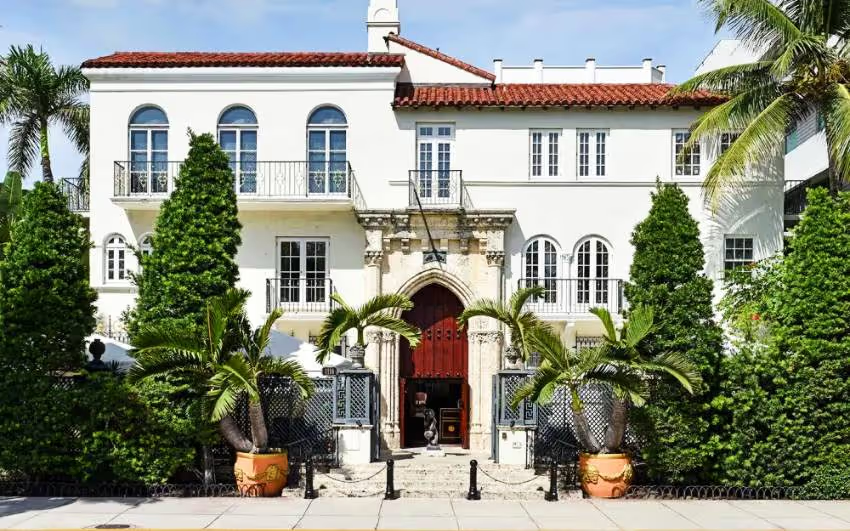
The first stop along the journey was the “Amsterdam Palace”, located just north of 11th St, at 1114 Ocean Drive. I kept looking for a Dutch castle, not realizing at first that the property in question was Versace’s own Casa Casuarina. For some reason, the audio guide declined to mention Gianni Versace by name, referring to him only as a certain “Italian fashion designer.” Likewise, any reference to his murder on the front steps at the hand of serial killer Andrew Cunanan was also absent. Instead, I learned that the present site had formerly been a dilapidated apartment building. The Preservation League, initially enthused by Versace’s purchase and renovation of the building in 1992, was quickly disappointed when the fashion designer announced that he intended to demolish the neighboring Revere Hotel in order to construct a swimming pool and a garage. Aside from its infamous associations with Versace’, this building also stands out as evidence that South Beach’s landscape isn’t limited to Deco creations: Mediterranean Revival thrives here as well, a reminder of an earlier period no less abundant in epicurean appeal.
The MDPL sued Versace, eventually agreeing to settle the matter out of court, with the stipulated compromise that the city would enact more stringent laws protecting other Art Deco structures in the surrounding area. Thus, one building was sacrificed so that 200 or so others might be protected.
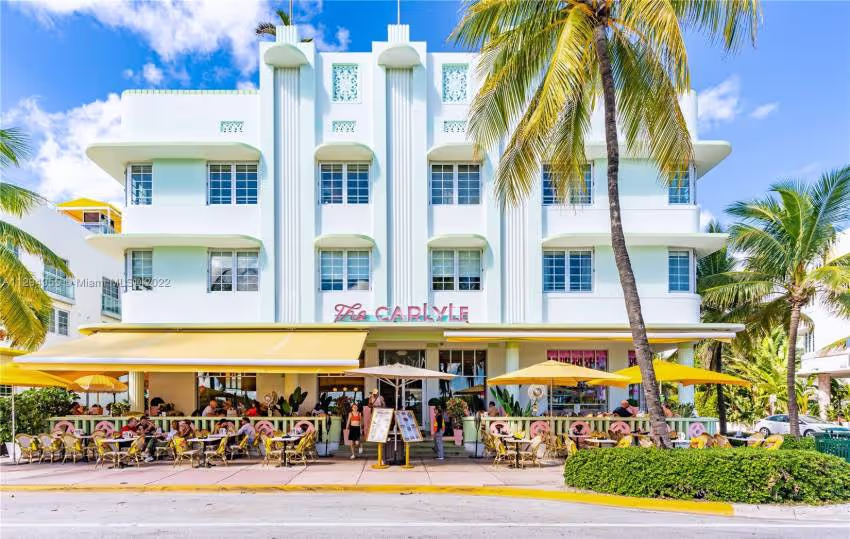

The second stop of the tour took us to a spot overlooking the Leslie and Carlyle Hotels, (1244 and 1250 Ocean Drive). Though close in proximity and painted a similar yellow color, these hotels were designed by different architects. Both exemplify typical Art Deco design, featuring horizontal bonding, windows in bands, eyebrows (concrete overhangs) above the windows, and strong verticals in front.
Whereas the Leslie was more functional and basic, the Carlyle was more rounded and “exuberant”, with streamlining used to convey a sense of speed, “sweeping” eyebrows, and the rule of 3: three strong vertical elements in front, which wrap around the building like ribbons. Though the recording doesn’t inform you of this fact—I suspect it may have been recorded in the early 90’s—you might be interested in knowing that the 1996 Robin Williams/Nathan Lane movie “The Birdcage” was filmed at the Carlyle.
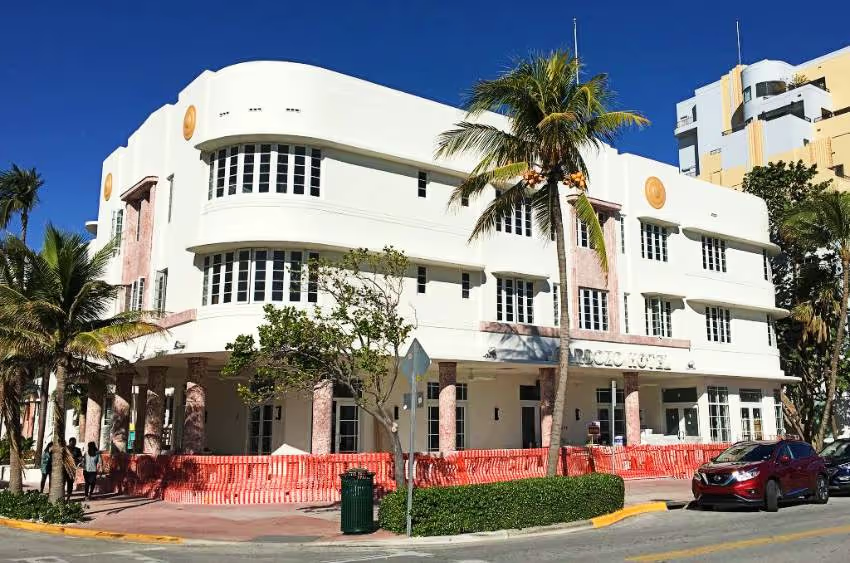
The Cardozo Hotel (1300 Ocean Drive) was built in 1939 and designed by architect Henry Hohauser. Here we learn that while many of the local hotels were named after establishments in New York and daughters of the designers, the Cardozo Hotel got its name from Benjamin Cardozo, one of the first Jewish jurors appointed to the US Supreme Court. The Cardozo was the site of the first Deco weekend, and housed the original offices of Barbara Capitman. The architecture here is very rounded, like the fender of an old Studebaker, and features Keystone trim, which, while dyed and made to look like marble, is actually a porous limestone.
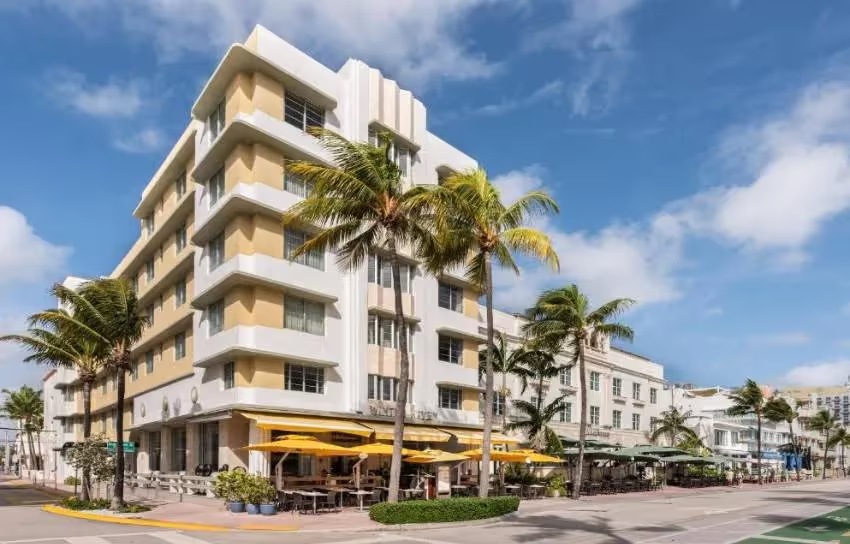
My audio guide informed me the next jewel in the crown of Ocean Drive, was the Winterhaven Hotel (1400 Ocean Drive), designed in 1939 by architect Albert Anis (1889-1964), one of a group of American architects who was pivotal in the formation of the South Beach cityscape of today. While others were ornate in their approach, austerity was Anis’ middle name, evident in the Winterhaven, along with his other creations, the Leslie, the Abbey, and the Temple Emanuel.
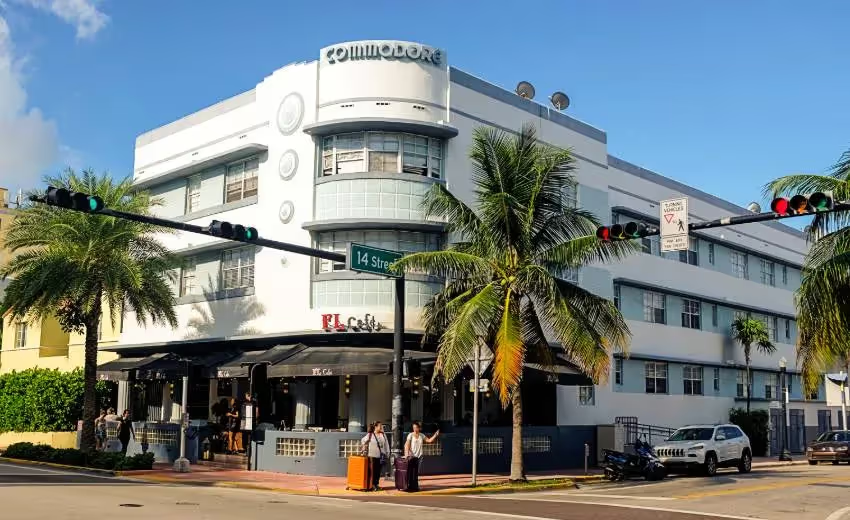
The fifth stop on the tour was waiting just around the corner at Collins and 14th Street: the Commodore Hotel (Southwest corner). Built in 1936 and designed by Henry Hohauser, it was made from inexpensive materials, featuring concrete block facades. This Art Deco creation is rich in ornamentals specific to the period: eyebrows, curved corners, and four round emblems, called “bosses” descending along the side, which provided an “odd charm” to the place, but also fodder for the anti-preservationists, who claimed that “eyesores” like this weren’t worth preserving.
.avif)
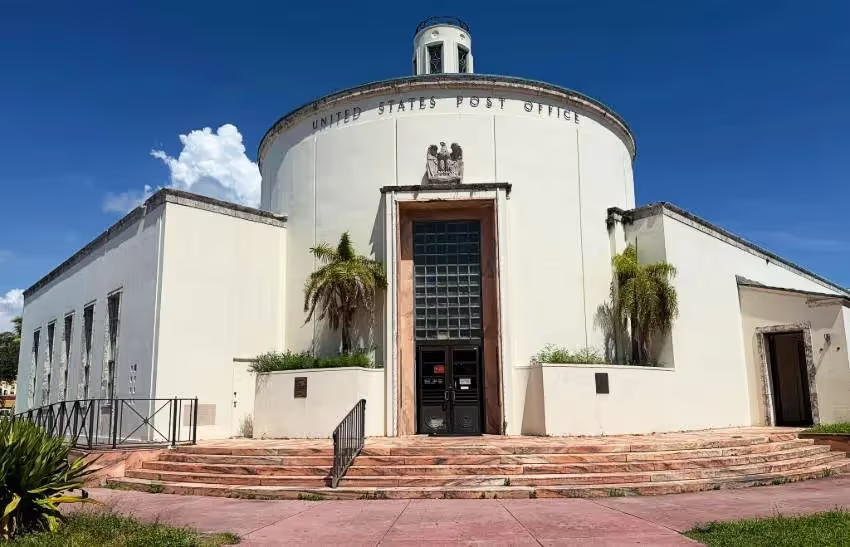
My audio guide then instructed me to proceed along Fourteenth Street, crossing Washington. From there, I was told to take a left and stop at 13th. Before me now was a building with which I’d already garnered a certain familiarity: the Post Office (Washington and 13th St.). This building was manufactured in a “stripped classic” design, in a style known as Depression Moderne. By 1977, it had seen better days, and the MDPL petitioned the federal government to refurbish it. That they did, and what we have today is perhaps one of the most striking of its kind.
Inside, muralist Charles Hardman, with funding from the WPA, created an elaborate painting of Ponce de Leon’s invasion of Florida. Overhead, the ceiling mural features a radiant sun, ablaze in a forest green sky.

The Old City Hall Building was built after the 1926 hurricane to prove Miami Beach’s resilience. After the storm, real estate developer Carl Fisher (for whom Fisher Island was named) reconstructed the City Hall as a way of showing that Miami Beach would come back. It was constructed in a Mediterranean Neo-Classical design, with four urns placed in the topmost balcony, in defiance of future hurricanes. They’re still there, apparently unmoved by any successive storms, which, unfortunately, is more than I can say for the building beneath. It appears to be undergoing some intense renovations, with no end in sight. Likewise, the optimistic Mr. Fisher lost his fortunes after the stock market crash in 1929, and finished off his days living in a small cottage in Miami Beach, where he supported himself by doing odd jobs for friends. Quite an unassuming end for the man who’d been pivotal in the creation of the Indianapolis Motor Speedway and promoter of the 1920s Florida Land Boom, at which time his net worth had been near $100 million! By the 70’s this City Hall was replaced by a larger building, located at 1700 Convention Center Drive
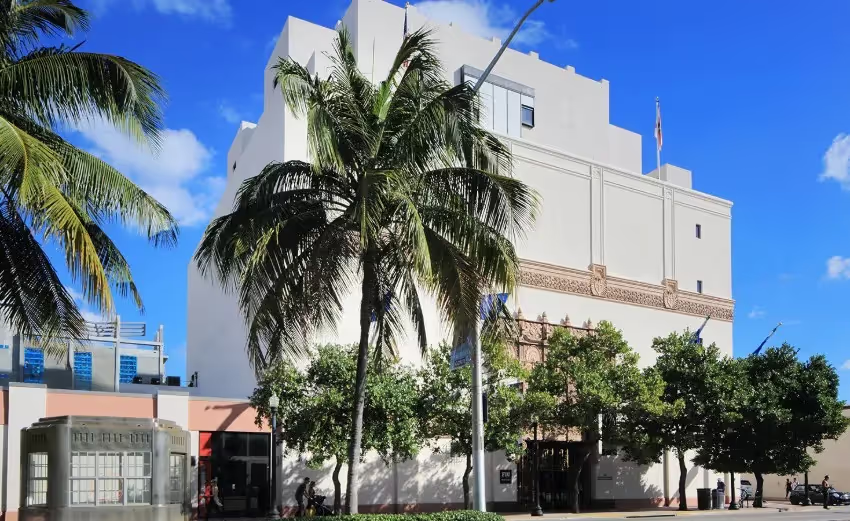
Next up is the Washington Storage Building, at 1001 Washington. The audio recording apparently predates this building’s transformation in 1997 into the Wolfsonian Museum, a collection of late 19th to mid-20th century decorative and propaganda arts, run by Florida International University. Prior to its use in the early 90’s as a private collection for the founder Mitchell Wolfson, Jr., it served as a warehouse for the citizens of Miami Beach. Wealthy northerners could safely store their valuables in this secure Mediterranean Revival structure, during their extended visits to this then-untamed jungle.
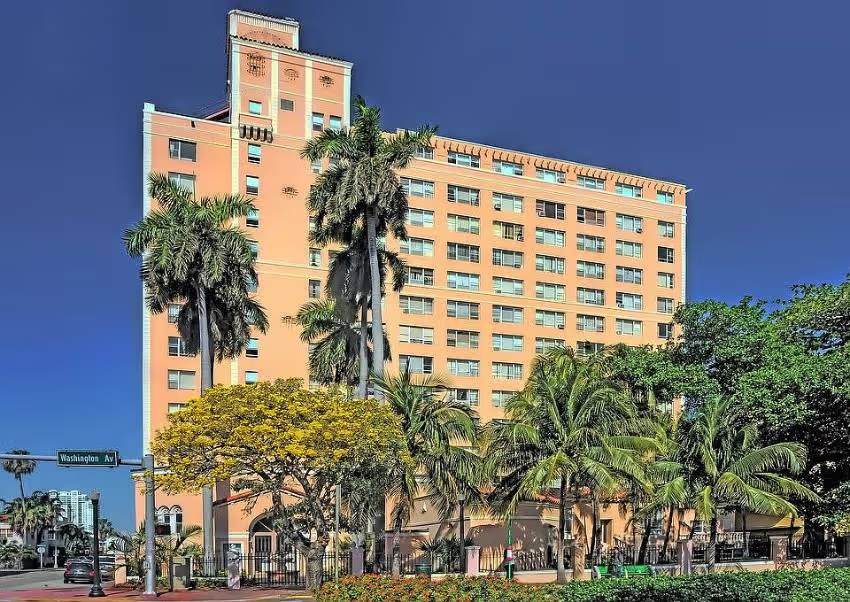
At number 9, we’re led to the corner of 9th and Washington and told to gaze to toward the southwest. Rising high in the distance with a long-forsaken clock dial on its tower is the Blackstone Hotel, one block away on 8th St., once a popular lodging spot for Jewish and African American visitors. It was here that George Gershwin was said to have composed part of the musical Porgy & Bess. When the early developers envisioned Miami as a playground for the wealthy, the narrative laments, it was one in which only the non-Jewish rich were allowed to participate. Most properties north of 12th Street were designated as “gentiles only”, while in South beach—especially the area below 5th St—welcomed tourists, residents and property owners who were Jewish. These people played a significant role in the development of South Beach as we know it today, which is, the narrator explains, “a neighborhood that knows no misfits.”
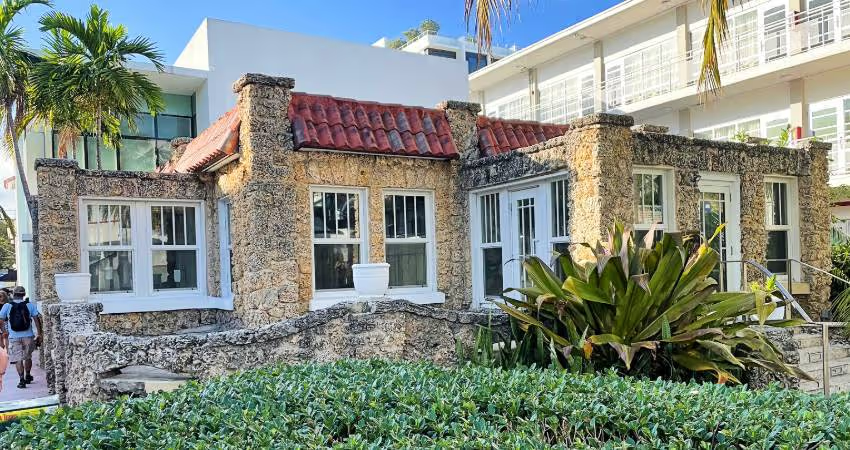
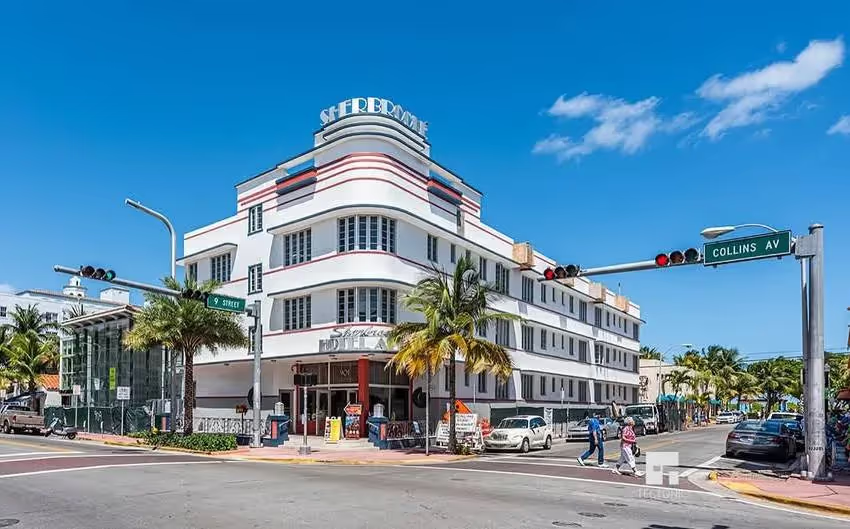
Crossing 9th Street, I then proceeded to the southwest corner of Collins Avenue, where I was presented with a study in contrasts: the Coral Rock House (900 Collins Avenue) and the Sherbrooke Hotel (facing it at 901 Collins). The Coral Rock House, originally built in 1915 and once the home of Avery Smith, operator of the first ferry service between Miami and Miami Beach. The back and sides had been completely demolished, leaving only the front wall facing Collins Avenue. The workers explained to me that while the coral facade in front would be preserved, the rest of the property was being cleared to make way for a condo and shopping complex. The site of this historic building in tatters was a painful reminder that the Preservation League’s powers were not all-encompassing.
The narrator, oblivious to these recent developments in his distant 90’s world, cheerfully explained that the Coral Rock House’s construction was typical of buildings from the 19th century, while the Sherbrooke across the street, built in 1947, was the poster child of Nautical Deco. Indeed, with its portholes and silver railings, it looked like it was about to set sail.
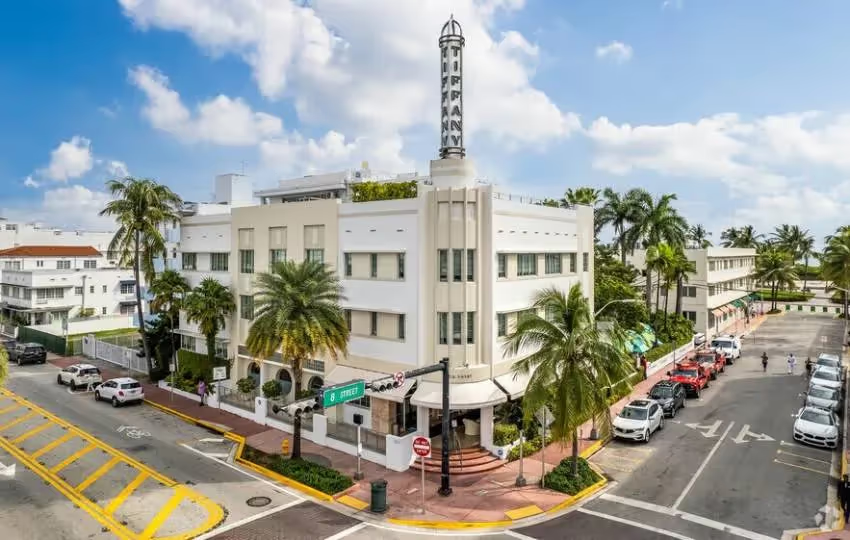
The Tiffany Hotel, one block south at 801 Collins, came in at number 11 on the list. A child of 1939, it flaunted eyebrows, rounded corners and streamlined design. Designed by architect Al Murray Dixon, the Tiffany is less whimsical and more Buck Rogers. With its dramatic spire on top, it looked like a prop from an old sci-fi serial, a space vessel, ready to take flight. These spired buildings, once common on Collins, are presently all but extinct.
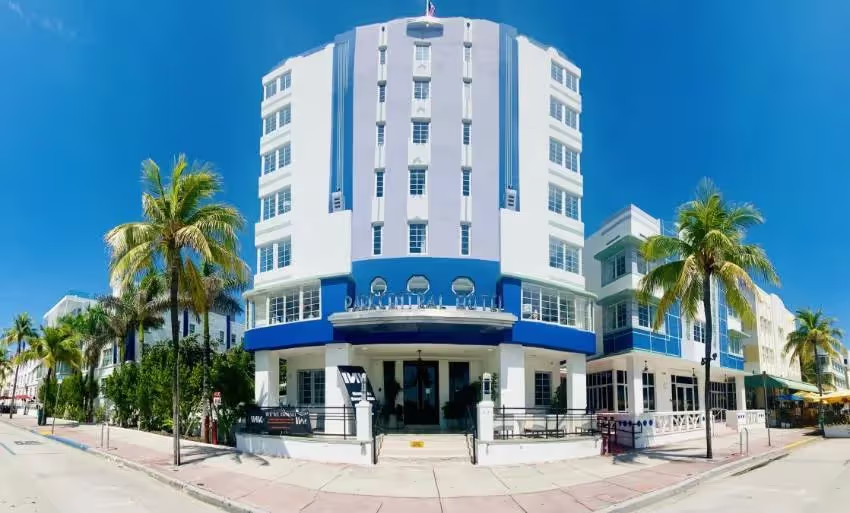
The 12th stop on the journey took me back to Ocean Drive, where I found myself standing across the street at the Park Central Hotel (640 Ocean Drive). Known as the blue jewel of Ocean Drive, the Park Central, built in 1937, is said by many to have been Hohauser’s greatest contribution. It features 3 octagonal portholes above the door, bosses, horizontal striping (instead of eyebrows) and vibrant coloring: periwinkle blue, with sea green trim, mimicking the natural world surrounding it. It was here where I learned of Leonard Horowitz and his color palette: during his tenure on the MDPL, Mr. Horowitz selected 36 pastel colors, which were required by city ordinance to appear on all the local buildings.
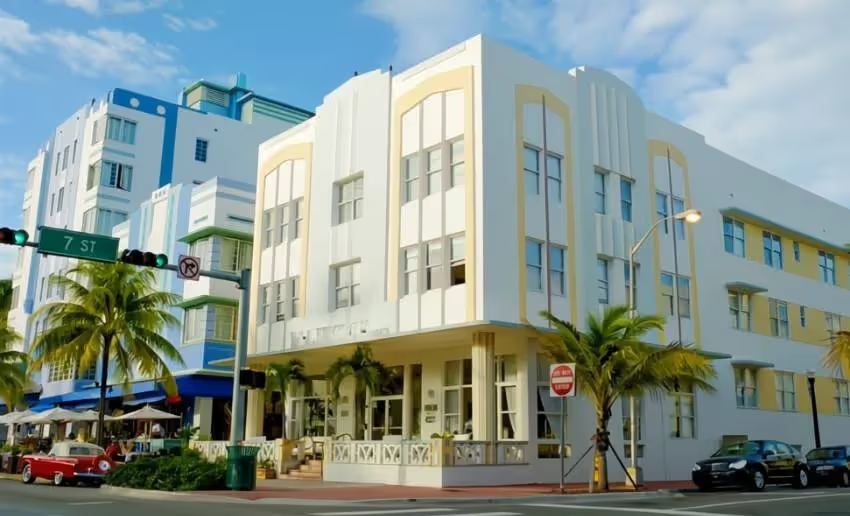
One block north, near the corner of 7th and Ocean, sat the Majestic Hotel (700 Ocean), which, with ropes and pulleys draped over the front, appeared to be in the midst of a face-lift. Designed in 1940, this Albert Anis creation abandoned horizontal linkage and eyebrows in favor of a mimicry of the pre-deco Vienna Succession style, with rectolinear windows and arched cornices, seemingly straight out of Fritz Lang’s Metropolis. Despite this digression, it maintains a style which looks decidedly Deco.
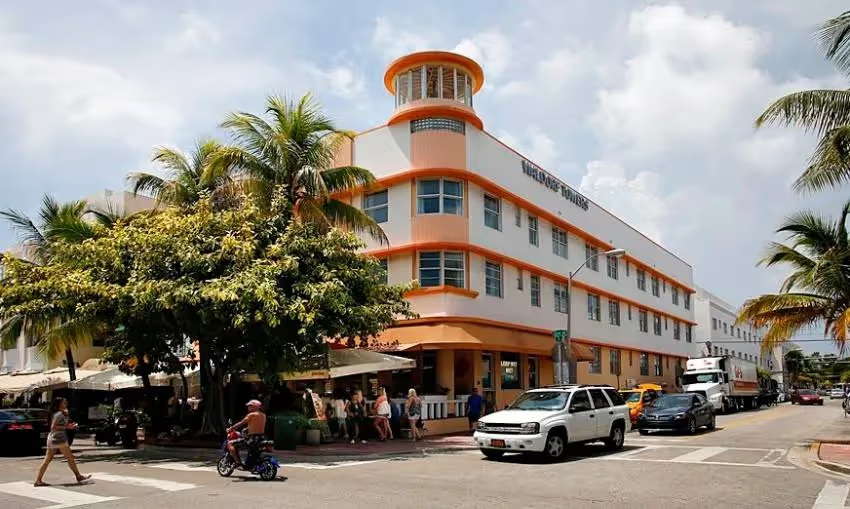
The Waldorf Towers Hotel marks the culmination of the tour, recognizable by its signature watchtower, presiding over its location at 860 Ocean Drive. This feature was actually condemned at one point and taken down, only to be later replaced. Its colorful facade, a mix of pink and yellow and cream, drew its inspiration from the palette of Leonard Horowitz, who envisioned South Beach as an adult playground, which, “unlike the manufactured environments of places like Disneyworld and Epcot, is a real neighorhood, a setting which, while possessing the convenience of the 80’s, would retain the rich atmosphere of the 30’s.” Unfortunately, Leonard Horowitz didn’t live long enough to enjoy the fruits of his efforts: he died in 1989.
The tour ended by recounting Capitman’s passing in 1990, and a Miami Herald editorial of the time, which, remembering her, proclaimed:
“She had wisdom and tenacity; she imagined and dreamed; she clung and triumphed. The sadness of her passing is offset by the life and Art Deco beauty that now exists because of and in tribute to her vision.”
As a clarinet played a lively version of Moon Over Miami, I continued along Ocean Drive to return my ipod at the Art Deco headquarters, sensing a newfound connection with my new hometown, surprised to learn that my own impressions of its appeal had also been the vision of its creators.
In 2026, South Beach’s Art Deco District remains one of the world’s best-preserved collections. The Wolfsonian thrives as a museum, many hotels (Carlyle, Cardozo, Park Central, etc.) are restored and operating, and Ocean Drive’s pastel palette endures. The neighborhood is more vibrant and walkable than ever.
Doug’s tour brings the exuberant spirit of South Beach’s Art Deco era to life—history, architecture, and a touch of Miami magic. For more information about the audio tour, visit the Miami Design and Preservation League website: MDPL.org
Editor’s Note: Originally published September 14, 2007. Updated in 2026 with new photography. Doug Eames’ original writing remains unchanged.

Lorem ipsum dolor sit amet, consectetur adipiscing elit. Suspendisse varius enim in eros elementum tristique. Duis cursus, mi quis viverra ornare, eros dolor interdum nulla, ut commodo diam libero vitae erat. Aenean faucibus nibh et justo cursus id rutrum lorem imperdiet. Nunc ut sem vitae risus tristique posuere.
Lorem ipsum dolor sit amet, consectetur adipiscing elit. Suspendisse varius enim in eros elementum tristique. Duis cursus, mi quis viverra ornare, eros dolor interdum nulla, ut commodo diam libero vitae erat. Aenean faucibus nibh et justo cursus id rutrum lorem imperdiet. Nunc ut sem vitae risus tristique posuere.
Check out our top local tours on Miami Beach 411—no tourist traps, just the best adventures, Everglades, and more.
Book Your TourOr book your hotel through our Hotels.com partnership—it helps keep Miami Beach 411 free and independent for everyone.
Book Your Hotel

Comment disclaimer:
Some comments below originated on a previous version of MiamiBeach411.com. As a result of platform migrations, displayed comment dates may reflect import timestamps rather than original posting dates. Many comments date back to the early 2000s and capture community conversations from that time. If you have local insight, updates, or memories to share, we welcome your comments below.
This story has been part of Miami Beach conversations for decades—and it’s still unfolding. Add your voice.
Lorem ipsum dolor sit amet, consectetur adipiscing elit. Suspendisse varius enim in eros elementum tristique. Duis cursus, mi quis viverra ornare, eros dolor interdum nulla, ut commodo diam libero vitae erat. Aenean faucibus nibh et justo cursus id rutrum lorem imperdiet. Nunc ut sem vitae risus tristique posuere.
Lorem ipsum dolor sit amet, consectetur adipiscing elit. Suspendisse varius enim in eros elementum tristique. Duis cursus, mi quis viverra ornare, eros dolor interdum nulla, ut commodo diam libero vitae erat. Aenean faucibus nibh et justo cursus id rutrum lorem imperdiet. Nunc ut sem vitae risus tristique posuere.