

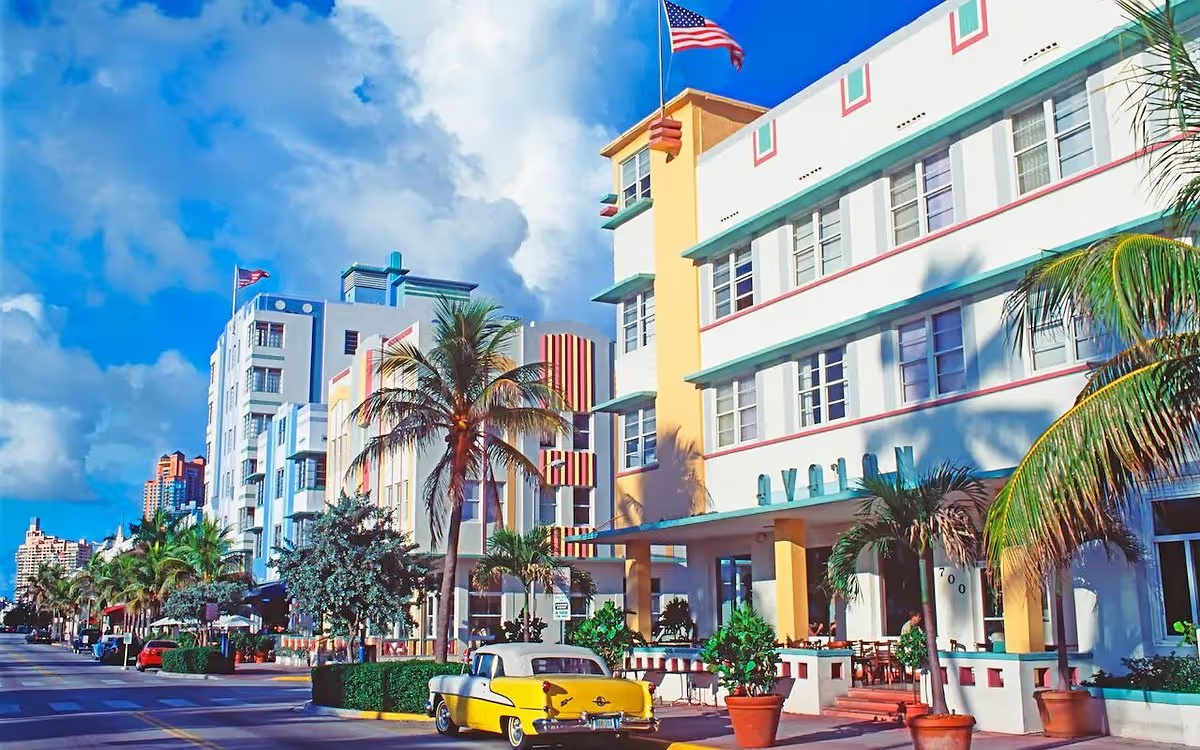
The Art Deco District in Miami Beach contains the largest concentration of 1920s and 1930s resort architecture in the world. These vibrantly colored buildings capture an era when Miami was promoted as a “tropical playground,” drawing visitors from across the country. To experience the district up close and appreciate its unique architectural styles, check out our South Beach Walking Tour guide, which highlights the most iconic Art Deco and Med-Deco buildings along a curated path through the heart of the city.
Vernacular construction was the earliest method used on Miami Beach, reflecting practical building techniques imported by settlers. These wood frame and masonry structures were simple, rectilinear, and functional, often enhanced with modest Classical details, like the engaged pilasters of the Atlantic Hotel (1915). Most vernacular buildings were one or two stories, with gabled or hipped roofs and single-story porches, creating a secluded, resort-like character.
Bungalows became popular as residential architecture in early Ocean Beach. Often based on mail-order plans, these wood frame homes featured gabled roofs, overhanging eaves, front porches, and large sash windows for cross ventilation. Elevated two to three feet above grade, they adapted perfectly to Miami Beach’s coastal climate while offering comfortable outdoor living spaces. Notable local architects, including V. H. Nellenbogen, also designed bespoke bungalows, adding distinction to the style.
Mediterranean Revival architecture was the signature style of Miami Beach’s first boom period. Drawing on Italian, Moorish, North African, and Spanish motifs, it was used in hotels, apartments, and residences. Key features include stucco walls, low-pitched terra cotta roofs, arches, scrolled parapets, and Classical detailing. This style projected the image of a glamorous European seaside resort, perfectly suited for Miami Beach’s tourist economy.
“Med-Deco” fused the familiar Mediterranean form with emerging Art Deco ornamentation, creating a bridge between tradition and modernity. Clean ziggurat rooflines replaced scrolled parapets, while sloped tile roofs complemented bold Art Deco entrances. Prominent architects like Henry Hohauser, T. Hunter Henderson, and V. H. Nellenbogen mastered this hybrid style, which featured patterned or incised stucco, keystone detailing, and steel or wood windows.
Art Deco marked a break from revivalist architecture. Influenced by the 1925 Paris Exposition des Arts Décoratifs, Miami Beach Art Deco emphasized angular, stepped-back forms, strong vertical accents, and geometric ornamentation. Local variants incorporated nautical motifs, tropical flora, and fauna, executed in materials like bas-relief stucco, glass block, vitrolite, metals, and terrazzo. This signature vocabulary is now recognized worldwide as the hallmark of Miami Beach’s Art Deco architecture.
Evolving from Art Deco, Streamline Moderne embraced industrial aesthetics inspired by automobiles, airplanes, and ocean liners. Horizontal lines, rounded corners, “eyebrow” ledges, and nautical motifs defined this style, emphasizing motion and speed. The Sherbrooke Hotel at 901 Collins Avenue is a classic example, with its curved façade, smooth stucco walls, and nautical-inspired details reflecting the era’s fascination with modern transportation and streamlined design.
Postwar Deco and Postwar Modern buildings extended the Art Deco vocabulary with horizontal and vertical compositions, cantilevered canopies, brick, permastone, cast architectural block, and open-air floor plans. Modernist principles emphasized functional simplicity, while retaining elements like rounded eaves, marine motifs, and sculptural staircases. These structures paid homage to earlier Miami Beach styles while accommodating contemporary needs.
Eclectic buildings in Miami Beach adopted styles from other times or places, often for dramatic effect. For example, Henry Hohauser’s English Tudor cottage at 321 Collins Avenue stands out for its steep gables and Gothic details.
Garden Style architecture emphasized open-air courtyards, shared gardens, and U-shaped building layouts. These structures, commonly two to three stories, created community spaces while incorporating features like cantilevered balconies, decorative railings, and overhanging roofs, balancing privacy with social interaction.
The following buildings are iconic examples of Miami Beach’s Art Deco legacy and are must-sees for visitors:
These landmarks illustrate the diverse vocabulary of Miami Beach Art Deco, from geometric elegance to Streamline Moderne curves and whimsical tropical motifs. They remain central to the city’s identity and continue to draw visitors, historians, and architects from around the world.
The Miami Beach Art Deco District remains the world’s premier collection of 20th-century resort architecture, preserving the imagination, glamour, and tropical fantasy of the 1920s through 1960s. Its streetscapes, hotels, and residences are not only visually iconic but also historically significant, providing a tangible connection to Miami Beach’s evolution as a global tourist destination.
Editor's Note: Originally published in 2002 and updated in 2026 to reflect the most current information.

Lorem ipsum dolor sit amet, consectetur adipiscing elit. Suspendisse varius enim in eros elementum tristique. Duis cursus, mi quis viverra ornare, eros dolor interdum nulla, ut commodo diam libero vitae erat. Aenean faucibus nibh et justo cursus id rutrum lorem imperdiet. Nunc ut sem vitae risus tristique posuere.
Lorem ipsum dolor sit amet, consectetur adipiscing elit. Suspendisse varius enim in eros elementum tristique. Duis cursus, mi quis viverra ornare, eros dolor interdum nulla, ut commodo diam libero vitae erat. Aenean faucibus nibh et justo cursus id rutrum lorem imperdiet. Nunc ut sem vitae risus tristique posuere.
Check out our top local tours on Miami Beach 411—no tourist traps, just the best adventures, Everglades, and more.
Book Your TourOr book your hotel through our Hotels.com partnership—it helps keep Miami Beach 411 free and independent for everyone.
Book Your Hotel


Comment disclaimer:
Some comments below originated on a previous version of MiamiBeach411.com. As a result of platform migrations, displayed comment dates may reflect import timestamps rather than original posting dates. Many comments date back to the early 2000s and capture community conversations from that time. If you have local insight, updates, or memories to share, we welcome your comments below.
This story has been part of Miami Beach conversations for decades—and it’s still unfolding. Add your voice.
Lorem ipsum dolor sit amet, consectetur adipiscing elit. Suspendisse varius enim in eros elementum tristique. Duis cursus, mi quis viverra ornare, eros dolor interdum nulla, ut commodo diam libero vitae erat. Aenean faucibus nibh et justo cursus id rutrum lorem imperdiet. Nunc ut sem vitae risus tristique posuere.
Lorem ipsum dolor sit amet, consectetur adipiscing elit. Suspendisse varius enim in eros elementum tristique. Duis cursus, mi quis viverra ornare, eros dolor interdum nulla, ut commodo diam libero vitae erat. Aenean faucibus nibh et justo cursus id rutrum lorem imperdiet. Nunc ut sem vitae risus tristique posuere.