


Every great metropolis has one—a spacious apportionment of open land, synonymous with the city itself, where you’ll find joggers, friendly ducks, picnickers, exhibitionists, and maybe, if you’re lucky, a little isolation to remind you that this whole concrete jungle motif is but a recent development in our collective human experience.
In Miami, by and large, the green space is mostly blue: as in ocean and abutting beaches, which provide the main local retreat from the complications of civilization. A map of the intertwining cities of South Florida might momentarily impress you with its ample patches of green, but a closer inspection reveals that many of them are golf courses.
This week, I went off in search of spaces where you can find relief from the big city. The good news is that there is still a little outdoor real estate left in the area that doesn’t contain sandtraps and caddies—but the bad news is that Miami hasn’t done a very good job of linking the concepts of free and park.
Of the eleven I checked out, a hodgepodge of private, state, county, and municipal parks, only five had no admission charge whatsoever: Tropical Park, AD “Doug” Barnes, Pinecrest Gardens, Flamingo Park, and The Miami Beach Botanical Gardens—and, technically speaking, the last three don’t really count, since they’re not in Miami at all…
Even among the municipal and county parks officially designated as “free,” there are often “parking fees” which negate the savings.
Generally, those affiliated with the Florida State Park system charge a nominal fee per car (or less for single-occupants), and smaller amounts for bikes and pedestrians. Frequent visitors to the state parks may want to purchase an annual pass (now around $60 for individuals or $120 for families), which entitles you to unlimited admissions to most of them (some surcharges may apply), with exceptions like certain wildlife parks where discounts apply instead. Unfortunately, this annual pass does you no good at national or other parks where fees are charged, but at least there is one consolation: despite the lack of adequate municipal parkland, the state parks here are among the most beautiful anywhere to be found—assuming you’re willing to pay for the scenery.
My visits comprised area parks in both categories—free and fee—and this is how they stacked up:
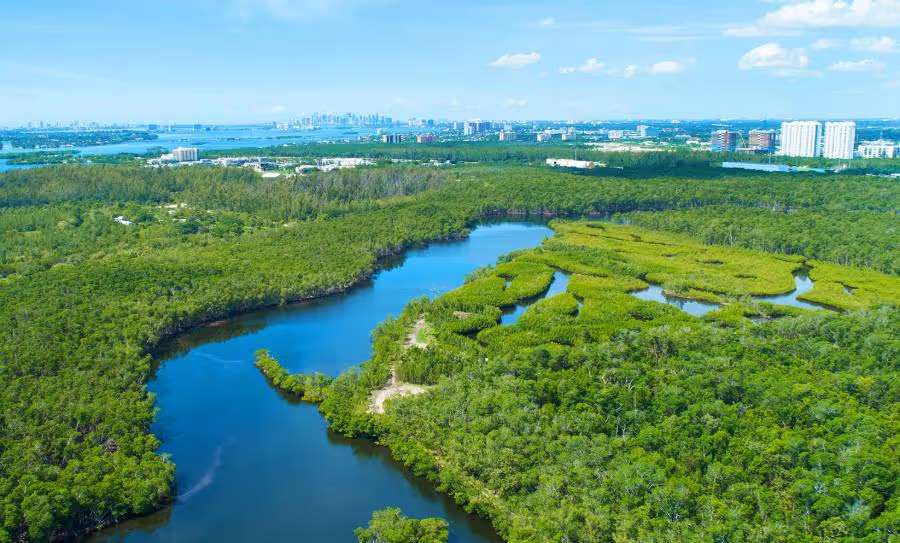
If your nature experience requires some extreme heart-pumping excitement, and the Monster Truck Show is still a few months away, take a little trip out to Oleta River State Park in North Miami (3400 NE 163rd St., east of I-95, Miami, 305-919-1844), where you can quench your need for speed as you mountain bike your way around wild curves and over spine-tingling hills and dips. You can select from any of the 15 miles of cross-country trails ranging from beginner to intermediate and advanced, which take you on a whirlwind journey through dense, hilly Australian Pine forests and alongside boggy lagoons. This spacious enclave, with its 1,043 acres, is actually the largest urban park in the entire Florida State Park System.
If, on the other hand, serenity is your game, then kayaking or canoeing is the answer, with a variety of waterways to choose from. Start off in a murky, mangrove-lined lagoon (where emerging manatee snouts occasionally disturb the water’s stillness), and soon you’ll find yourself adrift in a cove of lazy sailboats. Minutes later, you’re in Biscayne Bay, where a series of small, uninhabited palm tree-studded islands tempt the Robinson Crusoe in you. No boat, no bike, no motor car? No worries! The Blue Moon Outdoor Center has a convenient location just off the main park road, shortly after the entrance station, where you can rent bikes, canoes, and kayaks at reasonable hourly rates. Guided tours are also available.
(Note: Admission is now $6 per vehicle for 2–8 people, $4 for single-occupant or motorcycle, $2 for pedestrians/bicyclists.)
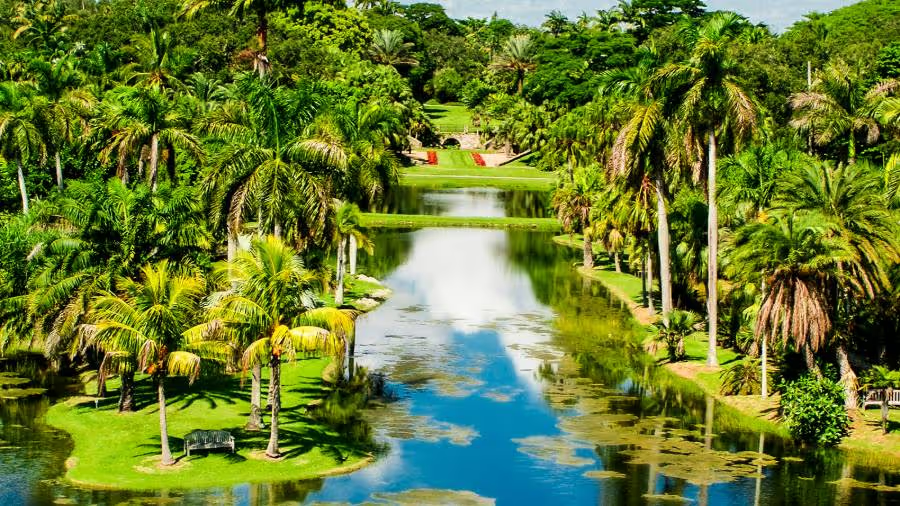
No park says exotic like Fairchild Tropical Botanic Gardens (10901 Old Cutler Rd., Miami, FL 33156, 305-667-1651), a privately-owned property first established here in 1938 by plant enthusiasts David Fairchild and Col. Robert F. Montgomery, designed by architect William Lyman Phillips. Palms, cycads, bromeliads, and rare tropical flowers aplenty adorn this 83-acre wonderland, the largest of its kind in the continental United States; interspersed with these flora are 11 crystal-clear lakes, which, in addition to providing great scenic beauty, offer routes of escape for the park’s thriving, yet shy, belly-flopping iguana population. Of all the parks in Miami, this is, hands down, the most visually stunning, a true vision of Eden. But don’t take my word for it: see for yourself!
HELPFUL HINTS: If the sheer expanse of the place appears overwhelming, just hop on one of the frequently circulating tourist trams, which will take you on a free guided tour of the various sections. The entrance fee is hefty (now around $25 for adults), but its best-kept secret includes occasional donation-style or eco-discount days—check the site for the latest perks like $5 off for walking/biking/public transit.
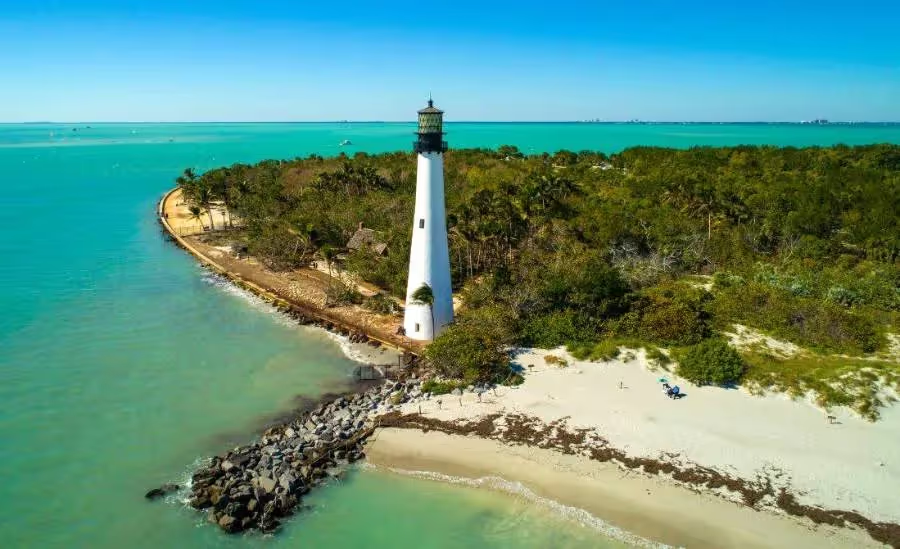
Just across the Rickenbacker Causeway lie the neighboring isles of Virginia Key and Key Biscayne, where for a toll (still modest), you’ll feel like you’ve been transported back in time to an earlier Miami—one without so much crazy development, traffic, and bustle. People relax on narrow beaches amid the coconut palms, listening to radios while they grill their barbacoa. Antiquated marquees promote the simpler roadside attractions of yesteryear, while you ride by, humming the theme song to Flipper. Follow the road to the southern end of the island—past the lush palm groves and Key Biscayne Village—and you’ll soon arrive at Bill Baggs Cape Florida State Park (1200 South Crandon Blvd., Key Biscayne, 305-361-5811).
Its once-abundant supply of non-native plants was wiped out by Hurricane Andrew in 1992. What has grown in its place is all genuine, local South Florida flora, which provides a commodity all-too-lacking in South Florida: shade. There are great paths all around for both hiking and biking throughout the preserve, which make you feel miles away from civilization, though South Beach is in reality only about 15 minutes or so away. The lighthouse at the far end of the park makes a logical destination. Built in 1845, it’s the oldest standing structure in Miami-Dade. And, if you’re lucky enough to catch it when it’s open, you can take the stairway to the top, taking in a bird’s-eye view of the primitive landscape below. The lighthouse perches beside a lazy stretch of beach, consistently rated among the top 10 beaches in America, where sunburned visitors share the space with a few frisky raccoons, who delight in pillaging through their discarded treasures. Bicycle and kayak rentals are also available.
(Note: Admission is now $8 per vehicle for 2–8 people, $4 single-occupant/motorcycle, $2 pedestrians/bicyclists.)
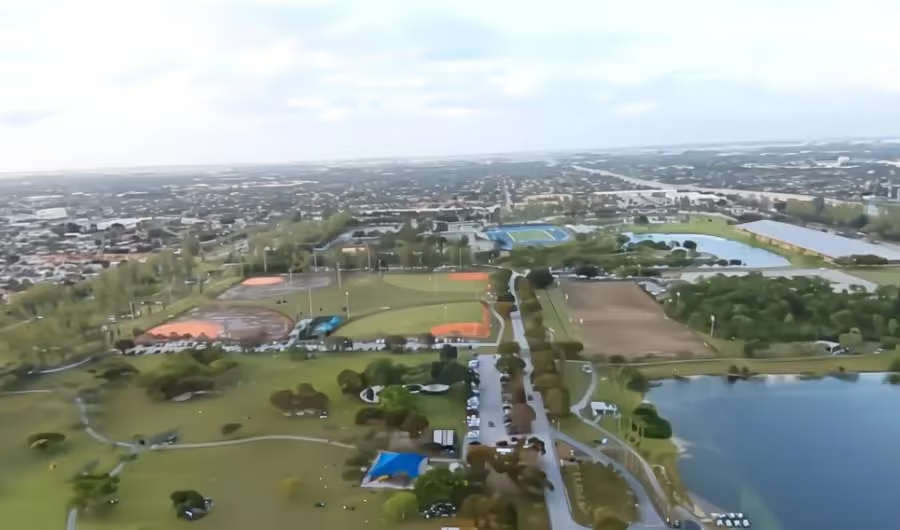
Tropical Park (7900 SW 40th Street, Miami, FL, 305-226-8315) must have been designed by a PE coach. As soon as you enter, you’re instantly bombarded by all things sporty. There are baseball, soccer, and football fields, a stadium with a track, biking paths, handball and basketball courts, and even an equestrian center. What hasn’t been dedicated to sports of one sort or another has been left to the picknickers. Numerous pavilions serve as the sites for family get-togethers: salsa music reverberates through the air accompanied by the aroma of barbecued meats, while children and wayward adolescents roam the surrounding fields, on foot, bicycle, or pony-back.
An oddly out-of-place hill rises toward the southern end of the park, whose summit provides a scenic view of all these goings-on. Toward the back, a series of lakes takes over the landscape, offering a semblance of serenity, but the Palmetto Freeway is just a few yards away to call you back to urban reality should you momentarily forget your bearings.
Nearby, a local curiosity offers its own carney version of Christmas: Santa’s Enchanted Forest. (It’s still a holiday staple, though prices and vibes have evolved—check current details if you're visiting in season.)
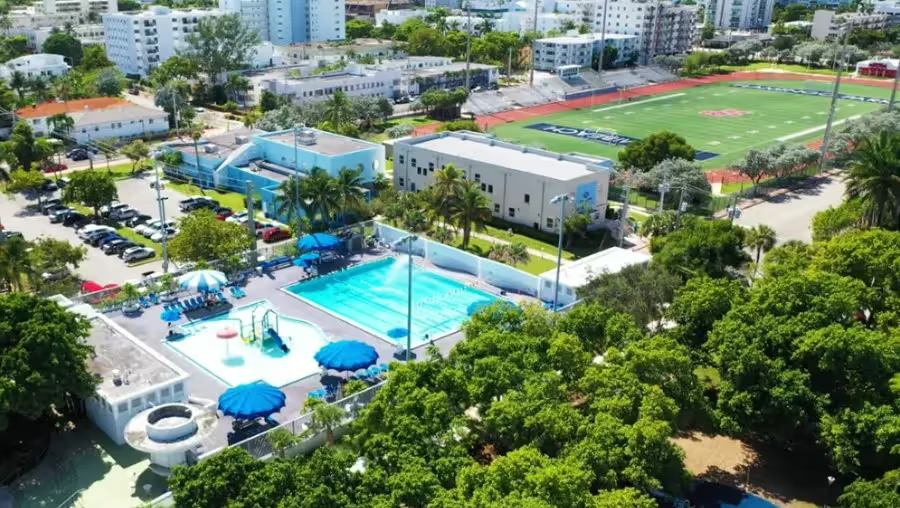
Topographically speaking, South Beach’s Flamingo Park (1000 12th St., Miami Beach, FL, 305-673-7761) is in the small what Tropical Park is in the large, without the lakes and Santa. Here you’ll find tennis, basketball, and racquetball courts, as well as football and soccer fields, a track stadium, and a municipal swimming pool. But what sets Flamingo apart isn’t the park itself, so much as the people in it. The place is dripping in sex appeal, so much so that the local police occasionally go undercover to thwart late-night rendezvous around the handball courts. During the day and early evening hours, dogs have become the calling cards of the pick-up world, and you’ll find plenty around here, being walked by owners who often look like they could have hopped out of last month’s issue of GQ.
Naturally, Flamingo Park is about more than the pretty people; the pool and an adjacent children’s playground draw kids and young parents less obsessed with appearances, who peacefully co-exist amid all the sexual tension.
(ABOVE) EVEN THE DOGS ARE HOOKING UP AT FLAMINGO PARK
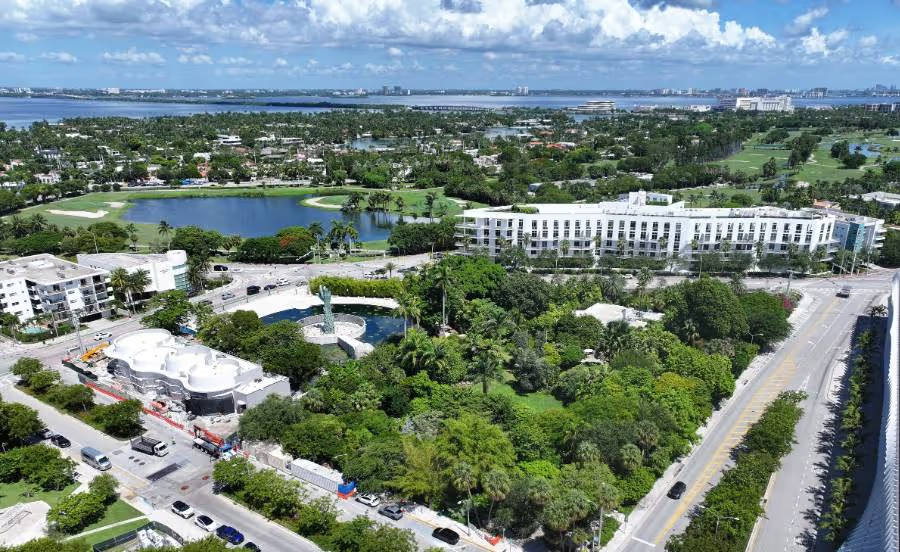
While it’s a bit small to meet the criteria for a spacious escape, what the Miami Beach Botanical Garden (2000 Convention Center Drive, Miami Beach, FL, 305-673-7256) lacks in acreage, it makes up for in meditative beauty. When you arrive, head to the south part of the garden, where you’ll find a painstakingly detailed Zen garden, which provides just the atmosphere for pensive self-reflection in a city better known for its less profound pleasures. Take a spot on a bench while you contemplate the koi and the life-size bonsai trees nearby. Open daily—still free or low-cost in most cases.
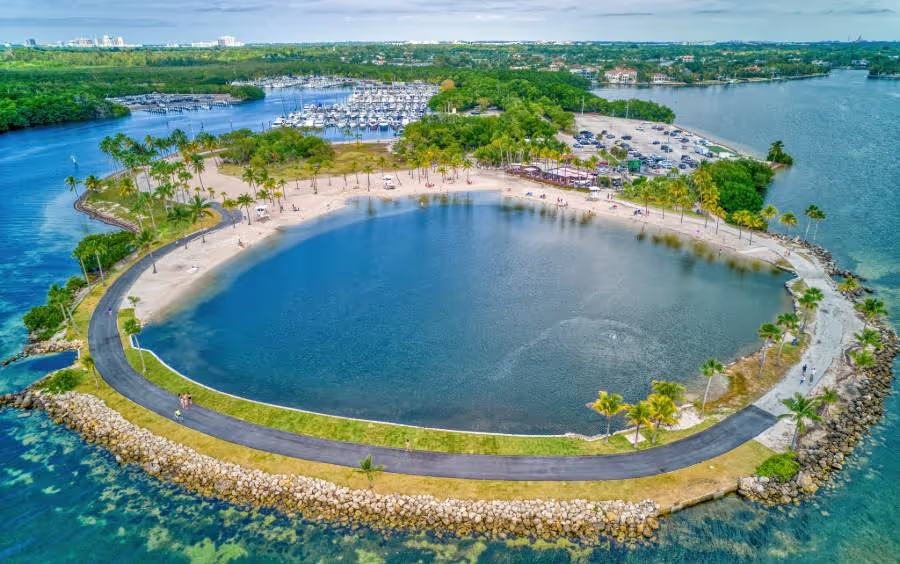
Despite the allure of its…er…black lagoon, the ride to Matheson Hammock Park (9610 Old Cutler Rd., Miami, FL, 305-665-5475) may actually be more exciting than the destination. Located in South Miami along Biscayne Bay adjacent to Fairchild Tropical Botanic Gardens, it was originally built in the 1930s from land set aside by conservationist William Matheson. As soon as you turn south from US-1 onto Old Cutler Road, you’ll embark on a lush journey past Jurassically-proportioned banyans, picturesque canals, and upscale homes.
Once inside the park, after passing a picnic area, the road continues through a patch of mangroves to the main gate. After paying the fee (now $7 weekdays, $10 weekends/holidays for parking), you’ve arrived. The high point of Miami’s oldest park is its man-made atoll lagoon. Swimming is allowed when lifeguards are on duty. Surrounding the lagoon is a sandy beach, shaded by coconut palms; however, the lagoon itself can be murky. Likewise, the nature path meanders through some muddy, mosquito-infested territory.
Unless you’re planning on docking at the marina or dining at the Redfish Grill (still upscale and lagoon-front), you’d actually be better off saving your parking money and enjoying the picnic area near the front gate. On the other hand, one man’s trash is another man’s treasure: the local crabs think it’s the best thing going…
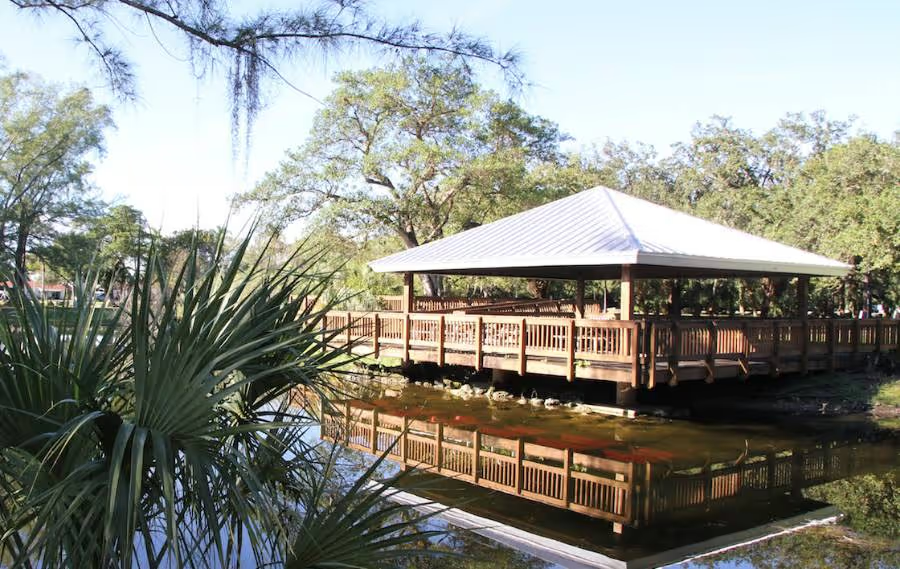
Despite its location at the intersection of busy NW 72nd Ave and Bird Road, this 65-acre sanctuary manages to feel a world apart; less developed than its neighbor Tropical Park, AD “Doug” Barnes Park (3401 SW 72 Avenue, Miami, FL, 305-666-5883) boasts one of the few remaining pine forests in the area, with a burgeoning bird population to boot. A labyrinth of criss-crossing cement paths leads you on an expedition past a pond, replete with sunning iguanas, a heated swimming pool, picnic areas, a parking lot or two, and a flourishing hammock, offering a rich sampling of native vegetation. Nearby cabins feed the illusion that you’re miles away from the city, when in reality urban mayhem lurks just a few blocks away.
(Note: There have been discussions and proposals in recent years about introducing parking fees here and at similar county parks like Tropical—currently still free in many cases, but check for updates as budgets evolve.)
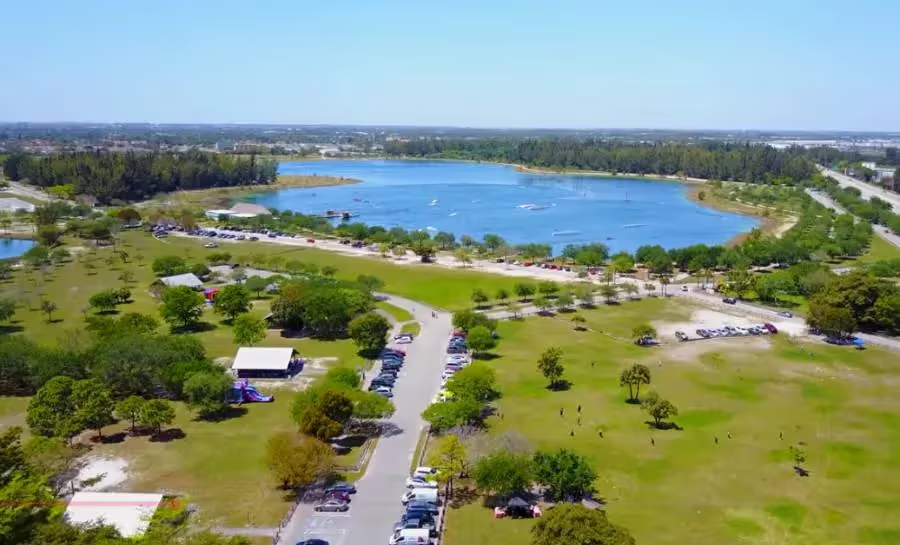
If farm animals are your thing, Amelia Earhart (401 East 65th Street, Miami, FL, 305-769-2693) delivers in spades, with its own “Bill Graham Farm Village,” a tribute to pioneer homesteading in Miami-Dade around the turn of the century. In this popular children’s park, there are pony rides to be had, and an ample supply of goats, cows, horses, chickens, sheep, and donkeys there for the petting. A demonstration shed provides opportunities for kids and adults alike to experience rural pastimes such as sheep-shearing, cow-milking, and horseshoeing. Nearby is a freshwater lake where you can go fishing, with an adjacent walking path. And no need to leave Fido at home—Bark Park will keep him occupied, although I’m sure he’d have a lot more fun in the petting zoo… Like Oleta River, off-road mountain biking is also popular here, with a variety of trails to choose from.
How to get there: From I-95, exit #13 (125th St.), and head west. Make a left on 441. Make right on NW 119th Street. Follow 119th Street west to a left onto NW 36th Avenue. Turn right on E. 65th Street, park entrance is on left after you pass E. 3rd Avenue.
(Note: Free during the week, with possible weekend fees—still a family favorite.)
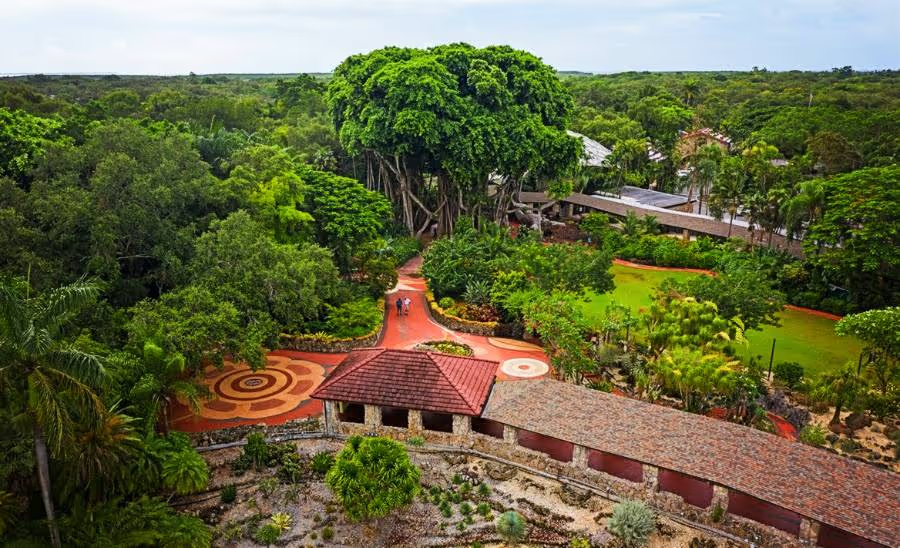
Old theme parks never die. They just turn into verdant, tropical paradises. Before Parrot Jungle moved to the MacArthur Causeway in 2003 and morphed into Jungle Island, it occupied this 14-acre space in the city of Pinecrest. Today, the parrots’ former home has been transformed into Pinecrest Gardens (11000 Red Road, Pinecrest, FL 33156, 305-669-6942), a beautifully landscaped enclosure, shaded by lofty banyans and luxuriant tropical vegetation. One can only hope that Disney World has such a happy end.
Founded by Austrian avian enthusiast Franz Scherr in 1936, the park was conceived as a space where birds could fly free. Today, a cement sidewalk with coral edges winds its way through tropical foliage so fancy and thick that it often feels like you’re in an enormous greenhouse. Streamlets and pools abundant in turtles, cichlids, and koi accent the greenery, though the meticulous landscaping gives it all a slightly unnatural feel. Tossed into the mix are a few abandoned bird cages and miniature amphitheatres once used for wildlife shows, now hauntingly silent. Apart from the natural attractions, it also features a petting zoo, butterfly exhibit, and “Splash n Play,” a water area open to children ages 2-12 (small fee). No smoking allowed.
(Note: Admission is charged for entry and certain activities—still a peaceful, evolved gem.)
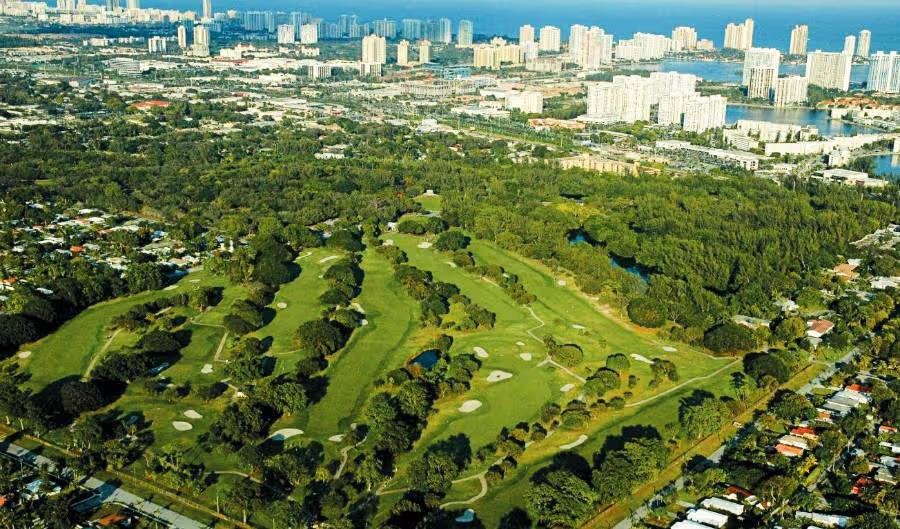
I may have saved the best for last. With its 249 acres of oak-canopied groves, hollows, mangrove lowlands, and foresty nature trails, Greynolds Park (2200 Miami Gardens Drive, Miami, FL, 305-945-3425) feels informal and inviting. While it lacks the lush razzle-dazzle of Fairchild and Pinecrest Gardens, it feels more accessible and natural. As far as the park’s many raccoons are concerned, Greynolds is the place to be. It’s also the place to be for the local flower children, who gather each May for the annual Love-In, a festival which celebrates all things 60’s.
Greynolds, originally a rock quarry manned by prison workers, was handed over to the Miami-Dade County Parks Department in 1936, where it continues to flourish along the banks of the Oleta River today. However, unlike Oleta Park, whose pine forests are dedicated to rigorous cross-country mountain bike riding, Greynolds satisfies more for those who enjoy a leisurely stroll beneath the endless oaks or a picnic by the river.
Although a dreaded golf course has encroached on some of the land, it provides basking ground for oodles of skittish iguanas, who go racing across the green to an adjacent riverside nature trail when people draw near, where they hide in the trees and dive indelicately into the water.
HELPFUL HINT: The park is free on weekdays (and relatively free of people, too). However, on weekends, when the crowds arrive, a parking fee is charged (now generally $10 per vehicle, pay-by-phone).
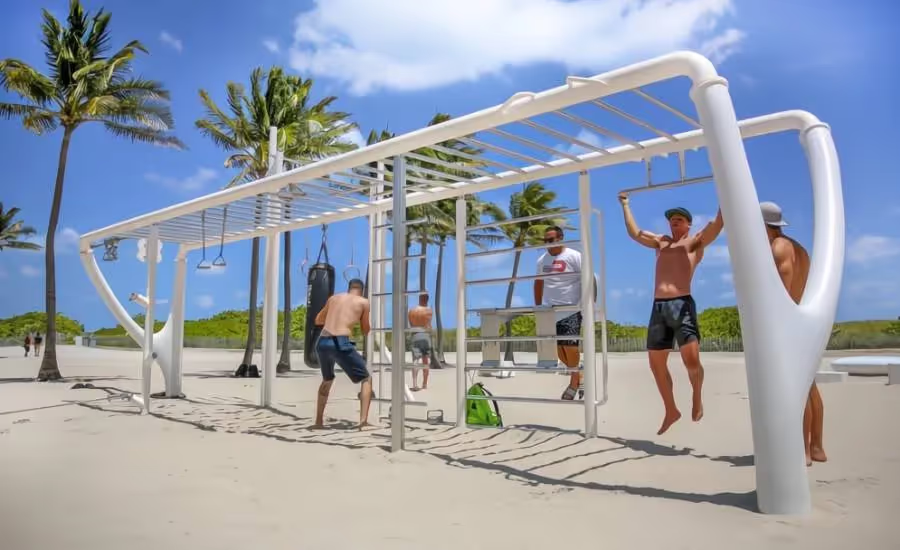
The aforementioned are only a sampling of what’s out there. There’s much more to experience, ranging from Muscle Beach in Lummus Park to the 35-acre Fruit and Spice Park in the Redlands. Even so, for its surface area, Miami doesn’t appear as enthusiastic about its shrubbery as it could be. Ask a local why there aren’t more parks—or at least something akin to a sprawling Central Park in Miami, and the response is generally that the weather here is just too hot much of the year to enjoy the outdoors—unless there is a lot of water involved. However, for diehard nature aficionados, a little heat and humidity is a small price to pay for the unparalleled beauty these elements help create. It’s the perfect cure for the skyscraper blues!
Most of these spots are still thriving (with updated facilities in many cases), though fees have crept up over the years—especially at state and county parks. The timeless appeal remains: a reminder that even in Miami, you can escape the concrete for a bit of green (or blue). Let me know which article to polish next!
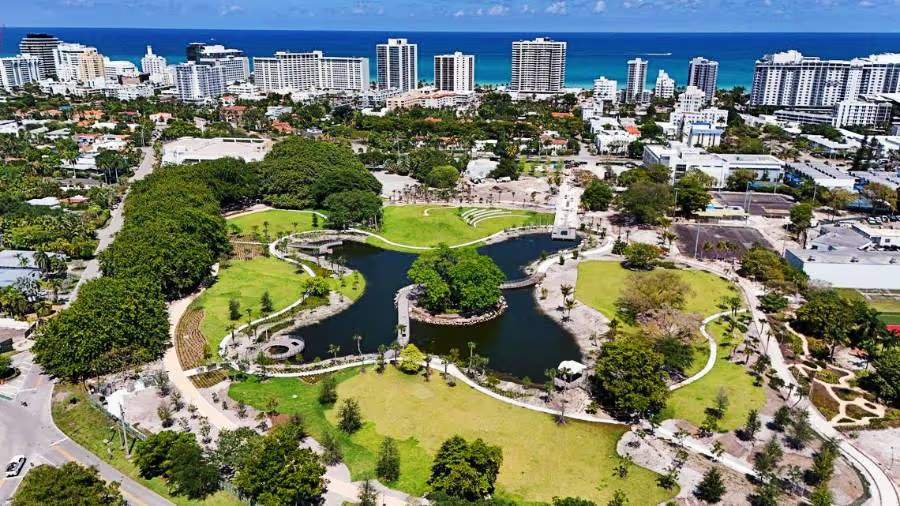
Miami Beach’s Bayshore Park opened in September 2025 and is now one of the largest public parks in the city. Located along Pine Tree Drive near 24th Street, the 20-acre green space features a scenic lake, a dog park, six competition-level tennis courts, and multiple recreational areas for residents and visitors alike. At the heart of the park is a central lake equipped with a circulation system that keeps the water oxygenated, along with several overlooks for viewing. The lake also includes infrastructure designed to collect and retain a portion of stormwater runoff from surrounding neighborhoods, helping to support the city’s broader resilience efforts.
Editor’s Note: Originally published December 17, 2007. Updated in 2026 with new photography; Doug Eames’ original writing remains unchanged.

Lorem ipsum dolor sit amet, consectetur adipiscing elit. Suspendisse varius enim in eros elementum tristique. Duis cursus, mi quis viverra ornare, eros dolor interdum nulla, ut commodo diam libero vitae erat. Aenean faucibus nibh et justo cursus id rutrum lorem imperdiet. Nunc ut sem vitae risus tristique posuere.
Lorem ipsum dolor sit amet, consectetur adipiscing elit. Suspendisse varius enim in eros elementum tristique. Duis cursus, mi quis viverra ornare, eros dolor interdum nulla, ut commodo diam libero vitae erat. Aenean faucibus nibh et justo cursus id rutrum lorem imperdiet. Nunc ut sem vitae risus tristique posuere.
Check out our top local tours on Miami Beach 411—no tourist traps, just the best adventures, Everglades, and more.
Book Your TourOr book your hotel through our Hotels.com partnership—it helps keep Miami Beach 411 free and independent for everyone.
Book Your Hotel

Comment disclaimer:
Some comments below originated on a previous version of MiamiBeach411.com. As a result of platform migrations, displayed comment dates may reflect import timestamps rather than original posting dates. Many comments date back to the early 2000s and capture community conversations from that time. If you have local insight, updates, or memories to share, we welcome your comments below.
This story has been part of Miami Beach conversations for decades—and it’s still unfolding. Add your voice.
Lorem ipsum dolor sit amet, consectetur adipiscing elit. Suspendisse varius enim in eros elementum tristique. Duis cursus, mi quis viverra ornare, eros dolor interdum nulla, ut commodo diam libero vitae erat. Aenean faucibus nibh et justo cursus id rutrum lorem imperdiet. Nunc ut sem vitae risus tristique posuere.
Lorem ipsum dolor sit amet, consectetur adipiscing elit. Suspendisse varius enim in eros elementum tristique. Duis cursus, mi quis viverra ornare, eros dolor interdum nulla, ut commodo diam libero vitae erat. Aenean faucibus nibh et justo cursus id rutrum lorem imperdiet. Nunc ut sem vitae risus tristique posuere.