

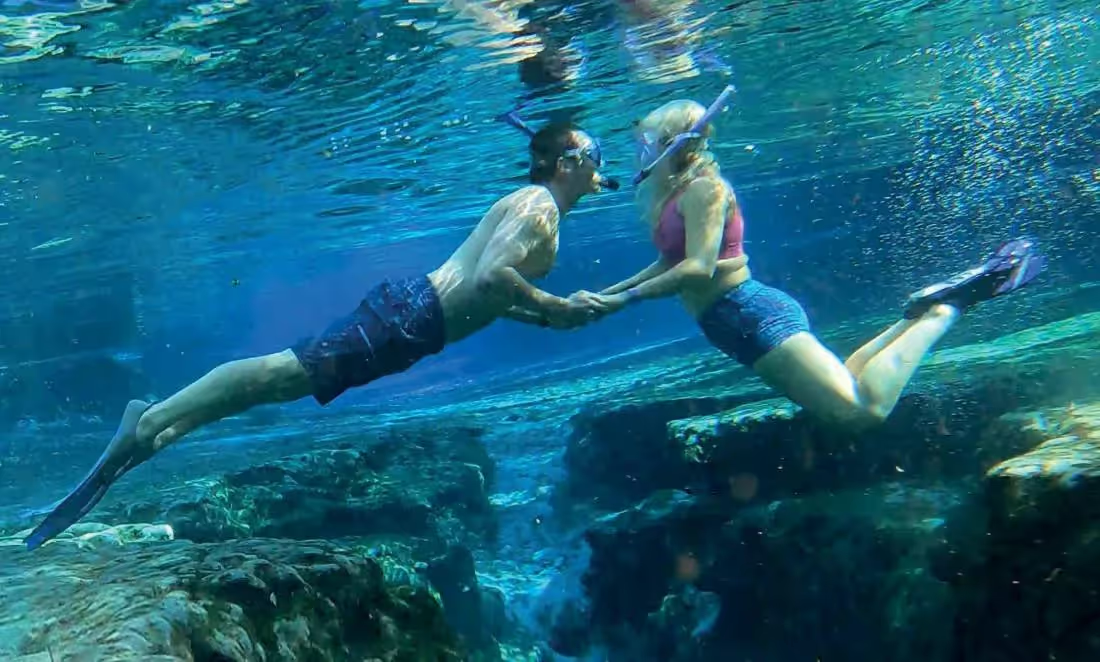
Sultry Florida sizzles in the summer, leading visitors and residents alike to run for the water. While many believe their only choices are swimming pools, murky rivers and lakes, the Gulf, or the Atlantic, there’s another frequently overlooked option that’s shark-, sludge-, and chlorine-free: the natural springs!
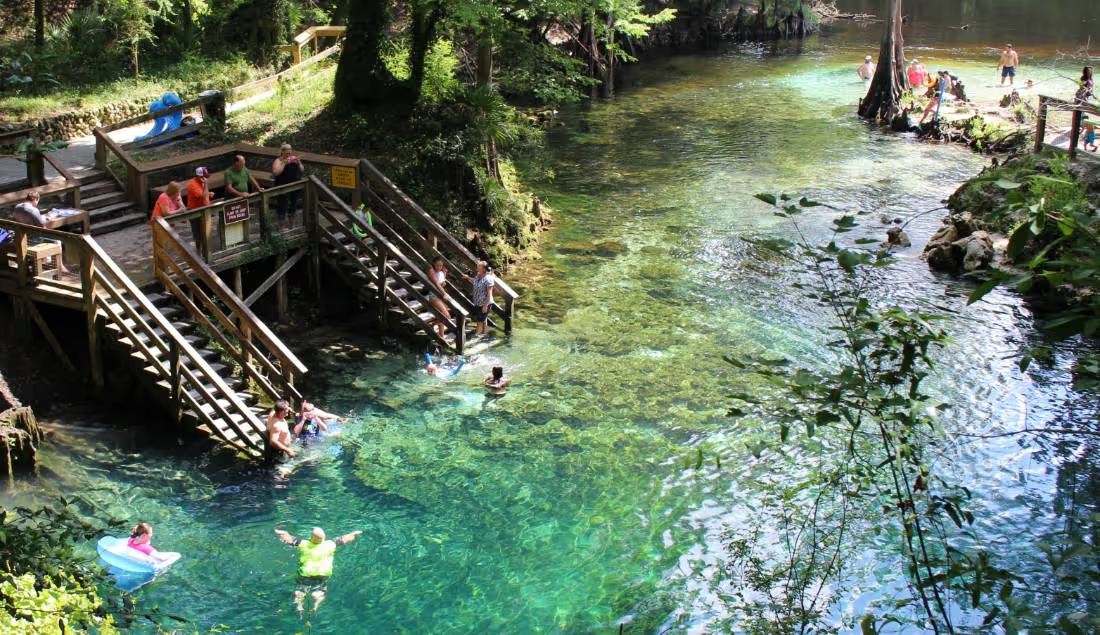
Central Florida has more of them in one area than any other spot on the planet. Remember Ponce de León and his quest for the Fountain of Youth? It was this region’s healing spring waters that brought our forefathers here in the first place!
And of all the springs in Florida, none are said to be as prolific and noteworthy as Blue Spring State Park (2100 W. French Ave., Orange City, FL 32763, 386-775-3663). Each day, it pumps out some 100 million gallons of fresh water, making it one of the largest springs in North America. Located just 2 miles west of Orange City, this sprawling 2,483-acre state park is about a 4.5-hour drive from Miami. With 51 campsites and six cabins, it makes for a perfect weekend getaway.
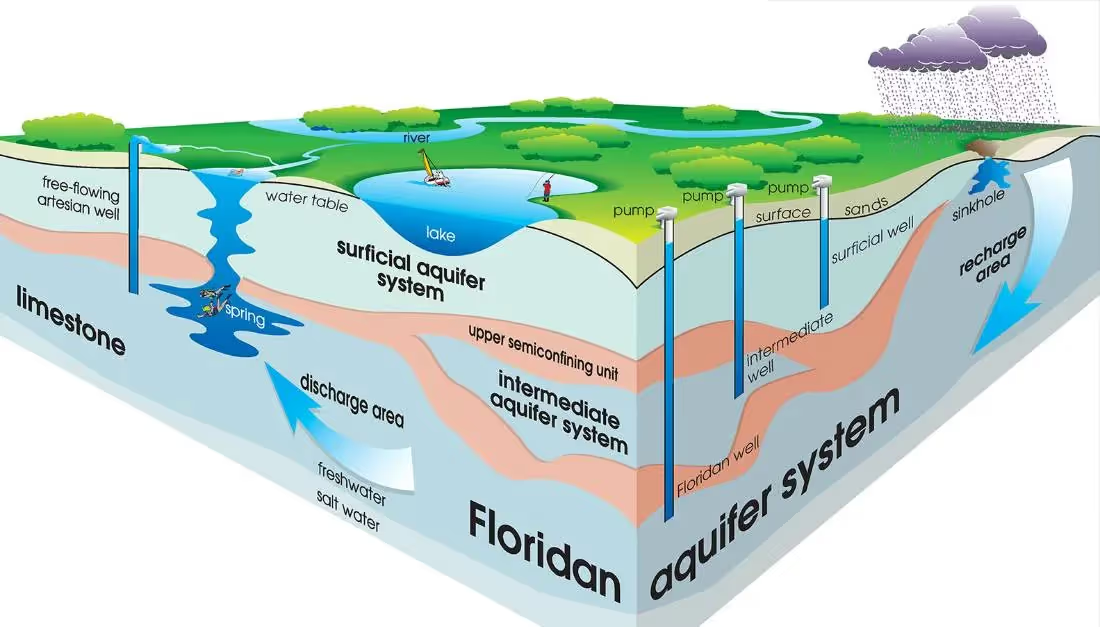
Deep beneath the Sunshine State’s surface is a layer of permeable rock that gradually filters rainwater over many years. The pristine, transparent, mineral-rich H₂O collects and rises through a network of subterranean caves, producing “boils”—so-named for the way the water bubbles up to the surface.
Contrary to what the name implies, Florida spring water isn’t hot (except Big Salt Spring and Little Salt Spring near Tampa). It maintains a constant year-round temperature of 72°F—perfect for a refreshing summer dip, but too cold for harmful bacteria like the flesh-eating Chromobacterium violaceum sometimes found in lakes.
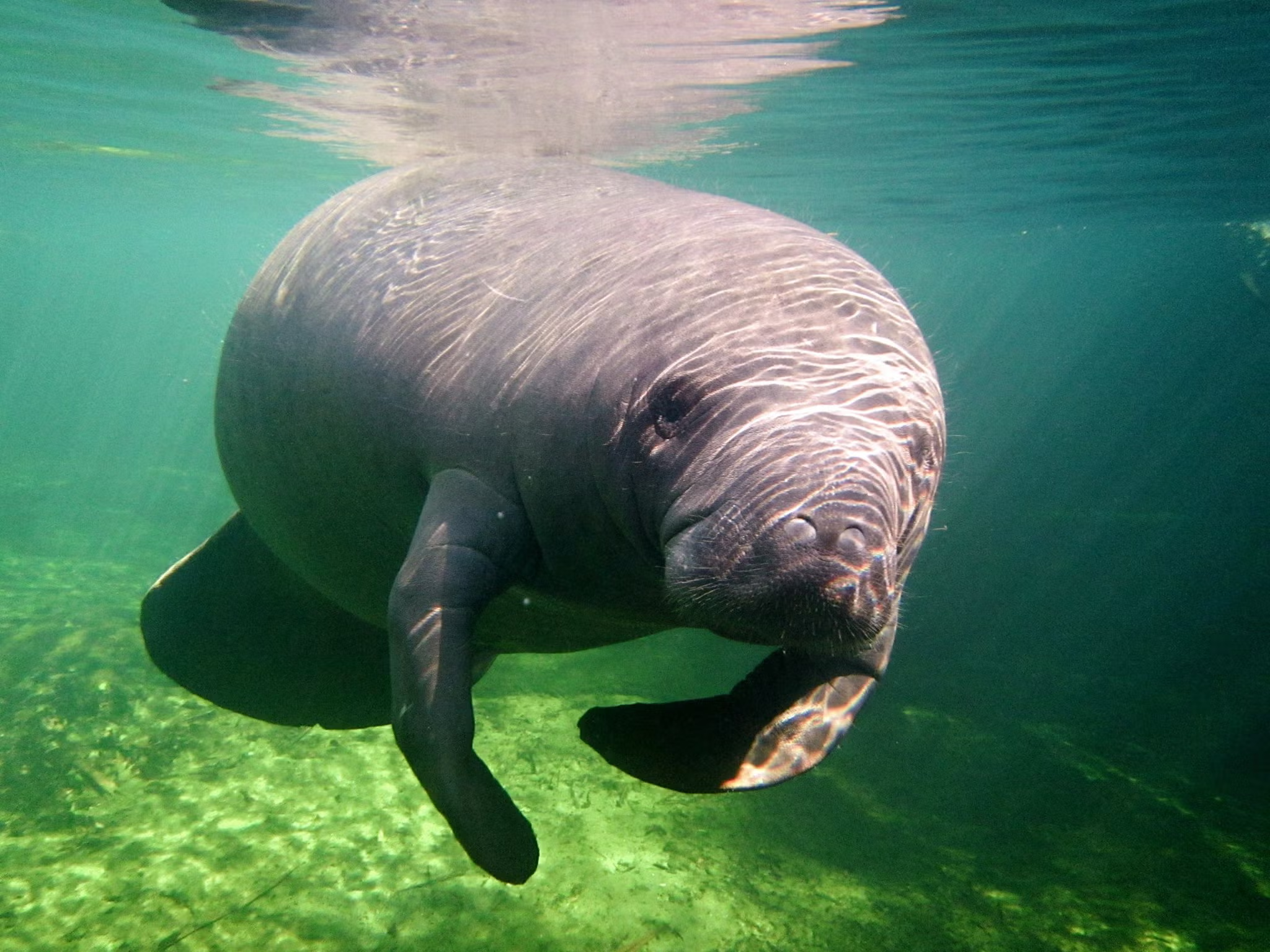
That’s a little too nippy and clear for alligators, who prefer warmer, murkier waters. However, manatees love it during winter months, making this one of Florida’s most popular spots to observe these unique mammals. Over 200 “snowbirding sea cows” flock here from the nearby St. Johns River (whose winter temps can dip to 50°F). The spring run is closed to swimming then for their protection (Nov. 21–Mar. 31, subject to change—check ahead).
In summer, the most common fish is the scary-looking but timid gar, which gets oxygen from the surface due to the boil’s low oxygen content.
For hundreds of years, Timucua Indians (Timicuan) called Blue Spring home, drawn by its spot on the St. Johns River for hunting and fishing. In 1766, British explorer and botanist John Bartram visited while searching for resources valuable to the Crown.
In 1856, gold rush prospector-turned-orange farmer Louis Thursby bought the land, turning it into a prime steamboat stop for northern visitors (pre-1880s railroad). He built an impressive home atop the Timucua shell mound in 1872 and lived there until his death from consumption in 1890.
The property stayed in the Thursby family until 1972, when Florida bought it and made it a state park.
From the parking lot, a path leads to a complex with a concession store, gift shop, bathrooms, showers, lockers, covered picnic area, and rentals for inner tubes, rafts, snorkels, and gear (kayaks/canoes via concessionaire Blue Spring Adventures—call for current rates).
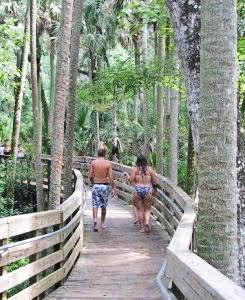
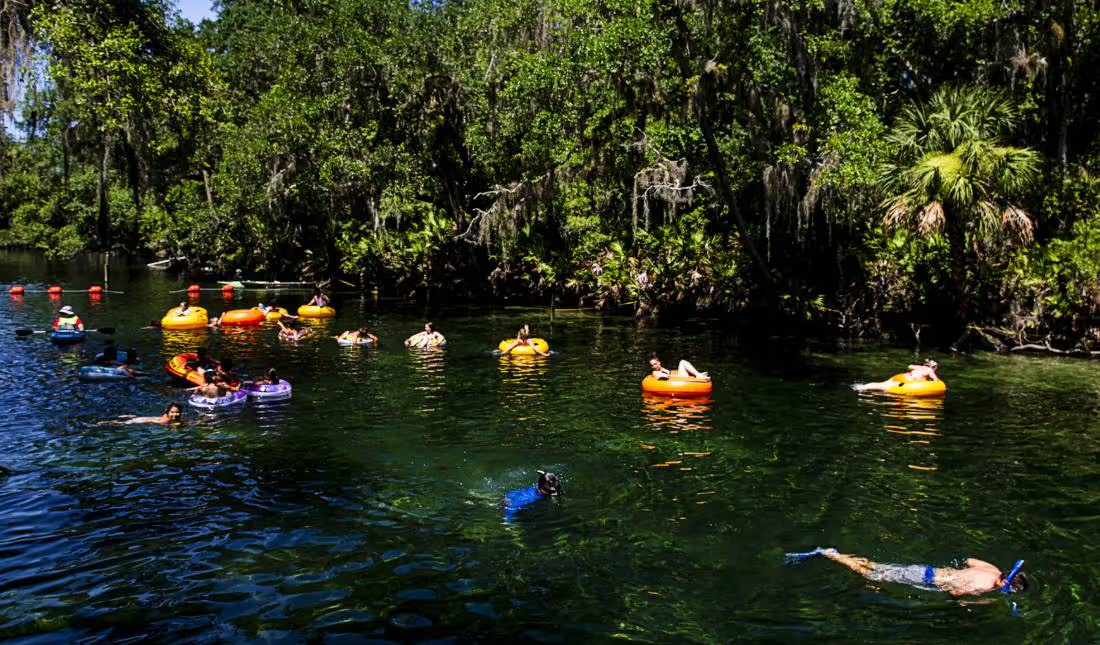
A wooden boardwalk runs along the periphery of the run (feels like a clear river). The main swimming area is just down from the complex. A 10-minute walk along the plank trail leads to the springhead one way, or past Thursby House to the St. Johns the other.
At the springhead, folks congregate around the underwater cave with scuba/snorkel gear or float on inner tubes in a Creature from the Black Lagoon-worthy setting.
Beyond are viewing stations off the main boardwalk for wildlife. Crystal-clear water creates a natural aquarium—watch fish schools, birds at the edge, under moss-laden oaks and cabbage palms.
Further back, the non-looping Pine Island Trail offers a 4.5-mile hike through oak hammocks and pine forests.

Beyond swimming and trails: Admission to the first floor of Thursby House is free—a captivating look at 19th-century Florida life.
A two-hour narrated wildlife tour along the St. Johns River departs daily at 10 a.m. and 1 p.m. near the spring/river junction (~$38 adults / $22 kids via Blue Spring Adventures—prices vary; call 386-775-0046 or check bluespringadventures.com for current rates).
Canoes, kayaks, and houseboats dock nearby (rentals available seasonally).
Camping: 51 tent/RV sites ($24/night + tax, water/electricity; $7 nightly utility for RVs, $6.70 nonrefundable reservation fee). Six 2-bedroom cabins ($95/night + tax, screened porch, A/C, gas fireplace Nov–Mar, full kitchen/bath, linens—two-night min. weekends/holidays; same fees).
Two caveats: A nearby railway means trains rumble day/night. Peak summer (and winter manatee season), the park hits capacity and closes gates—arrive early on non-holiday weekdays. Reserve camping/cabins ahead!
Driving: From Miami, take I-4 to exit 114, follow signs. South on 17/92 to Orange City (~2.5 miles), right on West French Ave. (park near end). ~4.5 hours total.
Gates open 8 a.m. to sundown (closes at capacity—often weekends/holidays; winter water activities restricted Nov–Mar for manatees).
Admission (unchanged):
Camping: $24/night + tax (water/electricity; $7 RV utility, $6.70 reservation fee).
Cabins: $95/night + tax ($7 utility, $6.70 reservation; 2-night min.).
Park often reaches capacity (long lines/closures, especially Nov–Mar manatee season). Call (386-775-3663) or visit floridastateparks.org/parks-and-trails/blue-spring-state-park to confirm rates/reservations. Arrive early; annual passes available ($60 individual/$120 family). Post-hurricane resilience strong—check for updates.
Editor’s Note: Originally published July 20, 2009. Updated in 2026 with new prices and photography; Doug Eames' original writing remains unchanged.

Lorem ipsum dolor sit amet, consectetur adipiscing elit. Suspendisse varius enim in eros elementum tristique. Duis cursus, mi quis viverra ornare, eros dolor interdum nulla, ut commodo diam libero vitae erat. Aenean faucibus nibh et justo cursus id rutrum lorem imperdiet. Nunc ut sem vitae risus tristique posuere.
Lorem ipsum dolor sit amet, consectetur adipiscing elit. Suspendisse varius enim in eros elementum tristique. Duis cursus, mi quis viverra ornare, eros dolor interdum nulla, ut commodo diam libero vitae erat. Aenean faucibus nibh et justo cursus id rutrum lorem imperdiet. Nunc ut sem vitae risus tristique posuere.
Check out our top local tours on Miami Beach 411—no tourist traps, just the best adventures, Everglades, and more.
Book Your TourOr book your hotel through our Hotels.com partnership—it helps keep Miami Beach 411 free and independent for everyone.
Book Your Hotel


Comment disclaimer:
Some comments below originated on a previous version of MiamiBeach411.com. As a result of platform migrations, displayed comment dates may reflect import timestamps rather than original posting dates. Many comments date back to the early 2000s and capture community conversations from that time. If you have local insight, updates, or memories to share, we welcome your comments below.
This story has been part of Miami Beach conversations for decades—and it’s still unfolding. Add your voice.
Lorem ipsum dolor sit amet, consectetur adipiscing elit. Suspendisse varius enim in eros elementum tristique. Duis cursus, mi quis viverra ornare, eros dolor interdum nulla, ut commodo diam libero vitae erat. Aenean faucibus nibh et justo cursus id rutrum lorem imperdiet. Nunc ut sem vitae risus tristique posuere.
Lorem ipsum dolor sit amet, consectetur adipiscing elit. Suspendisse varius enim in eros elementum tristique. Duis cursus, mi quis viverra ornare, eros dolor interdum nulla, ut commodo diam libero vitae erat. Aenean faucibus nibh et justo cursus id rutrum lorem imperdiet. Nunc ut sem vitae risus tristique posuere.