


If you get a chance to pick up a copy of the Miami Today newspaper this week, make sure to read Jim Moore’s interview. Jim is the Director of Operations at The Miami Tour Company, the sister site of Miami Beach 411. In the interview by Nina Lincoff, Jim discusses why Coconut Grove should not be overlooked by visitors, and why it’s an essential stop on The Original Miami Bus Tour.
Jim Moore is also Gus Moore’s father. He has been driving tours for Miami Beach 411, then The Miami Tour Company, and now oversees and manages the entire fleet, ensuring that every tour runs smoothly.

For Jim Moore, a certified heritage guide with The Miami Tour Company, Coconut Grove offers one of the richest introductions to Greater Miami’s history. He notes that it’s the first stop on the tour where visitors can clearly see Miami’s native limestone and understand how it shaped the city’s earliest development.
“The Grove is the first place on our tour where you really begin to see the limestone,” Moore said. “You can point it out and explain how that natural resource was used.”

The Miami Tour includes six stops, with the longest time spent in Coconut Grove due to its walkability, dining options, and concentration of historic sites. Key highlights include The Barnacle, the Cohen Murder House, Silver Bluff, the Pan Am Marina, The Kampong, and Plymouth Congregational Church.
“Most people don’t come to Miami thinking they need to see Coconut Grove — they often don’t know what it is,” Moore said. “But once we provide the historical context, they start to realize there’s much more to Miami than just South Beach.”
For Moore, a certified heritage guide with The Miami Tour Company, a bus tour through Coconut Grove allows visitors to explore Greater Miami history through its very building blocks.
“The Grove is the first place on our tour that you really get to start seeing the limestone. You can point out that resource and show how it was used,” Moore said.
Limestone, a naturally abundant material in South Florida, was crucial to early development, and Moore emphasizes how the Grove’s architecture and landmarks reflect both the natural environment and the city’s evolution.
The Miami Tour offered by MTC includes six stops, with Coconut Grove being the longest due to its mix of history, walking paths, and dining options. Moore highlights several of the area’s standout landmarks:
Moore emphasizes that heritage tourism—visiting places with historical, architectural, and cultural significance—is often overlooked in Miami, yet Coconut Grove is rich in stories that reveal the city’s growth and development. Visitors learn not only about the famous landmarks but also about the people who shaped Miami’s neighborhoods, from early settlers to cultural pioneers.
By combining history with experiential stops—like walking along the marina or enjoying local cuisine—Moore and Miami Tour Company bring Miami’s history to life, helping visitors connect the past with the city’s modern identity.
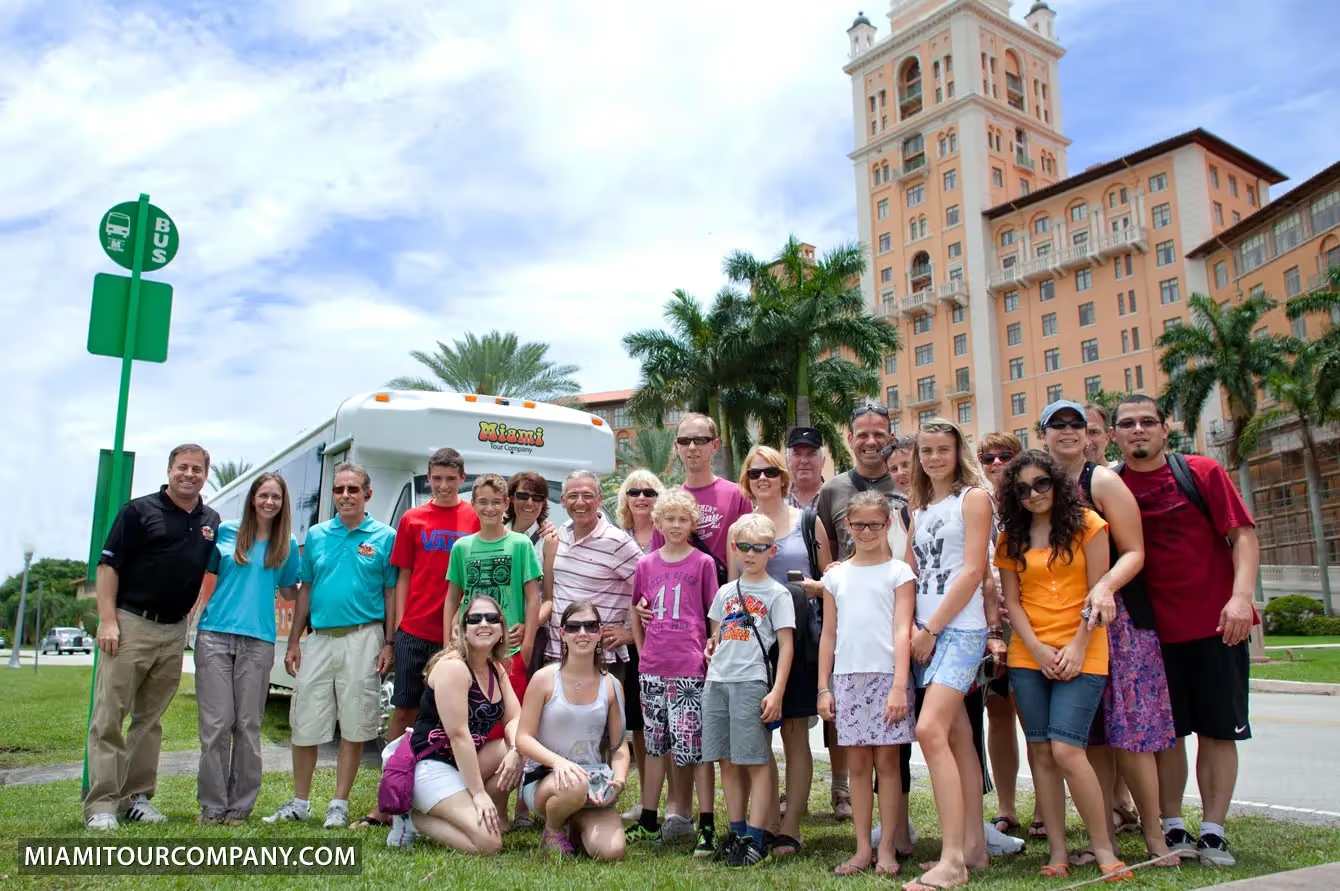
Editor’s Note: This article was originally published on August 16, 2014. Updated in 2026 with new photography.

Lorem ipsum dolor sit amet, consectetur adipiscing elit. Suspendisse varius enim in eros elementum tristique. Duis cursus, mi quis viverra ornare, eros dolor interdum nulla, ut commodo diam libero vitae erat. Aenean faucibus nibh et justo cursus id rutrum lorem imperdiet. Nunc ut sem vitae risus tristique posuere.
Lorem ipsum dolor sit amet, consectetur adipiscing elit. Suspendisse varius enim in eros elementum tristique. Duis cursus, mi quis viverra ornare, eros dolor interdum nulla, ut commodo diam libero vitae erat. Aenean faucibus nibh et justo cursus id rutrum lorem imperdiet. Nunc ut sem vitae risus tristique posuere.
Check out our top local tours on Miami Beach 411—no tourist traps, just the best adventures, Everglades, and more.
Book Your TourOr book your hotel through our Hotels.com partnership—it helps keep Miami Beach 411 free and independent for everyone.
Book Your Hotel


Comment disclaimer:
Some comments below originated on a previous version of MiamiBeach411.com. As a result of platform migrations, displayed comment dates may reflect import timestamps rather than original posting dates. Many comments date back to the early 2000s and capture community conversations from that time. If you have local insight, updates, or memories to share, we welcome your comments below.
This story has been part of Miami Beach conversations for decades—and it’s still unfolding. Add your voice.
Lorem ipsum dolor sit amet, consectetur adipiscing elit. Suspendisse varius enim in eros elementum tristique. Duis cursus, mi quis viverra ornare, eros dolor interdum nulla, ut commodo diam libero vitae erat. Aenean faucibus nibh et justo cursus id rutrum lorem imperdiet. Nunc ut sem vitae risus tristique posuere.
Lorem ipsum dolor sit amet, consectetur adipiscing elit. Suspendisse varius enim in eros elementum tristique. Duis cursus, mi quis viverra ornare, eros dolor interdum nulla, ut commodo diam libero vitae erat. Aenean faucibus nibh et justo cursus id rutrum lorem imperdiet. Nunc ut sem vitae risus tristique posuere.