

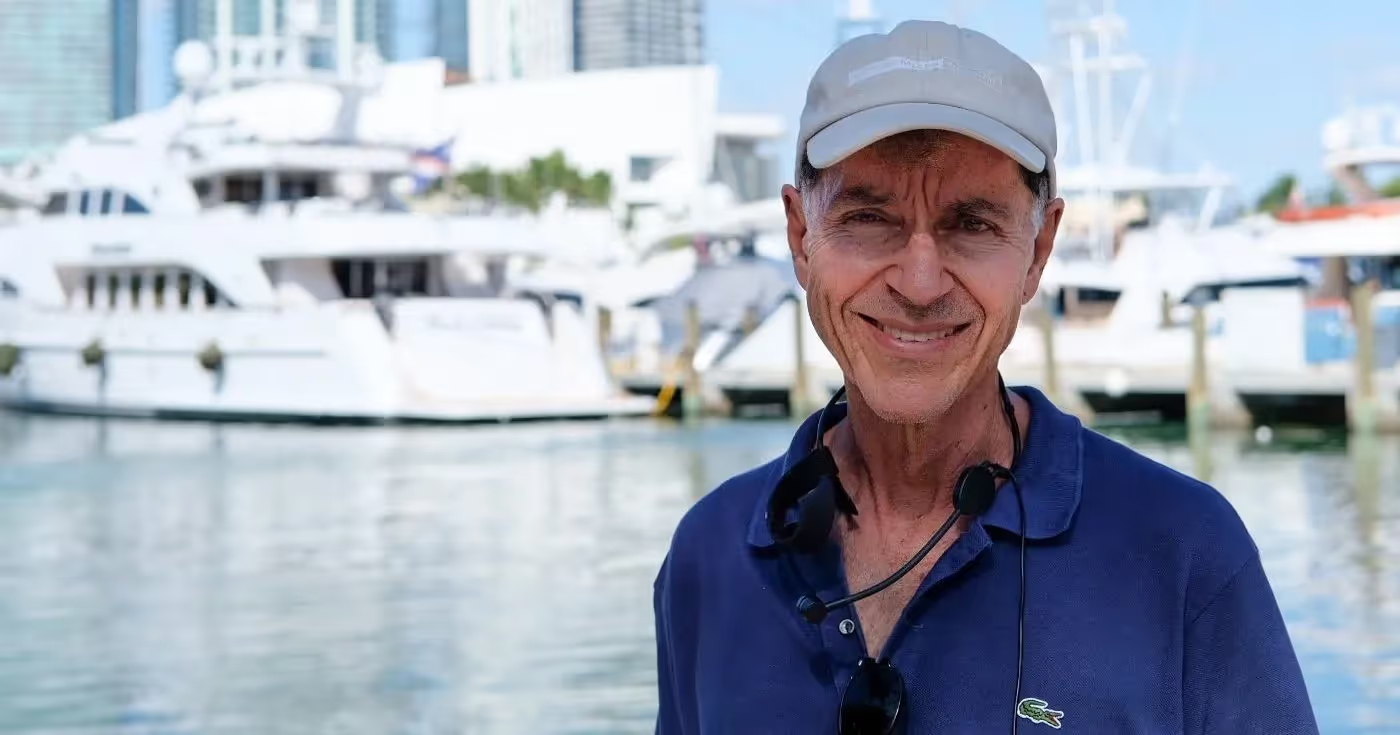
One of the most enjoyable experiences I’ve ever had was taking Dr. Paul George’s Miami and South Florida history course at Miami Dade College. With a strong academic background myself, few learning experiences have been as purely rewarding. Taking a class for the sheer pleasure of learning—without grades or pressure—was a revelation. Dr. George’s course is open to all adults, whether or not you’re pursuing a degree.
I took the course last spring and would gladly take it again. You can never learn enough about South Florida history, as Dr. George would enthusiastically agree. Anyone who doubts Miami has a “real” history should avoid debating with Dr. G, as students affectionately call him.
Dr. George has published several books and taught for decades. He lectures at Miami Dade College, offers tours through the Historical Museum of South Florida, and contributes to its publication, Tequesta. Despite his eminence, he’s far from a stuffy academic. His approachable, warm personality and infectious enthusiasm make him a favorite among students and history buffs alike.
To celebrate his 20th anniversary as the museum’s resident historian, over two hundred fans attended a roast in his honor—a true tribute to his impact. Dr. George’s lectures and tours never feel like lectures; he weaves stories that make South Florida’s history come alive.
Our class had about two dozen students, mostly adults, ranging from teachers seeking recertification to professionals and retirees passionate about Miami history. Many had previously taken his museum tours and wanted to learn more.
Over four months, we attended lectures and several exclusive tours, included in the affordable tuition. Dr. George’s syllabus moved chronologically—from pre-Columbian Tequesta populations to modern Miami—while connecting Miami to Broward, West Palm Beach, the Keys, and the Gulf Coast.
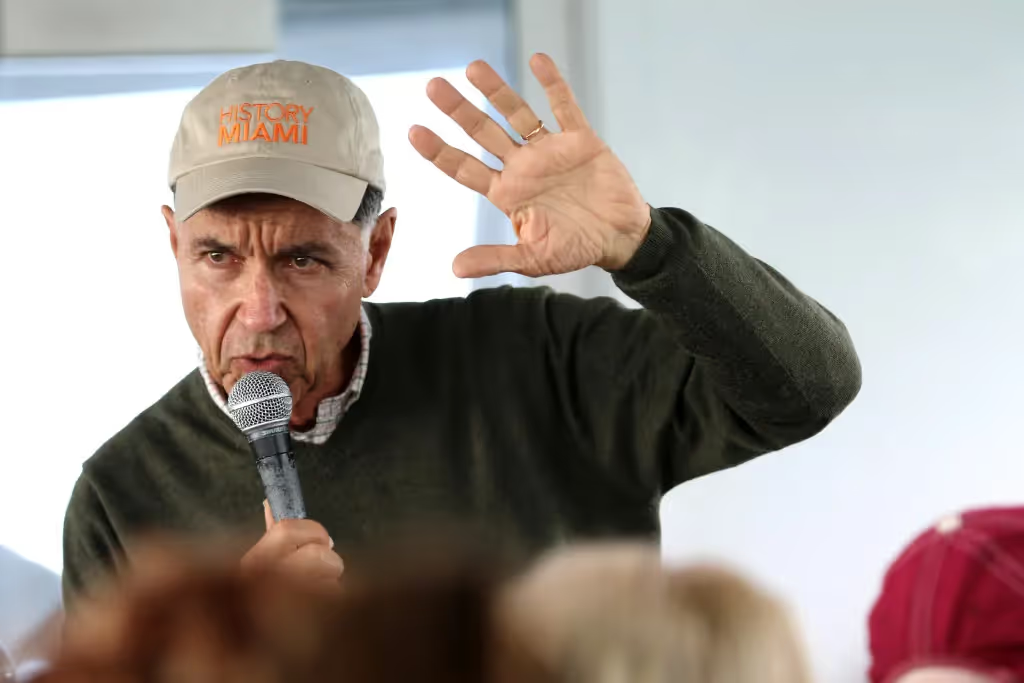
The highlight of the course was undoubtedly the tours. Our first tour focused on Miami’s origins. On a cool January evening, we met at the riverwalk behind downtown’s Hyatt Regency, in what was once Julia Tuttle’s riverfront land.
We visited Fort Dallas Park and the yellow clapboard cottage used by railroad workers. Just a block away, the “Incorporation Palm,” planted by artist Xavier Cortada, commemorates Miami’s incorporation in 1896—the same palm featured on the city seal.
Crossing the Brickell Bridge, we explored Brickell Park and learned about the influential family that shaped the south bank of the Miami River. From the bridge, we also viewed the Miami Circle, a 2,000-year-old archaeological site.
Back at the riverwalk, the towers of the Met development now rise where Henry Flagler built his extravagant Royal Palm Hotel. Seeing modern skyscrapers in the context of Miami’s early development is unforgettable.
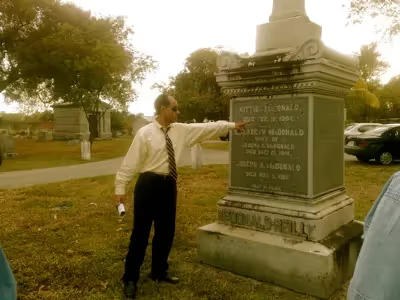
Other tours included the Miami cemetery, Little Havana, the South Beach Art Deco District, and the riverfront by Miami River Inn and Lummus Park. Dr. George’s knowledge of geology and architecture added depth—like explaining the Atlantic Coastal Ridge and pointing out limestone formations near the Brickell Metromover station.
Dr. George provides handouts and optional access to his books, including a pictorial history of Little Havana and a detailed history of Miami’s oldest Catholic church, The Gesu in Miami: A Story of God’s People in a Subtropical Metropolis 1896–2006.
The class encourages passive learning for non-degree students—you can simply show up, listen, and enjoy the experience without stress. Social opportunities abound as well; our semester ended with a group dinner at Perricone’s.
Contact: Dr. Paul George, (305) 237-3723
When: Thursdays, 5:40–8:00 PM; August 27–December
Where: Miami Dade College, Wolfson Campus, Downtown Miami
Tuition: About $250 for Florida residents; tours and handouts included
Parking: Free with student ID or proof of registration
Transit: Walking distance from College Station Metromover; most tours meet off-campus
Editor's Note: Originally published in 2009 and updated in 2026 to reflect the most current information.

Lorem ipsum dolor sit amet, consectetur adipiscing elit. Suspendisse varius enim in eros elementum tristique. Duis cursus, mi quis viverra ornare, eros dolor interdum nulla, ut commodo diam libero vitae erat. Aenean faucibus nibh et justo cursus id rutrum lorem imperdiet. Nunc ut sem vitae risus tristique posuere.
Lorem ipsum dolor sit amet, consectetur adipiscing elit. Suspendisse varius enim in eros elementum tristique. Duis cursus, mi quis viverra ornare, eros dolor interdum nulla, ut commodo diam libero vitae erat. Aenean faucibus nibh et justo cursus id rutrum lorem imperdiet. Nunc ut sem vitae risus tristique posuere.
Check out our top local tours on Miami Beach 411—no tourist traps, just the best adventures, Everglades, and more.
Book Your TourOr book your hotel through our Hotels.com partnership—it helps keep Miami Beach 411 free and independent for everyone.
Book Your Hotel


Comment disclaimer:
Some comments below originated on a previous version of MiamiBeach411.com. As a result of platform migrations, displayed comment dates may reflect import timestamps rather than original posting dates. Many comments date back to the early 2000s and capture community conversations from that time. If you have local insight, updates, or memories to share, we welcome your comments below.
This story has been part of Miami Beach conversations for decades—and it’s still unfolding. Add your voice.
Lorem ipsum dolor sit amet, consectetur adipiscing elit. Suspendisse varius enim in eros elementum tristique. Duis cursus, mi quis viverra ornare, eros dolor interdum nulla, ut commodo diam libero vitae erat. Aenean faucibus nibh et justo cursus id rutrum lorem imperdiet. Nunc ut sem vitae risus tristique posuere.
Lorem ipsum dolor sit amet, consectetur adipiscing elit. Suspendisse varius enim in eros elementum tristique. Duis cursus, mi quis viverra ornare, eros dolor interdum nulla, ut commodo diam libero vitae erat. Aenean faucibus nibh et justo cursus id rutrum lorem imperdiet. Nunc ut sem vitae risus tristique posuere.