


Tucked away at the south end of Coconut Grove is one of Miami’s oldest landmarks, the Kampong. One of its most famous residents, plant explorer Dr. David Fairchild, named the waterfront property after the Malaysian word for “village.”
If you drive by fast enough, you might miss the sign that marks this historic site, in addition to a beautiful, enormous banyan tree behind the limestone wall off Douglas Road. Behind the green, wrought-iron gate is a lush, tropical orchard and garden that currently serves as one of the five Congress-chartered National Tropical Botanical Gardens in the US (the others are in Hawaii and Florida). True to its mission, the Kampong advances scientific research, public education, and plant conservation.
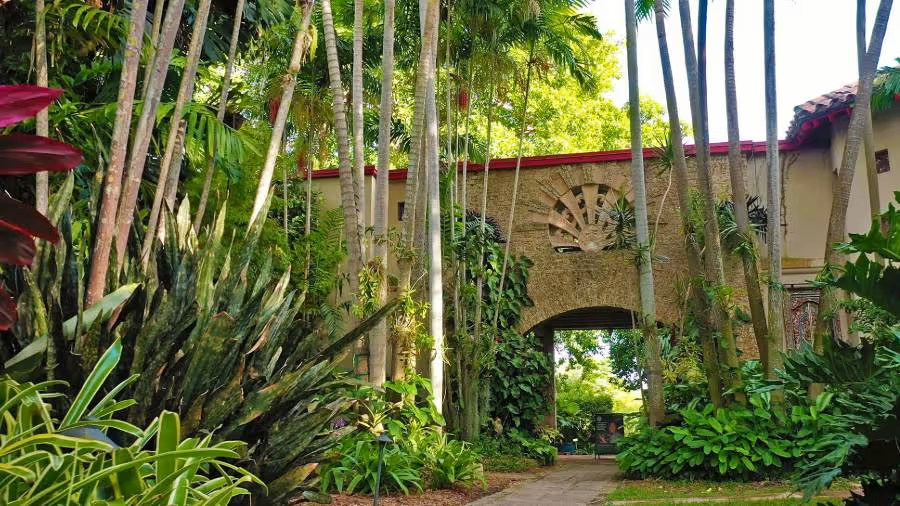
But it’s the history here, as well as the collection of plants, that captivates the imagination.
In 1916, David Fairchild and his wife Marian purchased the property, which became their winter home. As Chief of the Seed and Plant Introduction of the US Department of Agriculture, David Fairchild explored the world and introduced 20,000 types of plants to this country, some of which he planted at The Kampong. Barbour Lathrop, a wealthy American philanthropist, sponsored many of Fairchild’s expeditions. “Fairchild helped establish avocado in California,” said David Lee, director of The Kampong. “His work broadened the American palette by introducing many kinds of fruit.”
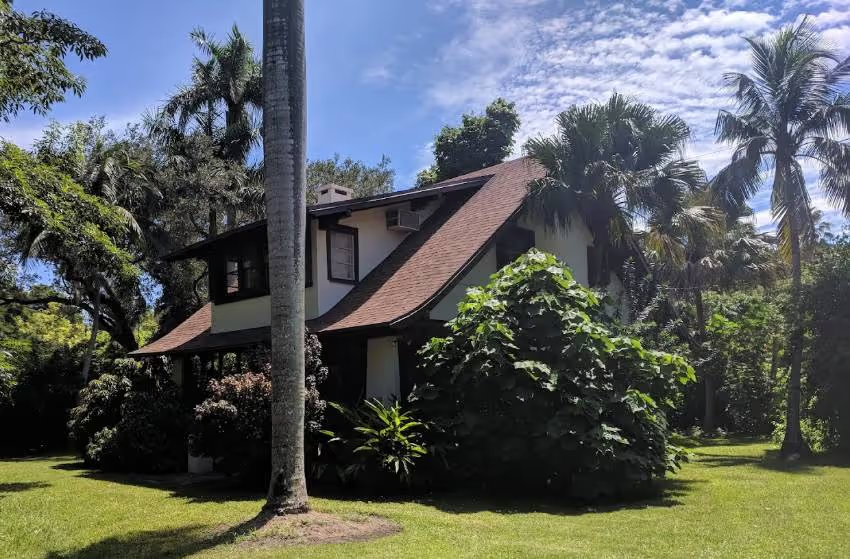
David Fairchild built a second story above Dr. Galt Simmons’s cottage where he wrote many books about his travels as botanist, horticulturist, and plant collector, including the popular work, The World Was My Garden. The study remains just as Fairchild left it, with artifacts from his desk, copious books, and framed pictures on the walls. You can see a large bignay tree from the window that Fairchild must’ve looked out of so many times. He used to make juice from the fruit. On the day I visited, a few cherry-headed parrots were quietly nibbling away at the abundant berries.
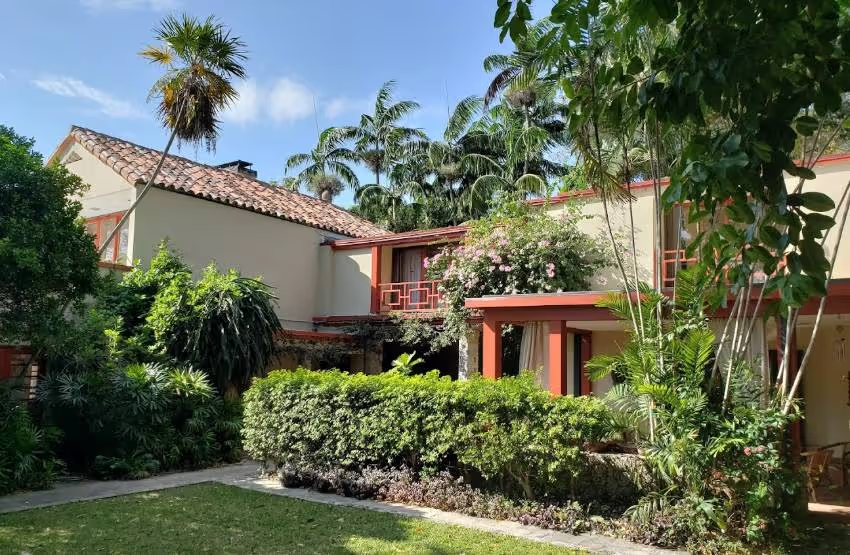
In 1928, Edward Clarence Dean designed the main house, relying on an oriental style inspired by Fairchild’s many travels to Southeast Asia. A lawn stretches out to a tennis court and beyond that, a carved-out boat channel extends to Biscayne Bay. But the real stunners on this 11-acre property are the hundreds of trees planted throughout, which include an exotic Buddha’s Hand—a tree that’s sacred in Southeast Asia—as well as an African baobab.
Fairchild’s wife was the daughter of Alexander Graham Bell. Her sister, Elsie, was married to Gilbert Grosvenor, the first editor of National Geographic Magazine, credited with building the publication’s greatness. In 1931, the Grosvenors purchased the property adjacent to the Kampong and called it Hissar, after the small town in Turkey where Grosvenor was born. Today, the property is private and boasts one of the oldest standing homes in Miami, which I had the opportunity to see. It is beautifully maintained, surrounded by a lawn and mango trees. There are a total of seven historic structures between The Kampong and Hissar properties, five on The Kampong alone.
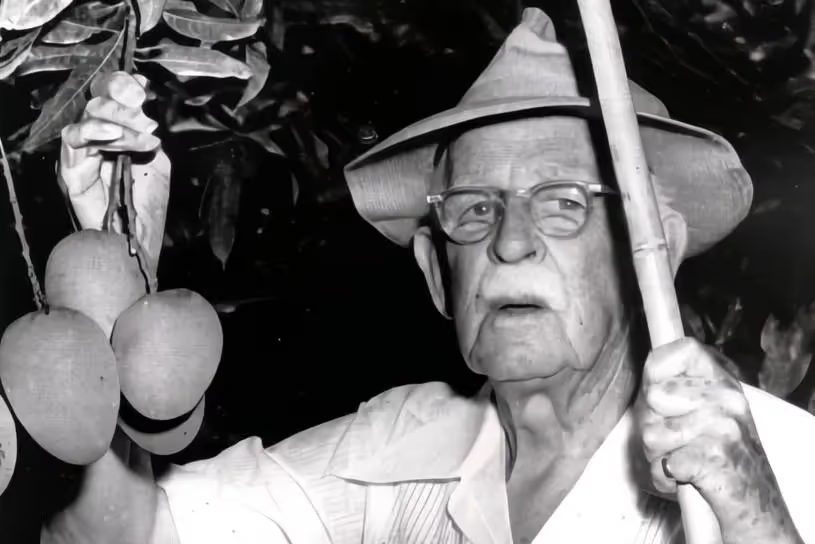
The Kampong was not only the home of two renowned families in the world of invention and exploration, but also the place where Fairchild, Marjory Stoneman Douglas, and Ernest Coe conceived the idea of an Everglades National Park. The historic meeting took place in the living room and it’s no small irony—the original, natural landscape here before human intervention was pineland and salt grass marsh fed by fresh water from the Everglades.
Many famous people came to the Kampong in Fairchild’s time, including Alexander Graham Bell, Thomas Edison, and Henry Ford.
In 1963, Mr. and Mrs. Edward Sweeney purchased the property after Marian Fairchild’s passing; she survived her husband David by 8 years. It was Mrs. Sweeney who guarded the Kampong from prospective developers and by 1984, it found a spot on the National Register of Historic Places.
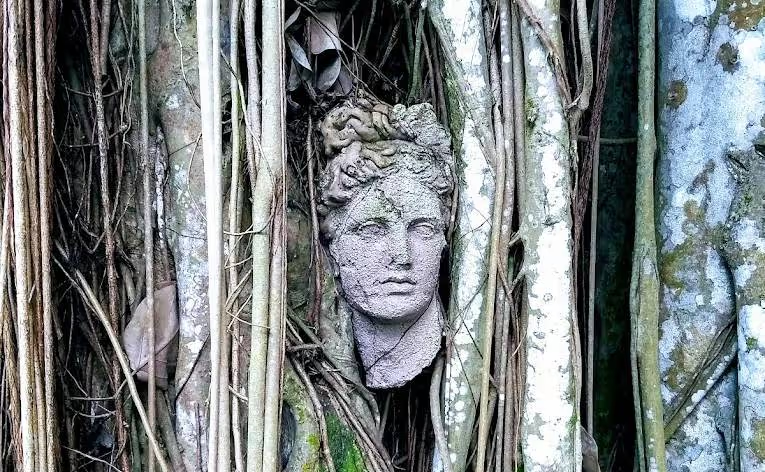
Today, the Kampong plays a significant role in education. The organization offers graduate and professional level courses. Its collection of plants provides an ideal resource for many students who would otherwise have to travel abroad for fieldwork. The property has an eco-friendly dormitory on site, which houses up to 12 students. Harvard University offers an annual summer course called “Plants of the Tropics.”
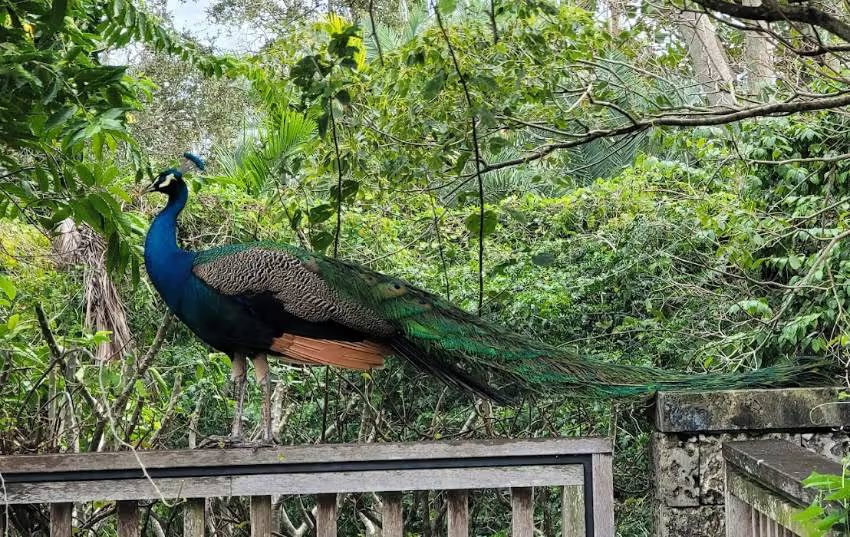
Fairchild’s legacy remains alive in the many edible and ornamental specimens that thrive at the Kampong.
Fairchild provided the name for Fairchild Tropical Botanic Gardens, located further south off Biscayne Bay, which was established in 1938 by Robert H. Montgomery; however, both are separate institutions.
You can take a self-guided tour of The Kampong by calling ahead and making a reservation. Guided and group tours are also available. Visiting hours are typically Tuesday through Saturday, with reservations required (check current schedule as they can vary seasonally). Admission is now $17 for adults, $12 for students/seniors, and free for children under 6. Call (305) 442-7169 or visit the NTBG website for more information.
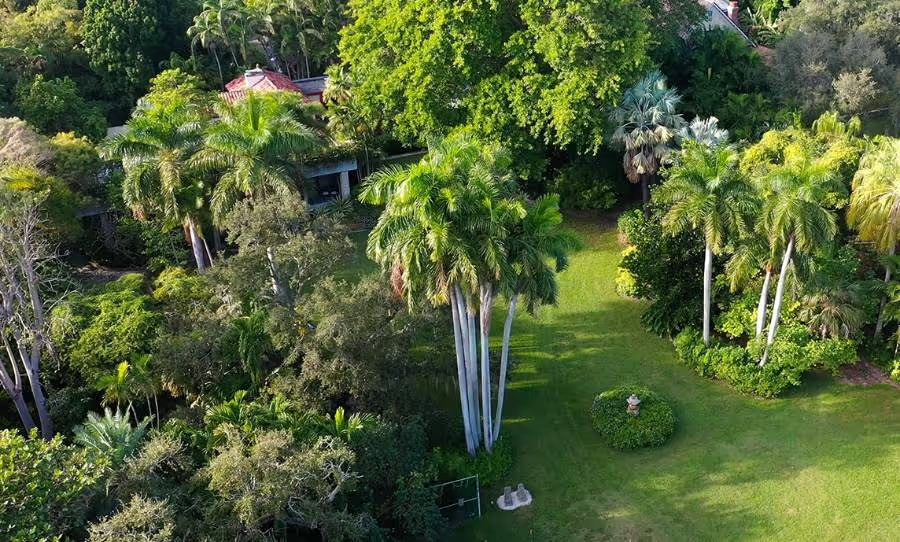
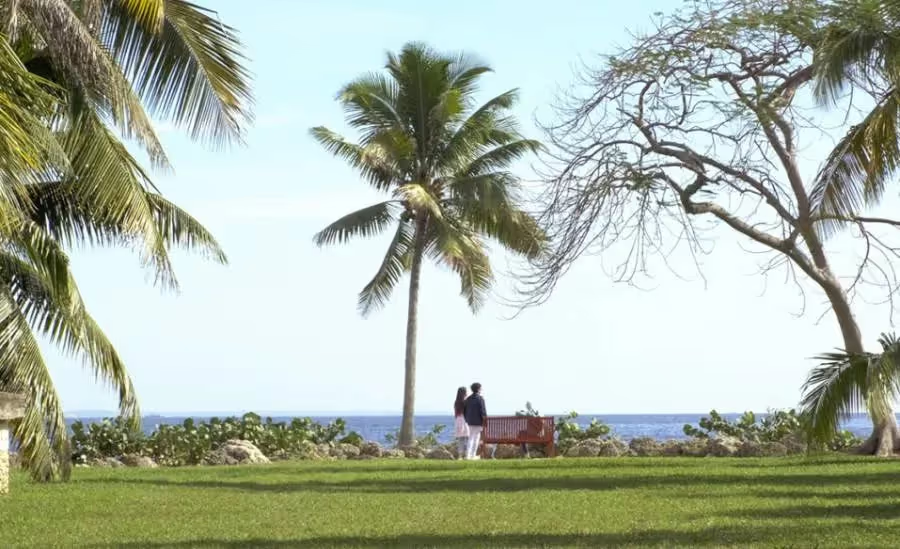
In 2026, The Kampong remains a serene, living museum of tropical botany and Miami history—still privately operated under the National Tropical Botanical Garden umbrella, with its collection and educational programs expanded. The adjacent Hissar property is private, but The Kampong itself is open to visitors by reservation only. The banyan tree and and other specimens Maria highlighted are still thriving, and the site’s quiet waterfront charm endures as one of Coconut Grove’s hidden treasures.
The compound did suffer damage from Hurricane Irma in 2017, but the grounds have been completely restored.
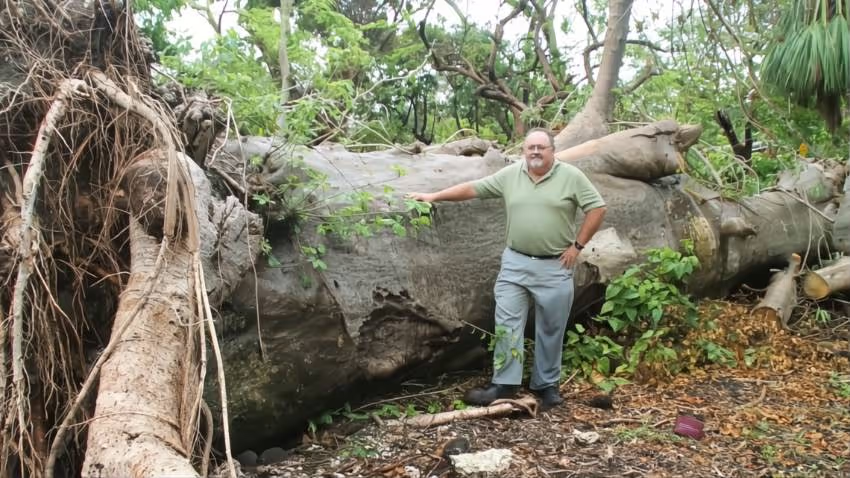
Maria’s warm, story-rich tour captures why The Kampong feels like a true time capsule—full of botanical wonders and Miami lore.
Editor’s Note: Originally published August 12, 2008. Updated in 2026 with new photography; Maria de los Angeles original writing remains unchanged.

Lorem ipsum dolor sit amet, consectetur adipiscing elit. Suspendisse varius enim in eros elementum tristique. Duis cursus, mi quis viverra ornare, eros dolor interdum nulla, ut commodo diam libero vitae erat. Aenean faucibus nibh et justo cursus id rutrum lorem imperdiet. Nunc ut sem vitae risus tristique posuere.
Lorem ipsum dolor sit amet, consectetur adipiscing elit. Suspendisse varius enim in eros elementum tristique. Duis cursus, mi quis viverra ornare, eros dolor interdum nulla, ut commodo diam libero vitae erat. Aenean faucibus nibh et justo cursus id rutrum lorem imperdiet. Nunc ut sem vitae risus tristique posuere.
Check out our top local tours on Miami Beach 411—no tourist traps, just the best adventures, Everglades, and more.
Book Your TourOr book your hotel through our Hotels.com partnership—it helps keep Miami Beach 411 free and independent for everyone.
Book Your Hotel

Comment disclaimer:
Some comments below originated on a previous version of MiamiBeach411.com. As a result of platform migrations, displayed comment dates may reflect import timestamps rather than original posting dates. Many comments date back to the early 2000s and capture community conversations from that time. If you have local insight, updates, or memories to share, we welcome your comments below.
This story has been part of Miami Beach conversations for decades—and it’s still unfolding. Add your voice.
Lorem ipsum dolor sit amet, consectetur adipiscing elit. Suspendisse varius enim in eros elementum tristique. Duis cursus, mi quis viverra ornare, eros dolor interdum nulla, ut commodo diam libero vitae erat. Aenean faucibus nibh et justo cursus id rutrum lorem imperdiet. Nunc ut sem vitae risus tristique posuere.
Lorem ipsum dolor sit amet, consectetur adipiscing elit. Suspendisse varius enim in eros elementum tristique. Duis cursus, mi quis viverra ornare, eros dolor interdum nulla, ut commodo diam libero vitae erat. Aenean faucibus nibh et justo cursus id rutrum lorem imperdiet. Nunc ut sem vitae risus tristique posuere.