


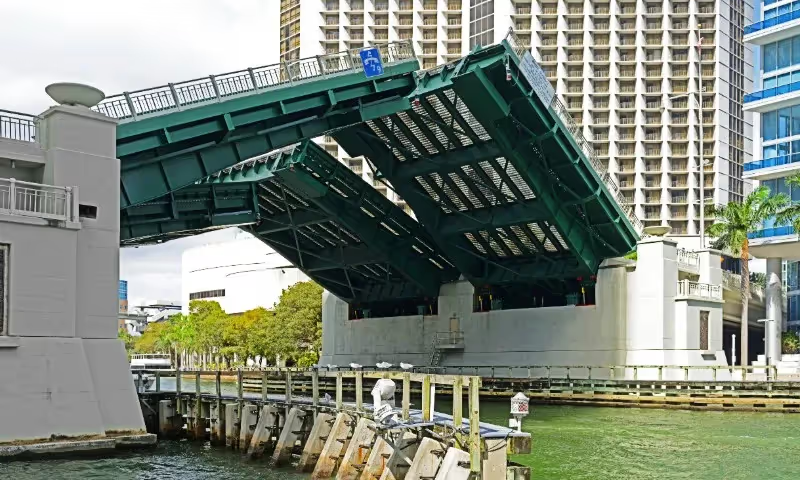
The mouth of the Miami river, where Brickell and Downtown meet, as seen from a boat. Tucked away at street level among these concrete and glass behemoths is a history worth exploring.
Bayside Marketplace and Marina, an open-air shopping mall, is where most tourists flock to when they visit Downtown Miami. Most locals think it’s too kitschy—food on display in front of restaurants and parrots ready to pose with you for a Polaroid.
Bayside is nice enough, if you’re a tourist, or a local who loves being a tourist, like me. I had a passable dinner there not long ago with a friend, facing the marina. But if you’re stuck there for an hour or longer, you can explore the rest of Downtown Miami without having to venture too far.
Here are 10 easy, rewarding things to do—all reachable on foot or via the free Metromover from Bayside.
.avif)
Short on time? Don’t forget about the gorgeous walk by Bayfront Park, located right next to Bayside. Head toward the bay just past the Hard Rock Café and see Biscayne Bay in all its glory, with the Port of Miami in the background. Turn south, pass Bayfront Park and walk down to the mouth of the river for impressive architectural views. This walk features the work of several artists, including an impressive sculpture by Haitian-born Edouard-Duval Carrié and amazing wall drawings by Cuban-born Glexis Novoa.
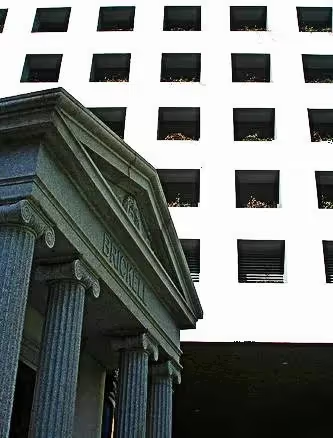
While standing at the mouth of the river, gaze upon the formidable concrete jungle of Brickell Key and think of the Brickell family, pioneers who braved the swamps when the river was pristine. They traded with Indians who paddled up from the Everglades in their dugout canoes.
Continue your stroll toward Biscayne Boulevard. At the path’s end, look straight directly south across the river at Philippe Starck’s massive Icon development. Well, actually, look at the empty patch of grass by the river’s edge. You won’t be able to see it from above, but the Miami Circle is an ancient archeological site where Tequesta Indians lived over 2,000 years ago. Currently, plans are underway for construction of a beautiful city park at this location.
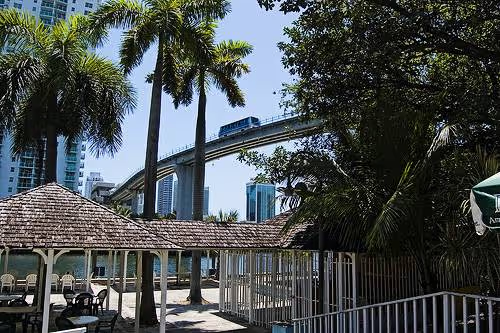
Take the Metromover, Miami’s light rail, free of charge. The Metromover has three loops – Omni, Downtown and Brickell: Omni takes you as far north as the the School Board, with the Miami Herald and Adrienne Arsht Center for the Performing Arts along the way; Downtown circles the business and shopping district; and Brickell travels as far south as 14th street.
There are numerous transfer stations for the different loops; you can figure out if you’re at one by observing the electronic signs above the track. There are also posted maps to guide you. You really can’t get lost though; the loops are finite and each rail car always returns to square one.
From Bayside, walk a couple of blocks west to College/Bayside station, where you’ll catch the Brickell loop and continue on to Brickell via Government Center. There’s no better way to get a bird’s eye view of Downtown and its surrounding neighborhoods. You’ll pass by many historic buildings and high over the river. Once at Brickell, simply return to Bayside or the stop of your choice. To learn more about Metromover stations, routes and hours of operation, visit Miami-Dade Public Transportation.
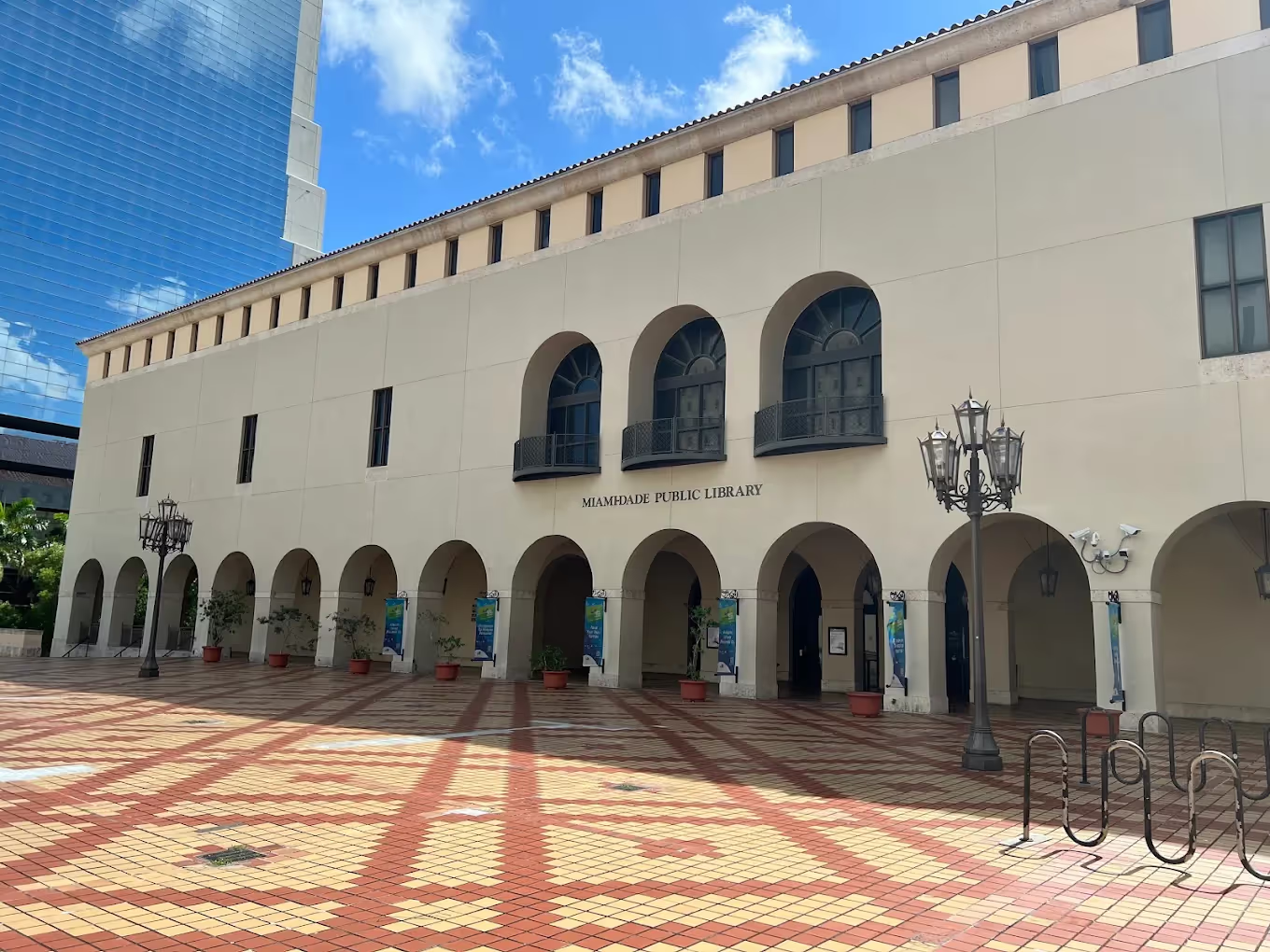
Visit the HistoryMiami Museum (formerly Historical Museum of Southern Florida) or Pérez Art Museum Miami (PAMM, formerly Miami Art Museum). Both are across from each other in Museum Park, with the main Miami-Dade Public Library nearby. Take the Metromover to Government Center and walk to Museum Park.
HistoryMiami’s permanent South Florida history exhibit is a must for newcomers, with seasonal displays diving deeper into local stories. PAMM offers world-class contemporary art with bay views. Both are excellent ways to spend a couple of hours indoors.
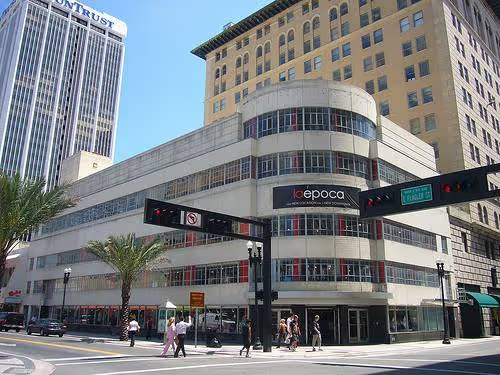
While Bayside has plenty of retail, venture just a couple of blocks west across Biscayne Boulevard into the heart of Downtown. Explore streets lined with mom-and-pop shops, budget chains, and hidden gems. On Flagler Street, you’ll find Macy’s, Ross Dress for Less, and La Epoca—a multi-story department store in a 1936 Streamline Moderne building (former Walgreens), specializing in apparel and echoing its famous Cuban namesake.
For gems, head to the Seybold Building on NE 1st Street—the second-largest jewelry building in the US, with over 10 floors and 280+ jewelers.
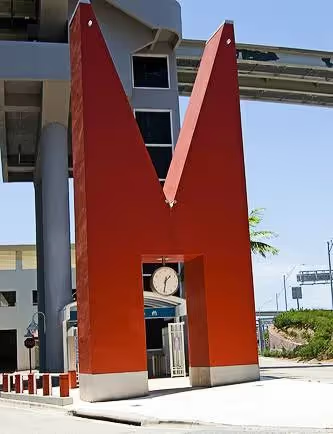
From College/Bayside station, take the Metromover Brickell loop heading south to Riverwalk station. Stop at the high platform and enjoy the view. Then head down the elevator and see the big red M for Miami sculpture designed by local architectural artists Roberto Behar and Rosario Marquardt. While there, think of the many words that start with M that could represent Miami.
Cross the street to Bijan’s restaurant, where you’ll spot Henry Flagler’s historic yellow clapboard cottage. The structure was moved from a different location further inland where it originally housed railroad workers circa 1896.
This site is also called Fort Dallas Park, Dallas being one name for the area before there ever was a Miami. Soldiers braved the swamps here during the Seminole Wars with nothing but rustic barracks for creature comforts.
In later years, the whole area would become Julia Tuttle’s homestead. Tuttle was the mother of Miami, which is why this area of the river is considered the city’s birthplace.
The city’s exact incorporation spot, however, requires a short stroll west on SE 4th street, just past the M statue, to South Miami Avenue, where you’ll see artist’s Xavier Cortada’s living sculpture, Incorporation Palm. The palm is planted exactly where new Miamians gathered to incorporate the city in 1896. It’s not much to look at, but the site’s historical importance is quite tremendous.
From Bijan’s – where you may be inclined to stop for a cold beer and a sandwich, if it’s open—stroll east on the river walk to the Hyatt Regency hotel. From there, walk up the stairs and through the lobby out to the front entrance. Then, head south over the Brickell Bridge, where you may stop to enjoy the view. (This is a drawbridge, so keep off the bridge when the tender engages the barricades.)
Note the obelisk-style statue on the east side of the bridge, dwarfed by all the surrounding buildings. The statue pays tribute to the Tequesta Indians who inhabited this territory long before the Spanish discovered Florida.
At the next crosswalk, carefully cross Brickell Avenue and head over to Brickell Park, which is just south of the Icon tower development (you can’t miss its ugly columns, which look like totems from Easter Island).
In the park, note historic First Presbyterian Church just next door and the park’s impressive trees. Make your your way to the water’s edge, where you’ll also enjoy a view of Brickell Key. You’ll encounter the Brickell family mini-crypt on your walk, but don’t worry—there are no ghosts in there. The Brickells are actually buried in Woodlawn Park. The only spooky things close by are the eerie totems spread all over Icon’s driveway.
On the way back, cross the street once again and head back to the Hyatt. Standing on the driveway by the valet station, you’ll see an empty construction site, future home of the Met 3. This was the location of Henry Flagler’s Royal Palm hotel, a luxury resort completed in 1897 to attract wealthy snowbirds to the Florida wilderness.
As you gaze at the concrete behemoths before you, marvel at how much Miami has changed in just over 100 years!
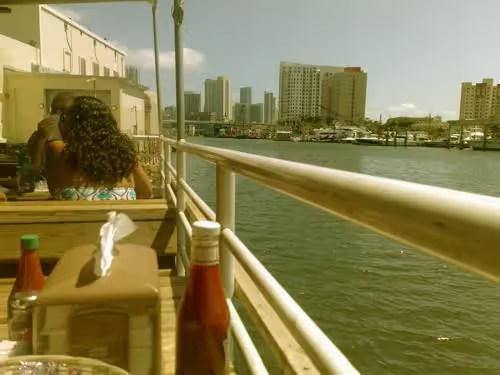
At some point, you’ll probably be hungry. There a dozens upon dozens of little restaurants Downtown—too many to name here. But if you want to explore more of the riverfront, take a short cab ride to Garcia’s Seafood Grille and Fish Market for a hearty lunch featuring fresh, local catches.
Afterwards, walk just due south along the river where you’ll find historic Lummus Park. On the premises, you’ll see the original home of pioneer William Wagner.
On this walk, you’ll also spy Miami’s weirdest looking building – the Scottish Rite Masonic Lodge. It’s hard to say what actually happens inside – unless you’re a mason. But the exterior is impressive. Bring your camera.
Make sure you take a cab back – though not far from Bayside, the neighborhood in between is rather sketchy..
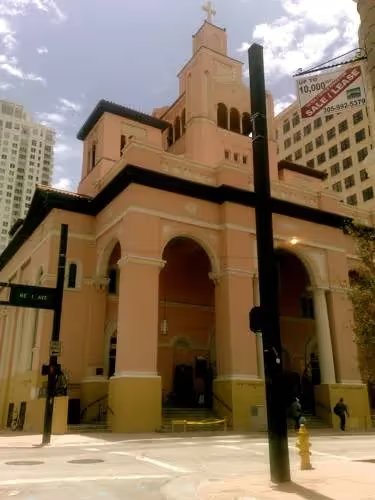
A short walk southwest from Bayside across Biscayne Boulevard leads to Gesu Catholic Church on NE 2nd Avenue—Miami’s oldest, founded 1896. Before suburbs sprawled west, much of the city’s religious life centered here.
Inside, check the pictorial history by the entrance, stained-glass windows, murals, and organ. Outside, admire the cantilevered ceiling, portico, and giant bell.
En route, pass Miami-Dade College campus and the old Federal District courthouse (built from ancient keystone quarried in the Florida Keys). Nearby gems: Alfred I. Dupont Building (beautiful lobby and elevators), Olympia Theater (peek into the lobby/theater if open), and Shoreland Arcade. Keep your eyes peeled—Downtown is full of architectural surprises.
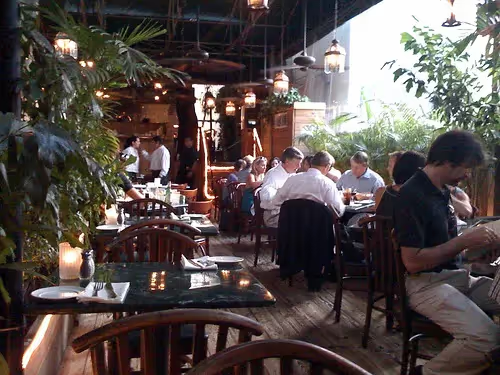
For something trendier, ride to Tenth Street Promenade station and explore Mary Brickell Village (one block west). Perricone’s offers a shaded outdoor patio under old Brickell trees in a tiny city park—try the pasta or sandwiches.
Dolores But You Can Call Me Lolita (in a beautifully remodeled 1926 firehouse) has a Monday–Friday lunch buffet.
Watch my interview with a local historian about the history of Freedom Tower.
The closest historic icon to Bayside is the Freedom Tower, modeled after Spain’s Giralda. Once home to the Miami News and Miami Metropolis, it became a processing center for Cuban exiles in the 1960s—earning its name. From Bayside, cross Biscayne Boulevard carefully for a closer look.
Public tours are limited (often through HistoryMiami Museum), but Miami-Dade College frequently hosts free art exhibits there—typically Tuesday–Saturday afternoons. Call (305) 237-7186 for details, or just check the lobby if doors are open.
Enjoy one or all of these excursions—by day only. Downtown Miami has become more livable and trendy, but it can still feel quiet or sketchy after dark. Weekdays are best, when shops and restaurants are busiest.
Editor’s Note: Originally published October 12, 2009. Updated in 2026 for closures. Maria de los Angeles’ writing remains unchanged.

Lorem ipsum dolor sit amet, consectetur adipiscing elit. Suspendisse varius enim in eros elementum tristique. Duis cursus, mi quis viverra ornare, eros dolor interdum nulla, ut commodo diam libero vitae erat. Aenean faucibus nibh et justo cursus id rutrum lorem imperdiet. Nunc ut sem vitae risus tristique posuere.
Lorem ipsum dolor sit amet, consectetur adipiscing elit. Suspendisse varius enim in eros elementum tristique. Duis cursus, mi quis viverra ornare, eros dolor interdum nulla, ut commodo diam libero vitae erat. Aenean faucibus nibh et justo cursus id rutrum lorem imperdiet. Nunc ut sem vitae risus tristique posuere.
Check out our top local tours on Miami Beach 411—no tourist traps, just the best adventures, Everglades, and more.
Book Your TourOr book your hotel through our Hotels.com partnership—it helps keep Miami Beach 411 free and independent for everyone.
Book Your Hotel

Comment disclaimer:
Some comments below originated on a previous version of MiamiBeach411.com. As a result of platform migrations, displayed comment dates may reflect import timestamps rather than original posting dates. Many comments date back to the early 2000s and capture community conversations from that time. If you have local insight, updates, or memories to share, we welcome your comments below.
This story has been part of Miami Beach conversations for decades—and it’s still unfolding. Add your voice.
Lorem ipsum dolor sit amet, consectetur adipiscing elit. Suspendisse varius enim in eros elementum tristique. Duis cursus, mi quis viverra ornare, eros dolor interdum nulla, ut commodo diam libero vitae erat. Aenean faucibus nibh et justo cursus id rutrum lorem imperdiet. Nunc ut sem vitae risus tristique posuere.
Lorem ipsum dolor sit amet, consectetur adipiscing elit. Suspendisse varius enim in eros elementum tristique. Duis cursus, mi quis viverra ornare, eros dolor interdum nulla, ut commodo diam libero vitae erat. Aenean faucibus nibh et justo cursus id rutrum lorem imperdiet. Nunc ut sem vitae risus tristique posuere.