

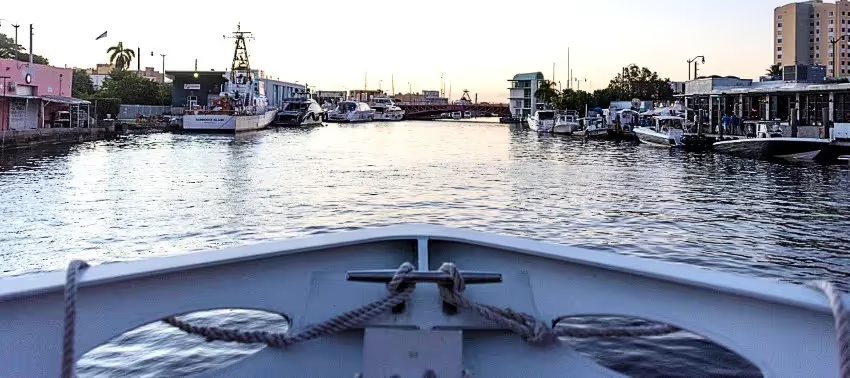
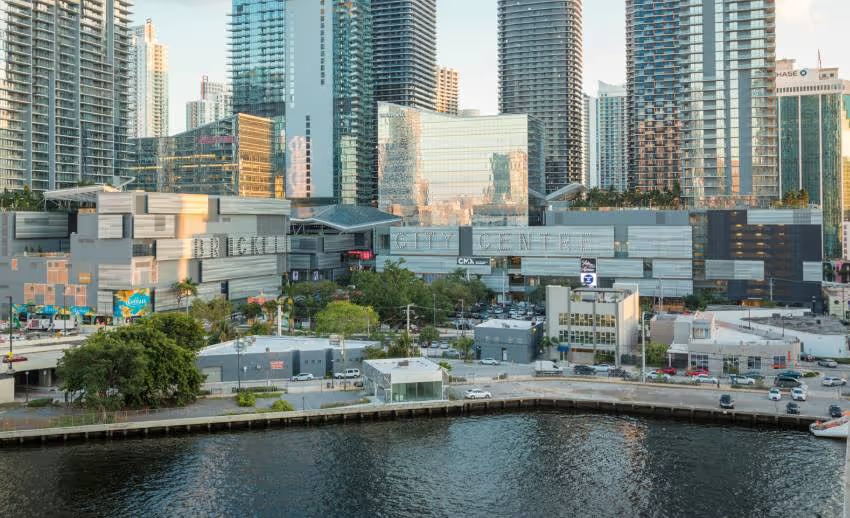
ABOVE: The neck cranes upward inevitably at the mouth of the river, where towering high-rises, courtesy of Miami’s recent construction boom, flank either bank of the river’s Downtown stretch.
It’s only five and a half miles long, but the Miami River is packed with so many fascinating stories that it takes a full three hours to hear them all. Born and raised in Miami, I’d never given that winding waterway downtown much thought—except when stuck in traffic waiting for a drawbridge to rise. But after taking a narrated boat tour with historian Dr. Paul George, I realized something essential: to truly know the Miami River is to truly know the city.
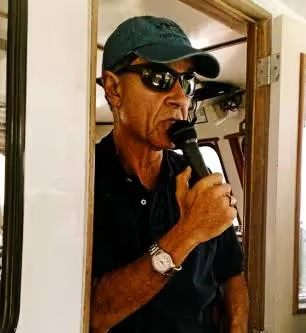
One of the best ways to get acquainted is by joining one of Dr. Paul George’s legendary boat tours. A professor at Miami-Dade College and longtime historian for the Historical Museum of Southern Florida (now HistoryMiami Museum), Dr. George has been leading these tours for over 35 years. He’s no ordinary guide—he’s a walking encyclopedia of Miami lore, delivering facts, anecdotes, and colorful tales with infectious passion and never-ending enthusiasm. On our three-hour outing, he took only one short 15-minute break; every bend and every building sparked another story.
We boarded the Island Queen at Bayside Marketplace with about 60 other passengers. The boat is comfortable, the ride smooth, and the short sail from Biscayne Bay into the river mouth sets the stage perfectly.
The river isn’t “pretty” in a postcard sense—no Mickey Mouse tropical paradise here. One popular riverfront restaurant’s website once called it an “industrial wasteland.” Yet for me, that raw, working character makes it one of the most compelling parts of Miami—definitely worth exploring up close.
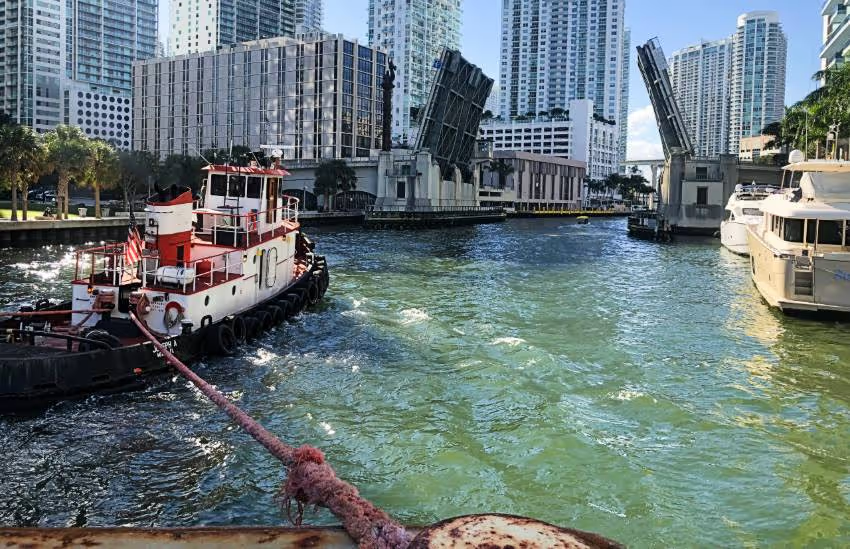
The Miami River stretches 5.5 miles from Biscayne Bay to Miami International Airport. (The Miami Canal, extending farther west, was dredged between 1909–1912 but isn’t part of the original river.) Everywhere you look, maritime life is on full display: freighters, tugboats, houseboats, commercial fishing fleets, lobster crates, luxury yachts, sailboats, and even derelict hulls share a narrow, 90–150-foot navigable channel (widening to about 225 feet in spots).
Traffic jams are routine—captains wait their turn for one of the 10 drawbridges along the route.
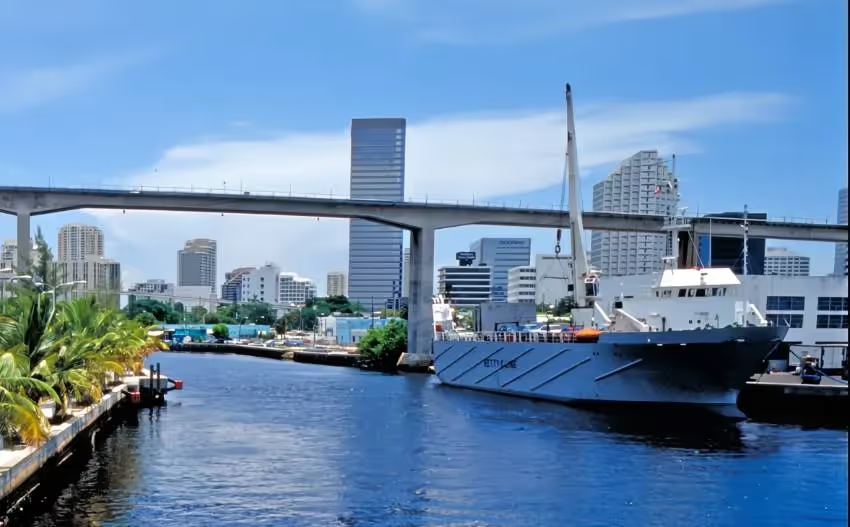
That bustle is economic gold. The river hosts 32 private international shipping terminals handling over $4 billion in annual cargo. Caribbean carriers prefer it over the Port of Miami because the shallower drafts, shorter seawalls, and crane setups suit their vessels better—and it’s more affordable. A 2005 Biscayne Bay Economic Study estimated waterborne commerce generated $805 million in output, $406 million in income, 6,700 jobs, and $44 million in tax revenue for Southeast Florida. Mega-yacht repairs alone can inject $385,000+ per vessel into the local economy.
The river wasn’t always polluted. Freshwater once flowed from the Everglades through rapids on the north fork, dropping six feet over 450 feet, with springs bubbling up along its length. Population growth, poor sewage, and industrial runoff changed that.
Today, the U.S. Army Corps of Engineers’ massive dredging project (completed in the early 2010s) deepened the federal channel to 15 feet, removed contaminated sediments, and improved navigation and water quality. Freighters now load to full capacity even at low tide, boosting trade and jobs. Merrill Stevens Dry Dock (operating since 1923) expanded with solar-powered “green” upgrades. A proposed biodiesel plant using Jatropha nuts and recycled restaurant oil aimed to supply river terminals, cruise ships, and county buses (Florida once imported 100% of its diesel).
Beyond industry, the lower river is evolving into a “living” river—eclectic mix of riverside parks, historic homes, quaint (sometimes rickety) residences, and sleek new condos hugging the seawalls. Nine public parks dot the waterway; E.G. Sewell Park stood out on our tour—lush, green, with surviving royal palms planted in the late 19th century by snowbird Gen. Samuel C. Lawrence.
The Miami River Greenway, a long-term vision by the Miami River Commission, envisions a 10-mile pedestrian/bike path along both banks. Many sections are now complete, offering scenic public access.
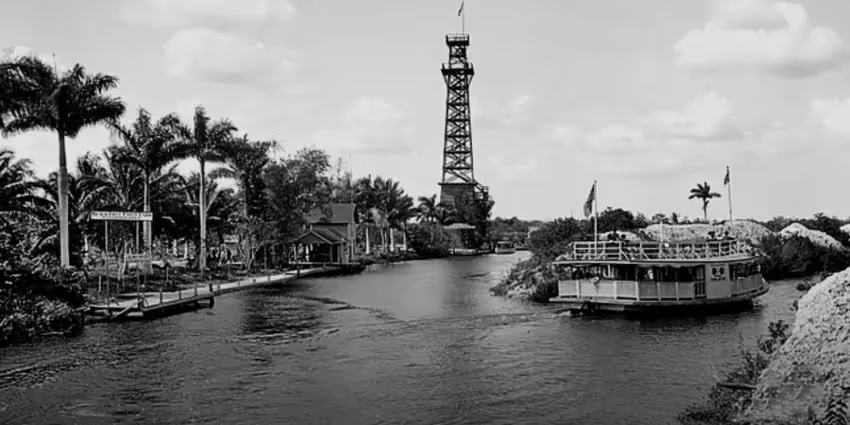
People have lived, worked, and traded along the Miami River for millennia. Juan Ponce de León spotted a Tequesta village here in 1513. The Miami Circle archaeological site (dating to at least 750 B.C.) is the last major remnant of Tequesta culture—a humble reminder dwarfed by today’s high-rises (a statue honoring them stands on the Brickell Bridge).
The 19th century brought Fort Dallas (Seminole Wars barracks near today’s Bijan’s/Fort Dallas Park), William Brickell’s trading posts (1870s), and Julia Tuttle’s homestead (1887). Tuttle convinced Henry Flagler to extend his railroad, leading to the 1896 founding of Miami and the luxurious Royal Palm Hotel on the northeast bank—680 feet long, five stories, 450 rooms, electricity, ice, elevators—in the middle of a swamp.
The Miami River has transformed dramatically since 2008. The Army Corps dredging finished years ago, deepening the channel and improving water quality. The Miami River Greenway is largely complete with miles of scenic paths and parks.
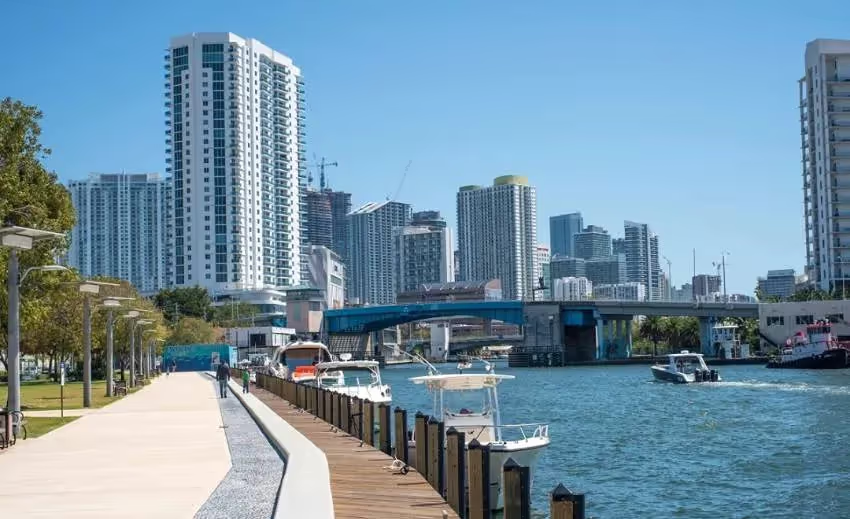
The river’s gritty charm and rich history remain, but it’s cleaner, greener, and more accessible than ever. Industry thrives alongside luxury condos and waterfront dining. Dr. Paul George still leads occasional narrated boat tours through HistoryMiami—check their site: historymiami.org for the latest schedule.
Maria’s vivid account captures why the Miami River is so much more than a waterway—it’s the living spine of the city’s story.
Editor’s Note: Originally published September 16, 2008. Updated in 2026 with new photography; Maria de los Angeles’ original writing remains unchanged.

Lorem ipsum dolor sit amet, consectetur adipiscing elit. Suspendisse varius enim in eros elementum tristique. Duis cursus, mi quis viverra ornare, eros dolor interdum nulla, ut commodo diam libero vitae erat. Aenean faucibus nibh et justo cursus id rutrum lorem imperdiet. Nunc ut sem vitae risus tristique posuere.
Lorem ipsum dolor sit amet, consectetur adipiscing elit. Suspendisse varius enim in eros elementum tristique. Duis cursus, mi quis viverra ornare, eros dolor interdum nulla, ut commodo diam libero vitae erat. Aenean faucibus nibh et justo cursus id rutrum lorem imperdiet. Nunc ut sem vitae risus tristique posuere.
Check out our top local tours on Miami Beach 411—no tourist traps, just the best adventures, Everglades, and more.
Book Your TourOr book your hotel through our Hotels.com partnership—it helps keep Miami Beach 411 free and independent for everyone.
Book Your Hotel


Comment disclaimer:
Some comments below originated on a previous version of MiamiBeach411.com. As a result of platform migrations, displayed comment dates may reflect import timestamps rather than original posting dates. Many comments date back to the early 2000s and capture community conversations from that time. If you have local insight, updates, or memories to share, we welcome your comments below.
This story has been part of Miami Beach conversations for decades—and it’s still unfolding. Add your voice.
Lorem ipsum dolor sit amet, consectetur adipiscing elit. Suspendisse varius enim in eros elementum tristique. Duis cursus, mi quis viverra ornare, eros dolor interdum nulla, ut commodo diam libero vitae erat. Aenean faucibus nibh et justo cursus id rutrum lorem imperdiet. Nunc ut sem vitae risus tristique posuere.
Lorem ipsum dolor sit amet, consectetur adipiscing elit. Suspendisse varius enim in eros elementum tristique. Duis cursus, mi quis viverra ornare, eros dolor interdum nulla, ut commodo diam libero vitae erat. Aenean faucibus nibh et justo cursus id rutrum lorem imperdiet. Nunc ut sem vitae risus tristique posuere.